Why ClusterIQ Exists
The gap we wanted to solve
A raw export from Ahrefs, Semrush or Google Search Console is useful, but it is not yet a working structure. Before an SEO can make decisions, the data usually needs to be cleaned, deduplicated, grouped, labelled and turned into something that makes sense to a person. That work takes time, especially when the dataset contains thousands of keywords.
Sending the whole dataset straight to a generative model can be useful for ideas, but it also makes the first structural decision harder to inspect and reproduce. ClusterIQ takes a different approach. The core clustering work is calculated first, using conventional text analysis and statistical methods, with generative tools left for the stages where they are most useful.
The engine cleans and normalises the data, builds TF-IDF features, derives a latent semantic representation, measures similarity and uses a sparse relationship graph to form clusters. Search intent, topic labels and quality signals are then added so the result is easier to review and refine.
The goal is not to produce an automated SEO strategy. It is to give you a dependable working dataset quickly, so you can make the strategic decisions yourself.
Where ClusterIQ fits in the workflow
ClusterIQ is the structured layer between raw keyword research and whatever you need to do with that research next.
Bring the data you already have
Start with exports from Ahrefs, Semrush, Google Search Console or a spreadsheet. ClusterIQ cleans, normalises and deduplicates the dataset before clustering begins.
Create a structure you can inspect
Measured lexical and latent semantic relationships are used to build reproducible keyword clusters, with intent, labels and quality signals added on top.
Take the dataset wherever you need it
Refine the result, build reports, explore it in ClusterIQ, export it to a spreadsheet or use the cleaner structure as context for downstream AI and content workflows.
What We Stand For
Structure Before Generation
Where relationships can be measured and reproduced, calculate them first. Generative AI can be useful downstream, but it does not need to invent the underlying keyword structure.
Speed as a Feature
The practical value of clustering is getting from a messy export to something useful quickly. ClusterIQ is built to reduce cleanup and organisation time without hiding how the structure was created.
Built for Practitioners
ClusterIQ is designed around the work SEOs actually need to get through: large keyword sets, tight deadlines, client requests and the need to produce something credible quickly.
Trust & Transparency
Your data is yours. You can inspect the methodology, export your work and delete your data. Pricing and product limits are presented clearly, without hiding the workflow behind a black box.
The thinking behind ClusterIQ
Good clustering starts before an algorithm runs and ends with something a practitioner can actually use. These principles shape the product.
Prepare the data first
Normalise, deduplicate and preserve useful source context before asking a clustering model to find structure.
Measure relationships
Represent keywords mathematically so lexical and latent semantic relationships can be measured rather than guessed or generated.
Use the right method for the job
Clustering and graph-based methods should add evidence and structure. They should not make strategic decisions on behalf of the practitioner.
Keep practitioners in control
Expose enough methodology, controls and evidence for an SEO to challenge, refine and apply the output rather than simply accept it.
What ClusterIQ is, and what it deliberately is not
The product has a specific place in the SEO workflow. Clear boundaries make the value easier to understand and keep the software focused.
ClusterIQ is
- a structured analytical layer for keyword data
- a reproducible clustering and working-data system
- a place to inspect, refine, retain and reuse project data
- a foundation for reporting, site intelligence, forecasting and downstream AI workflows
ClusterIQ is not
- a generic AI SEO assistant or LLM wrapper
- a replacement for Ahrefs, Semrush or Google Search Console
- an autonomous strategist that asks you to surrender judgement
- a black-box upload that ends with an unexplained CSV
Keep reading
Explore more of the thinking, methodology and practical SEO workflows behind ClusterIQ.
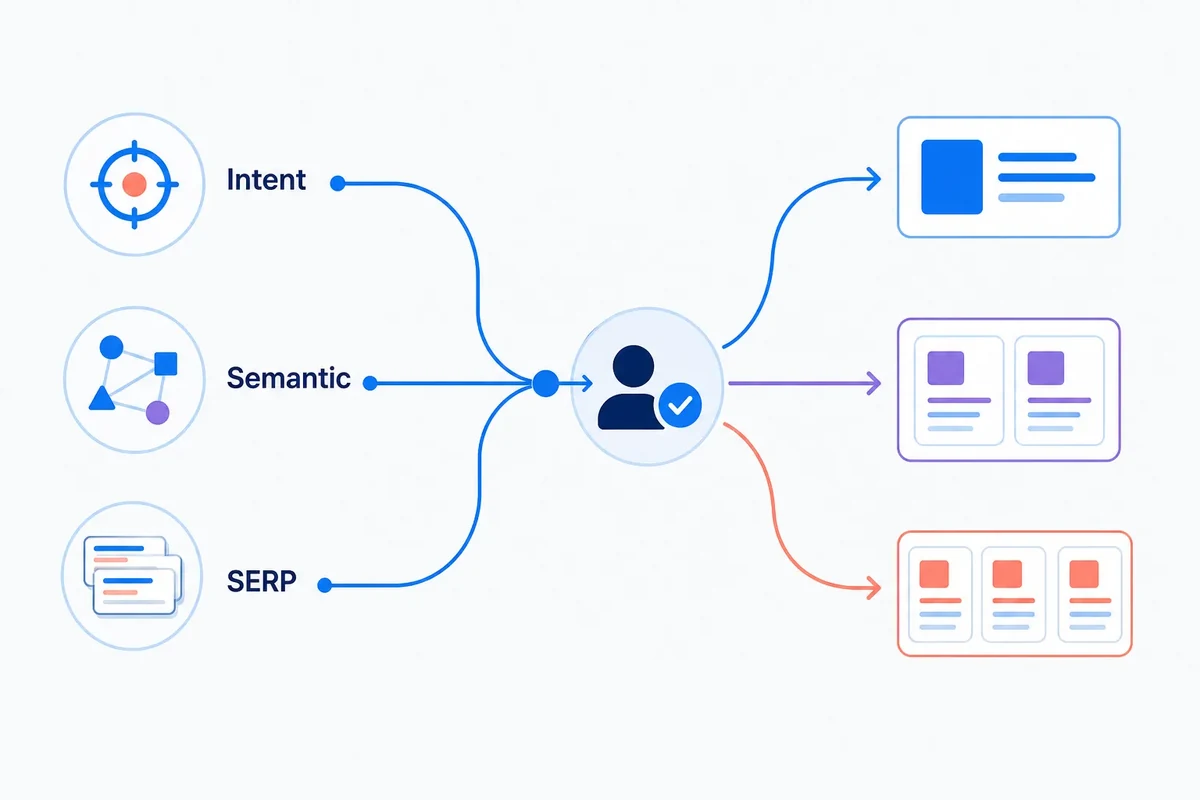
How to combine search intent, semantic similarity and SERP overlap for keyword clustering
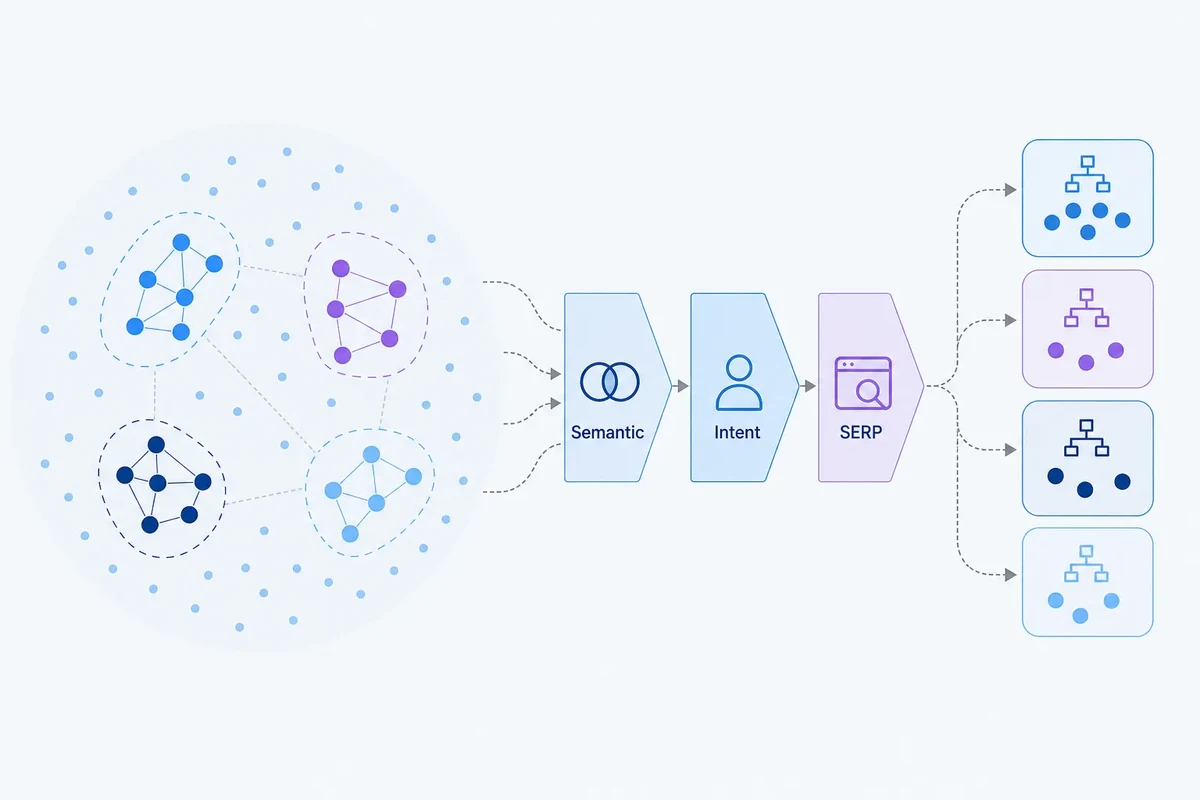
When semantic similarity helps keyword clustering, and when it does not
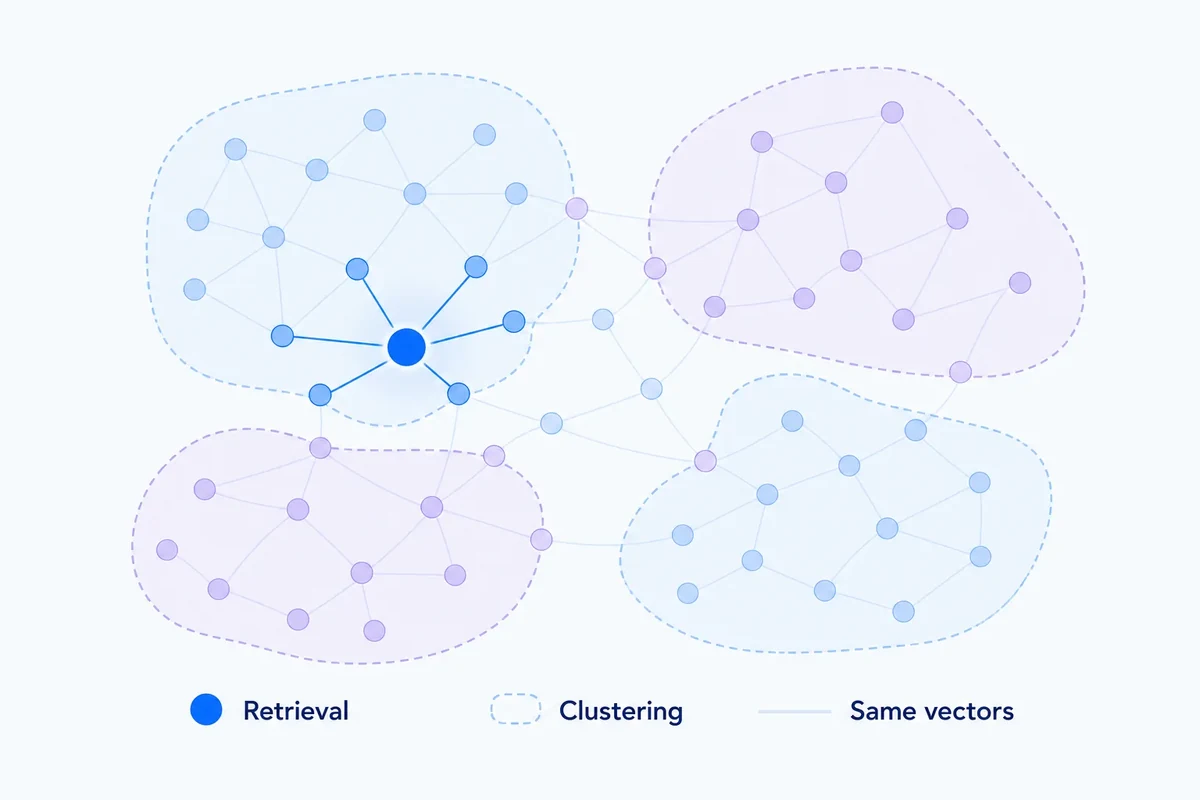
Semantic search vs keyword clustering: retrieval and grouping solve different problems
Test the method on your own data
Start with one evaluation project and 14 days of free access. Bring a real export, inspect the clustering and decide whether the resulting working dataset saves you time and gives you a better way to handle keyword research.