Forecasting SEO growth you can defend in a board meeting
Traffic forecasts fail when they assume every keyword hits position one. A defensible model starts with click-through curves and realistic rank movement.

Farky Rafiq
Founder of ClusterIQ
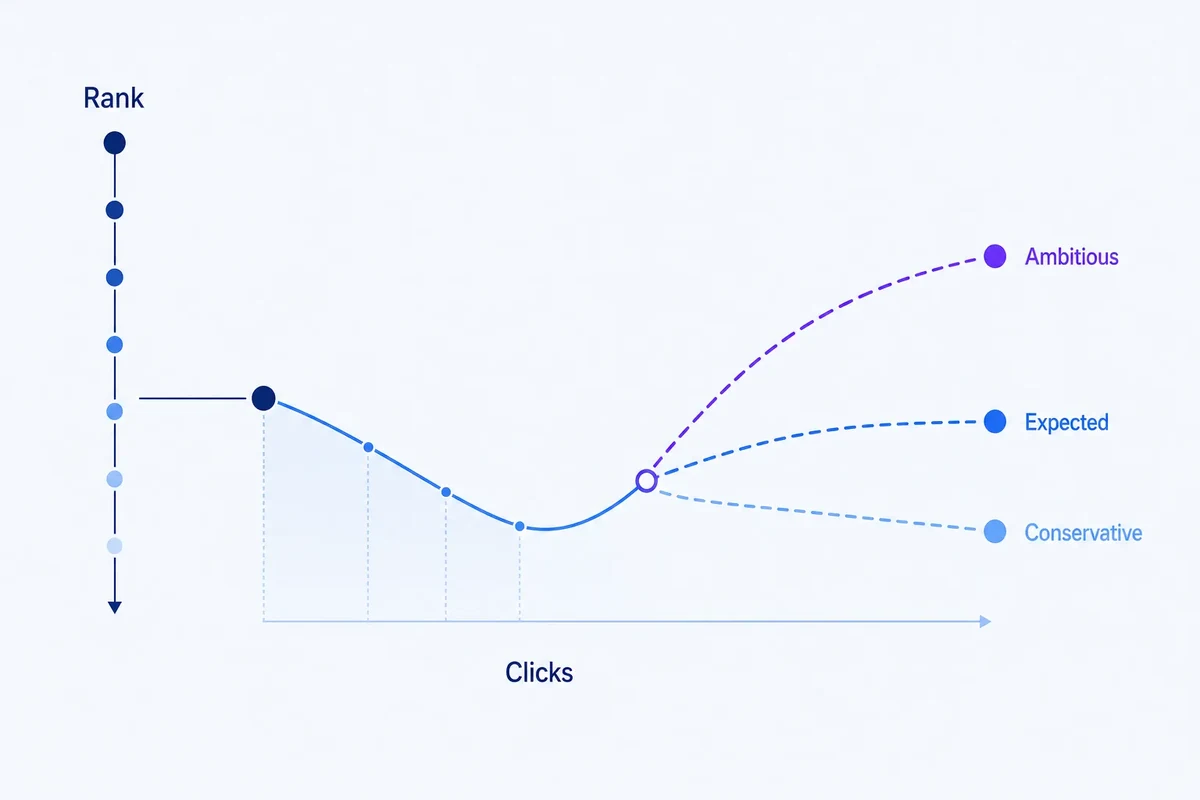
If you are asking for an SEO budget, you will probably be asked how much traffic or revenue it could bring in. Every forecast rests on assumptions. A useful one makes those assumptions clear enough for your finance team to question them.
Start with the click curve, not the volume
Search volume tells you how often people search, not how many will visit your site. Position one for a query with clear intent might attract 30% of clicks; position five might attract 5%. For a forecast covering 500 keywords, estimate clicks for each keyword using its projected ranking and a click-through curve, which describes how click rates vary by position. This is the single biggest improvement you can make to forecast accuracy.
Model rank movement honestly
A move from position 30 to 15 is common within a quarter. A move from 15 to 1 against well-established competitors usually is not. Set a limit on projected gains based on how difficult each keyword is to compete for and where you currently rank. Make that limit explicit in the forecast.
Three scenarios beat one number
- Conservative: only pages already ranking on pages two and three improve.
- Expected: planned work is completed roughly on schedule and delivers typical ranking gains.
- Ambitious: all planned work is delivered and competitors stand still.
A range gives you a more useful conversation than a single target: what would need to happen to reach the upper estimate, and what would it cost?
Convert clicks to money carefully
Multiply projected clicks by a conversion rate from searches with the same intent, rather than your site-wide average. Someone researching a topic behaves differently from someone comparing products or looking to buy. Blending informational and commercial traffic is how a forecast can look convincing today and lose credibility six months later.
Revisit monthly
Use your forecast to track progress, not just to secure approval. Each month, compare projected ranking changes with what actually happened, then adjust your assumptions. That way, the model becomes more useful over time rather than quietly becoming wrong.
Farky Rafiq
Founder of ClusterIQ
I've worked in digital marketing since 2005 and founded Liquid Silver in 2011. These articles are where I share the methods, experiments and practical SEO thinking behind ClusterIQ.
Put the idea into practice with your own keyword data
ClusterIQ helps turn raw SEO exports into clean, structured working datasets you can inspect, refine, report on and take into the next stage of your workflow.
Keep reading

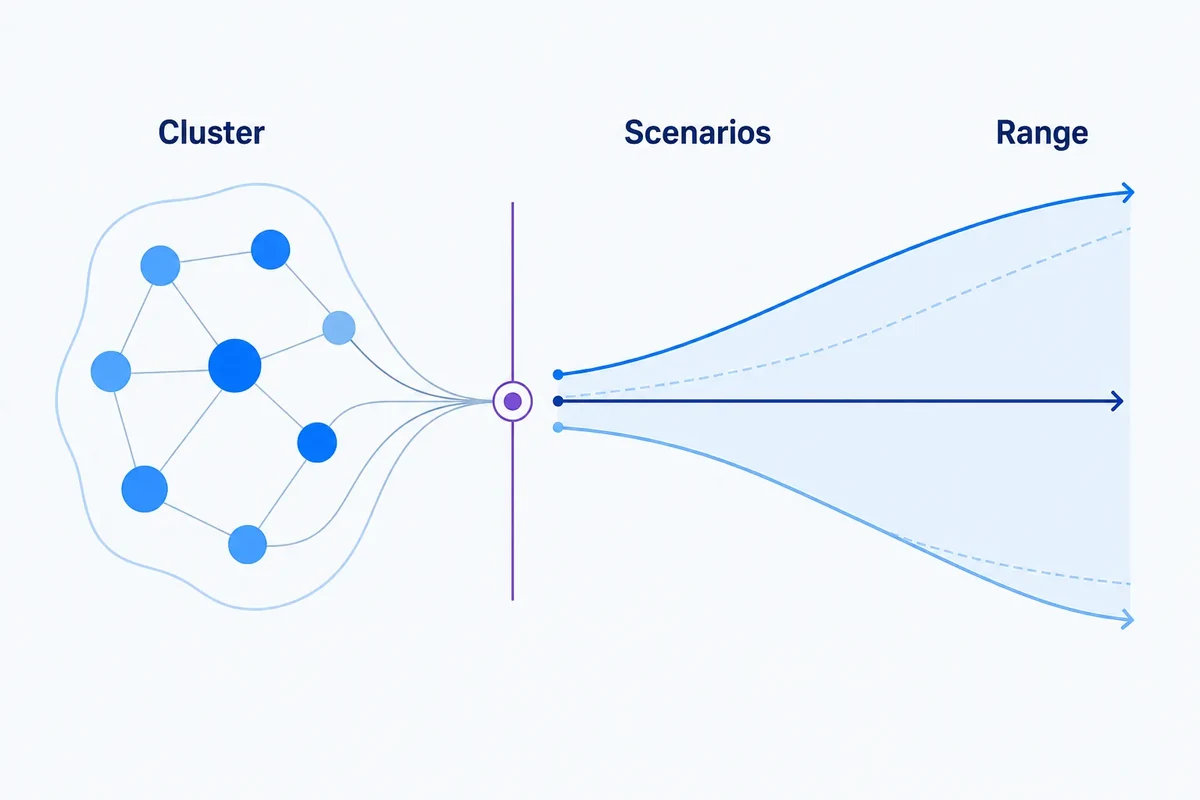
Forecast uncertainty at keyword-cluster level: making SEO projections less falsely precise
