Building topical authority without publishing filler
Topical authority is coverage plus depth, not volume. Here is how to find the gaps that matter and close them in the right order.

Farky Rafiq
Founder of ClusterIQ
You have published plenty of articles about your core service, but rankings are still disappointing. The answer is not necessarily more content. Topical authority is often treated as a publishing quota: cover a subject often enough and rankings will follow. In practice, covering a topic thinly can hurt more than leaving it alone.
Coverage is measurable
Start with a topical map: the full set of subtopics a credible site in your field would cover. If you are working through 800 keywords, group them by subtopic rather than treating each keyword as a separate article. For each subtopic, record whether you cover it, how thoroughly, and how well the relevant page performs. This gives you a list of gaps to address, not just another content calendar.
Three kinds of gap
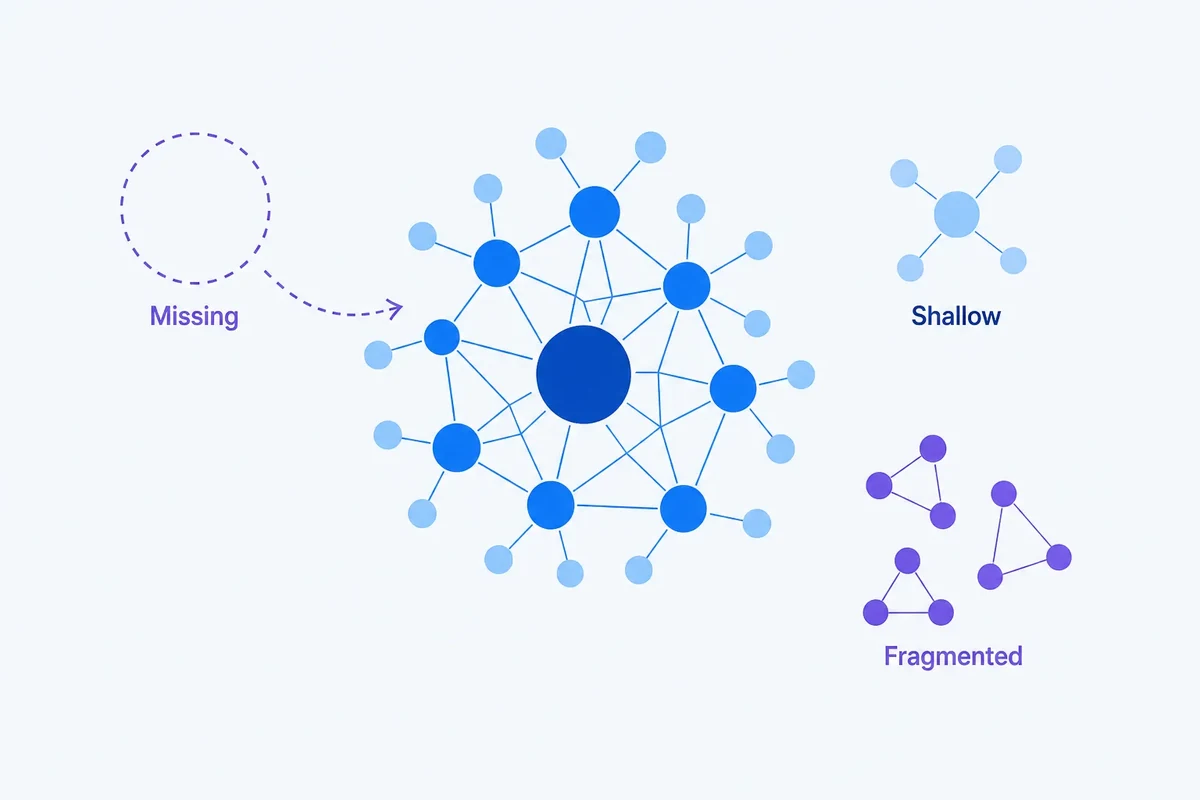
- Missing: no page addresses the subtopic. Filling this gap can be valuable when there is search demand.
- Shallow: a page exists, but it does not give searchers what they need. Improving it is usually cheaper than replacing it.
- Fragmented: several weak pages split coverage of one topic. Consolidate them into a stronger page and redirect the old URLs to it.
Order the work by leverage
Improving shallow pages that already rank on page two can bring results within weeks. Creating a new pillar page, a central guide to a broader topic, in an area you have never covered can take months. Make room for both, but tackle the quicker improvements first. That way, your longer-term work has existing authority to build on.
Internal links carry the authority
Your topical map should also guide your internal links. Each subtopic page should link to its main pillar page and to relevant related pages, using link text that clearly names the topic. Teams often skip this step, yet it helps turn a loose collection of pages into a recognisable topic cluster.
Know when to stop
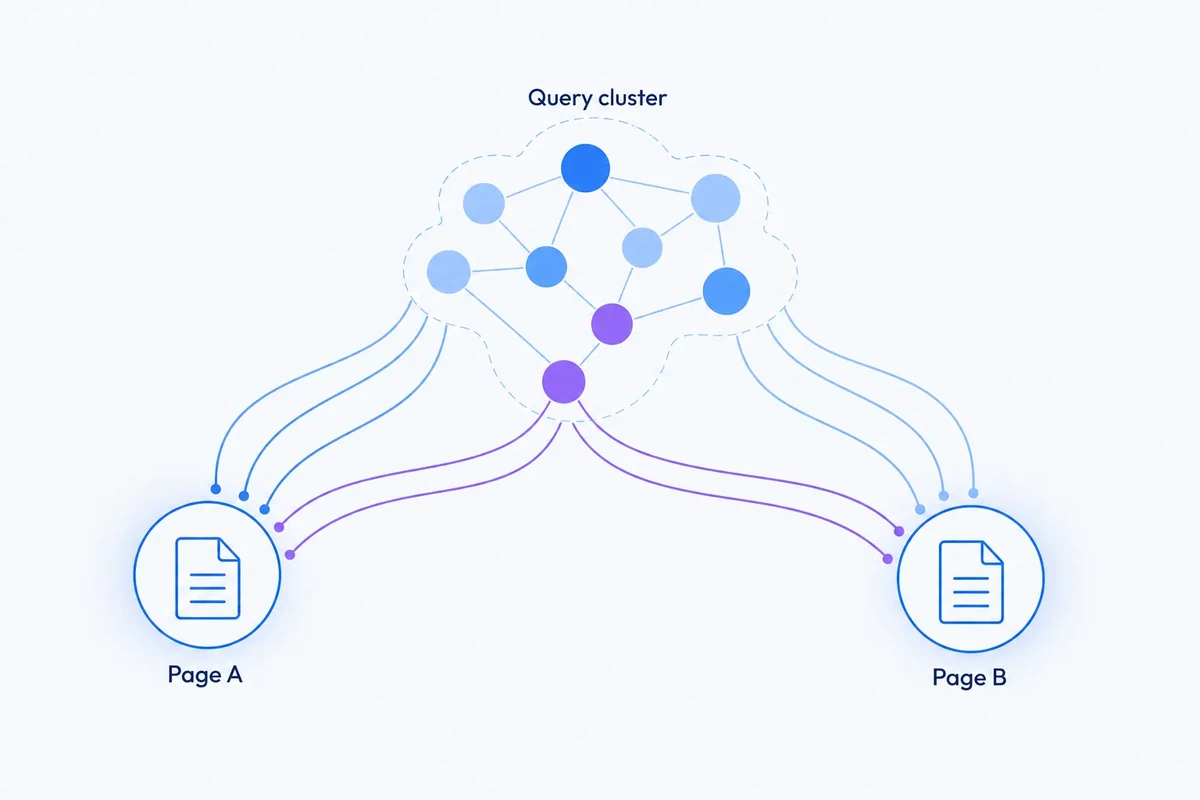
A subtopic is sufficiently covered when your pages genuinely serve the reader's needs, not when you reach a word count target. Publishing more of the same beyond that point adds pages for search engines to crawl and risks keyword cannibalisation, where your own pages compete for the same searches. It does not add credibility.
Farky Rafiq
Founder of ClusterIQ
I've worked in digital marketing since 2005 and founded Liquid Silver in 2011. These articles are where I share the methods, experiments and practical SEO thinking behind ClusterIQ.
Put the idea into practice with your own keyword data
ClusterIQ helps turn raw SEO exports into clean, structured working datasets you can inspect, refine, report on and take into the next stage of your workflow.
Keep reading
Forecasting SEO growth you can defend in a board meeting
Measuring topical coverage with clusters without inventing a fake authority score