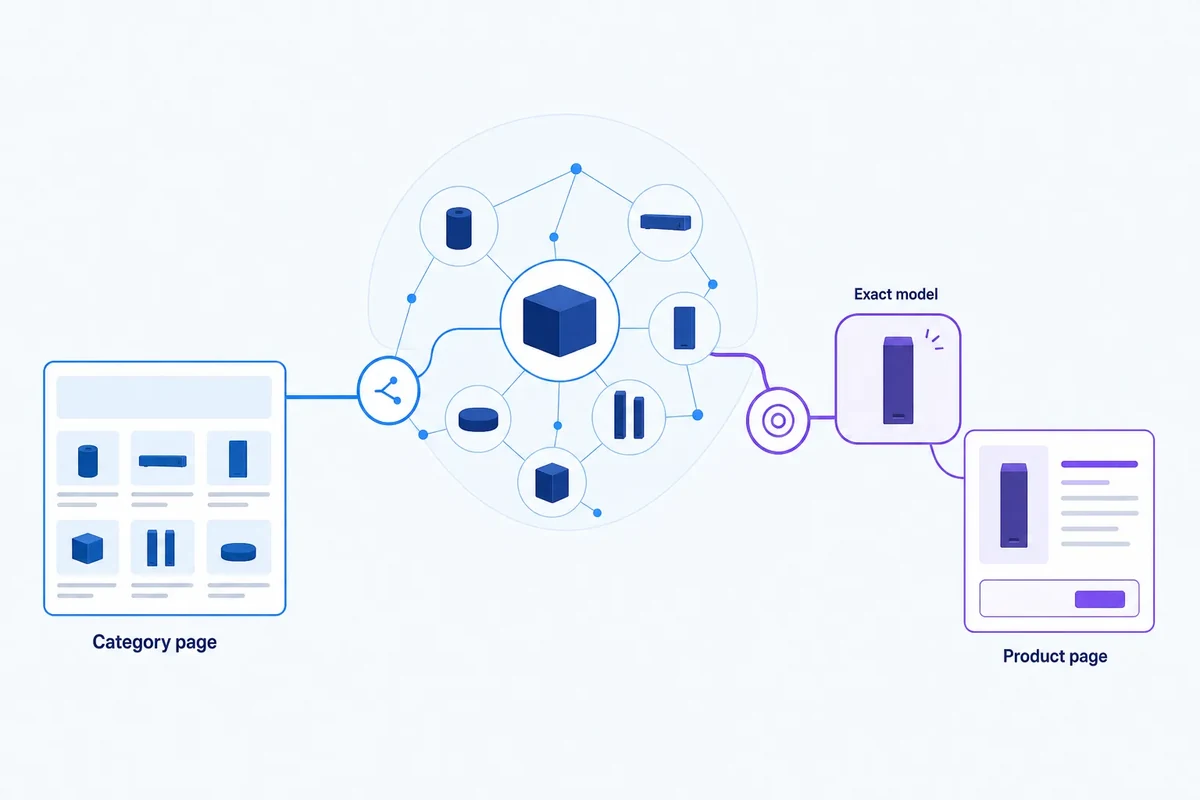
International ecommerce keyword clustering: shared products, different markets and different pages
The same product can generate different search language, demand and page structures across countries. Learn how ClusterIQ can connect shared concepts without flattening local market differences.

Farky Rafiq
Founder of ClusterIQ
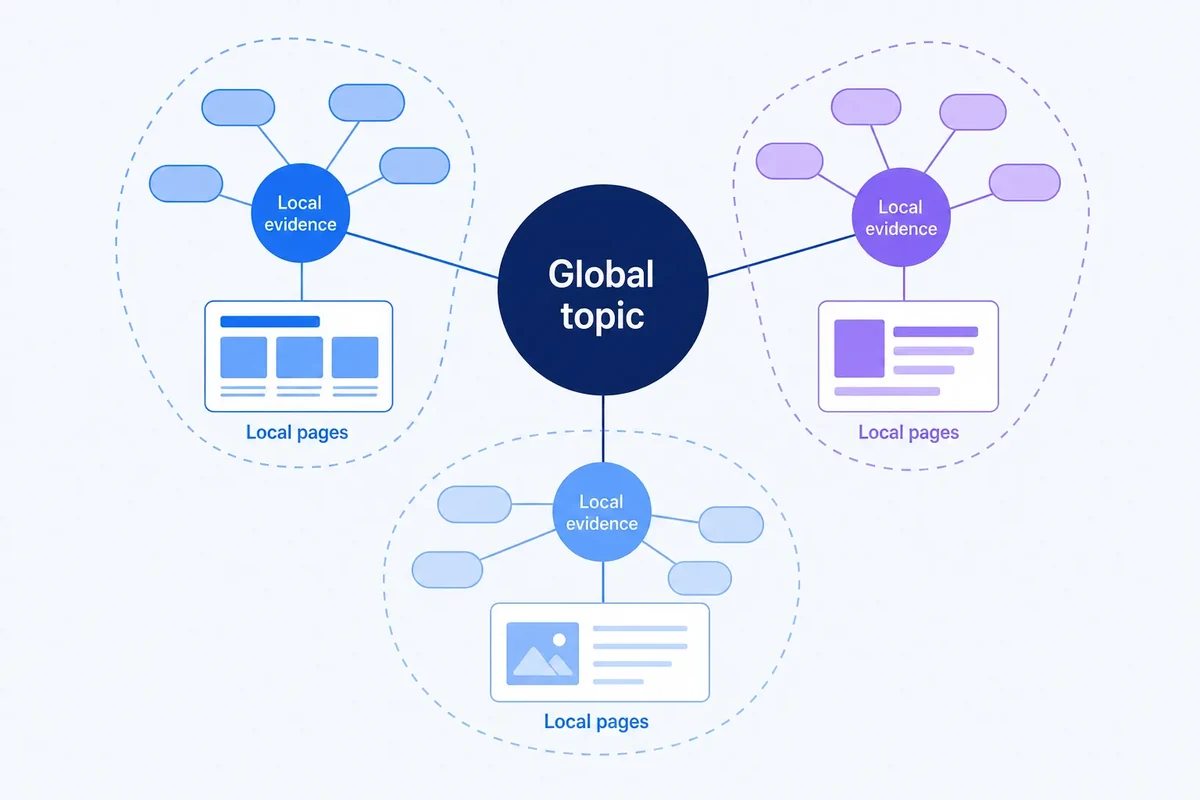
International ecommerce presents a unique challenge that simple translation cannot fix. You might be selling the exact same product range across several countries, but the way people search, the brands they recognise, and the local regulations they follow vary wildly. While a multilingual embedding can link these concepts together, it cannot tell you whether those markets actually deserve the same landing page.
ClusterIQ allows you to separate a global topic identity from its local execution. This means your international teams can maintain consistency across the brand without losing the nuances that make a local market tick.
Start with a global concept and local market
When you are managing thousands of keywords from Ahrefs or Search Console across different regions, your data needs to be organised. A practical record for international SEO should include:
- The search query;
- The specific language;
- The target country or market;
- The canonical product or category entity;
- Local search volume and metrics;
- The local ranking URL;
- A global topic ID.
By structuring data this way, you can compare how a single product performs globally while letting local teams make their own decisions about page structure.
Shared language does not mean shared market
It is a common mistake to treat all English speakers the same. Queries from the UK, US, and Australia might look identical on paper, but the context is often different. You will frequently find that:
- Product ranges and availability differ;
- Currencies and pricing psychology vary;
- Delivery expectations and logistics are unique;
- Legal terminology and compliance requirements change;
- Search engine results pages (SERPs) show different competitor types;
- Preferred page formats, such as long-form guides versus quick shop grids, differ.
For these reasons, you should always store the market as a separate data point from the language.
Multilingual embeddings help connect equivalent concepts
Sentence Transformer models are excellent at placing related phrases from different languages into a shared mathematical space. This is incredibly useful for spotting that a cluster of German keywords and a cluster of Spanish keywords are actually talking about the same global product family.
ClusterIQ's multilingual clustering guide goes into more detail on why similarity across languages does not always mean the markets are equivalent in a commercial sense.
Product IDs are powerful cross-market anchors
When you have a specific SKU or model number sold in multiple countries, that ID is a much more reliable anchor than a translated word. ClusterIQ can use these identifiers to bridge the gap between how people search and how your catalogue is structured. We can look at:
- SKUs;
- Brand IDs;
- Product family or parent IDs;
- Category IDs;
- Market-specific availability.
This ensures that your keyword research is always grounded in what you actually have in stock.
Worked example: one product family, three markets
Consider a manufacturer selling showers in the UK, France, and Germany. The product is the same, but the search intent shifts by border. In the UK, users might focus heavily on electric shower compatibility. In France, the queries might lean towards specific dimensions and installation styles. In Germany, the search terms often involve highly technical specifications and comparison language.
ClusterIQ can group all these under one international "Product Topic" while still recommending different subclusters or page types for each country based on those local priorities.
Inventory availability is a hard local constraint
There is no point in ranking for a term if you cannot sell the product. If a cluster of keywords in France maps perfectly to a product that is only sold in the UK, that data is interesting but not actionable. Your inventory levels and market eligibility must act as a filter for your page recommendations.
Local SERPs should be collected locally
Search results are not universal. You should never use a UK SERP to decide how to map a page for the German market. When ClusterIQ uses SERP overlap to determine if keywords belong together, the data must come from the specific market you are targeting to be accurate.
Local page ownership can differ
A single global topic does not always require the same type of URL. Depending on the market, that topic might be best served by:
- A specific category page;
- A dedicated brand landing page;
- An educational guide if the product range is small;
- No page at all if the items are unavailable.
This is why we suggest that global clusters should inform your strategy, not strictly dictate your URL structure.
Hreflang follows page equivalence, not cluster equivalence
Google is very specific about hreflang. It is used to point to alternate versions of the same content. Just because two keyword clusters are related does not mean the pages they point to should be linked via hreflang. Those pages must serve the same purpose and offer equivalent content. ClusterIQ helps you review these relationships by comparing entities, but the final decision should be based on the page content itself.
Use market-specific thresholds cautiously
The way keywords group together can change based on the language. A clustering threshold that works perfectly for English might be too loose or too tight for Japanese or Finnish. It is worth testing your settings in each major market rather than assuming a "one size fits all" approach will work.
Global reporting can use common topic IDs
By using stable topic IDs, you can give stakeholders a high-level view of international performance. You can compare:
- Market demand;
- Content coverage;
- Keyword ownership;
- Content gaps;
- Stock availability.
This allows for centralised reporting without stripping away the local team's ability to execute their own strategy.
Local teams should retain override authority
No model is perfect. A local SEO will always have a better grasp of regional slang, local competitors, and cultural buying habits than a global algorithm. Treat local overrides as valuable data points rather than errors to be corrected.
Shared research can reduce duplicated work
If you are doing deep technical research for a product in one market, much of that work can be reused elsewhere. The entity definitions and core research stay the same, even if the final content briefs and page layouts are tailored to the local audience. This makes your international content operations much more efficient.
Practitioner principle: use global clustering to discover shared concepts. Use local evidence to decide the local page.
ClusterIQ Conclusion
Successful international ecommerce clustering relies on separating the global "what" from the local "how". By using multilingual embeddings and product IDs, you can connect your global strategy while respecting the local SERPs and inventory levels that actually drive conversions. This approach ensures your SEO remains relevant to the user, no matter where they are searching from.
Compare global consistency with local usefulness
A smart international model makes it easy to see the big picture without forcing every market into the same box. ClusterIQ displays a global topic ID alongside local labels and URLs. This transparency allows central teams to spot missing opportunities across the globe, while local experts keep control over their specific terminology. If a certain market requires a different page type for a standard product, that becomes a clear strategic choice rather than a data error.
Revalidate after catalogue or market changes
Markets are not static. When you launch new ranges or retire old products, you must re-run your entity checks. Keeping your data fresh ensures that old global relationships do not lead to irrelevant local recommendations, keeping your content plan aligned with your current inventory.
Sources and further reading
Farky Rafiq
Founder of ClusterIQ
I've worked in digital marketing since 2005 and founded Liquid Silver in 2011. These articles are where I share the methods, experiments and practical SEO thinking behind ClusterIQ.
Put the idea into practice with your own keyword data
ClusterIQ helps turn raw SEO exports into clean, structured working datasets you can inspect, refine, report on and take into the next stage of your workflow.
Keep reading
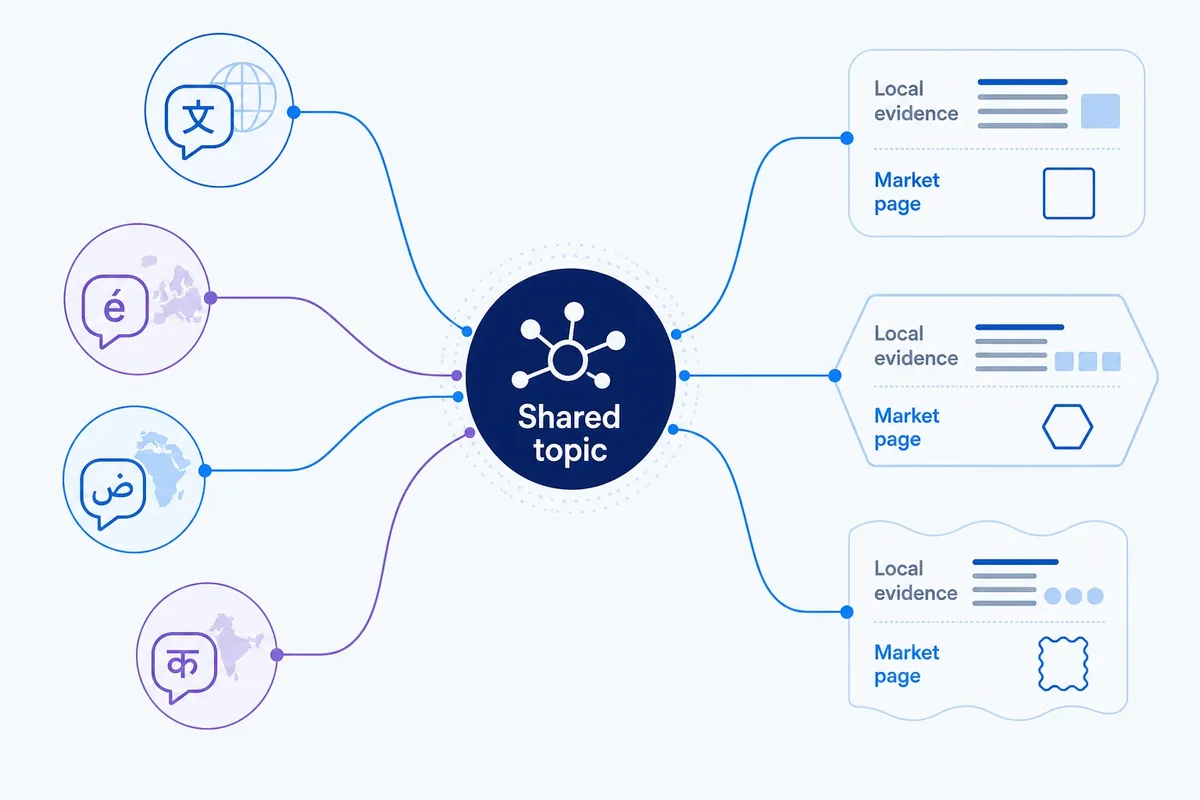
Multilingual keyword clustering: finding shared topics without erasing local intent
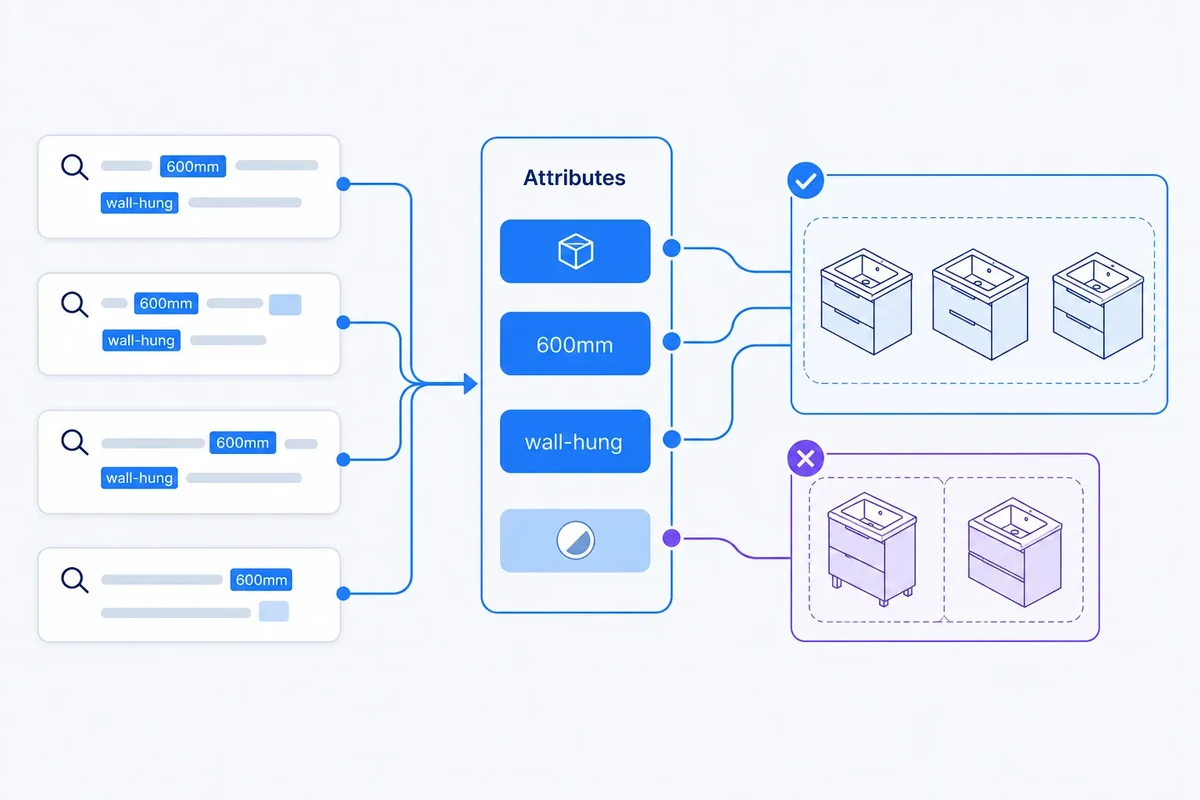
Product attribute extraction for SEO: turning keyword modifiers into structured ecommerce evidence