The practical guide to keyword clustering
Why one keyword per page wastes your best opportunities, and how semantic clustering builds pages that rank for hundreds of terms at once.

Farky Rafiq
Founder of ClusterIQ

You have a spreadsheet of 800 keywords and need to decide what to write next. Sorting by search volume and planning a page for every term feels like a sensible starting point, but it builds your content plan the wrong way round. Search engines moved beyond that approach years ago.
Search engines rank pages, not keywords
One strong page can routinely rank for hundreds of related searches. Spread those searches across five thin pages instead, and your pages compete with each other, weakening the signals that help them rank.
What clustering actually does
Keyword clustering helps you work out which searches one page should answer. Semantic clustering groups keywords by meaning and intent, rather than just matching words. For example, “best running shoes for flat feet” and “flat foot trainers recommendation” belong on the same page, despite using mostly different wording.
For each group, look at:
- Canonical keyword: the term that best represents the group and gives your page title its focus.
- Intent: what the searcher wants to do, whether that is learn something (informational), compare options (commercial), buy or take action (transactional), or find a particular site or page (navigational). Keep transactional and informational intent on separate pages.
- Opportunity score: a combination of search volume, ranking difficulty and your current position, helping you decide what to work on first.
A workflow that holds up
- Export your keywords with search volume, difficulty, current ranking position and the URL currently ranking.
- Group them by meaning and intent, then review the clusters. Automation gets you 90% of the way there; your judgement closes the gap.
- Assign each cluster to one URL, either an existing page to improve or a new page to create.
- Prioritise opportunity, not volume alone. A keyword at position 12 with decent search volume beats one at position 60 every time.
The mistakes worth avoiding
Make a cluster too broad and the page loses focus. Make it too narrow and you risk creating thin content. Aim for groups that one genuinely useful page can satisfy from start to finish. Before writing, check that every keyword in the group reflects the same intent.
Farky Rafiq
Founder of ClusterIQ
I've worked in digital marketing since 2005 and founded Liquid Silver in 2011. These articles are where I share the methods, experiments and practical SEO thinking behind ClusterIQ.
Put the idea into practice with your own keyword data
ClusterIQ helps turn raw SEO exports into clean, structured working datasets you can inspect, refine, report on and take into the next stage of your workflow.
Keep reading
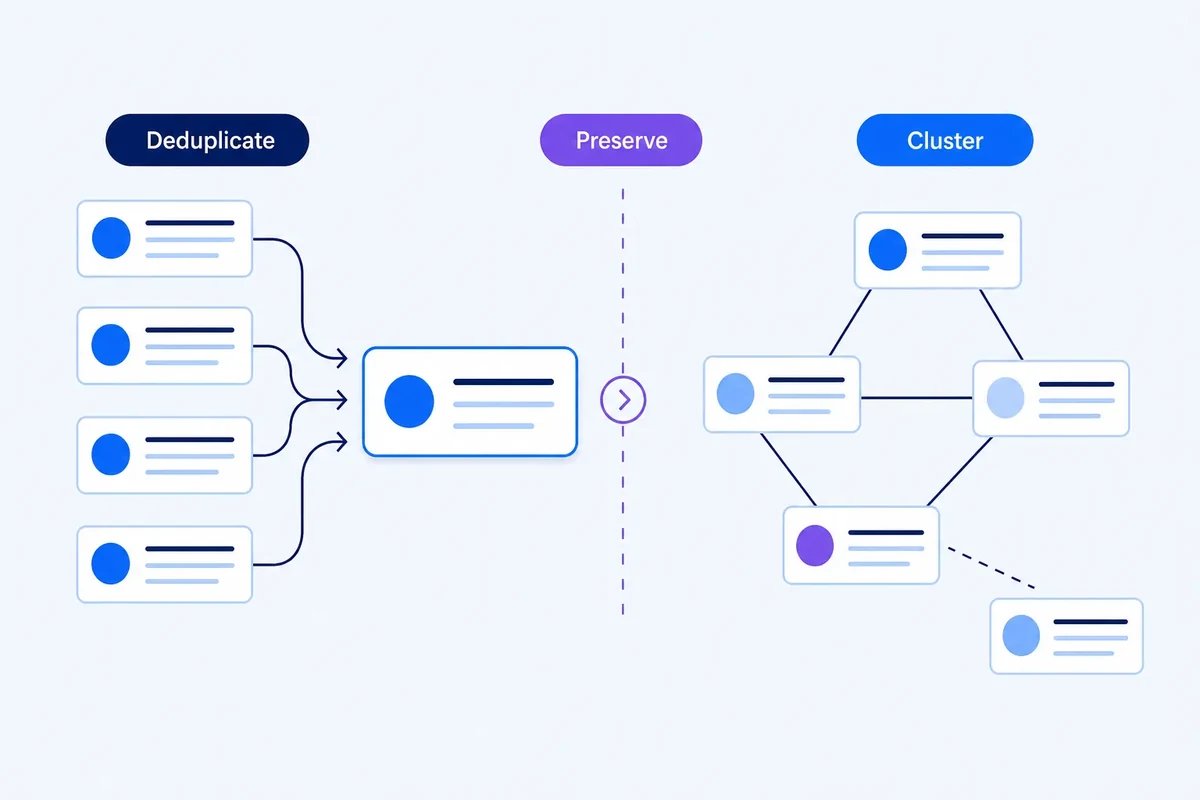
Keyword deduplication vs clustering: why they should stay separate
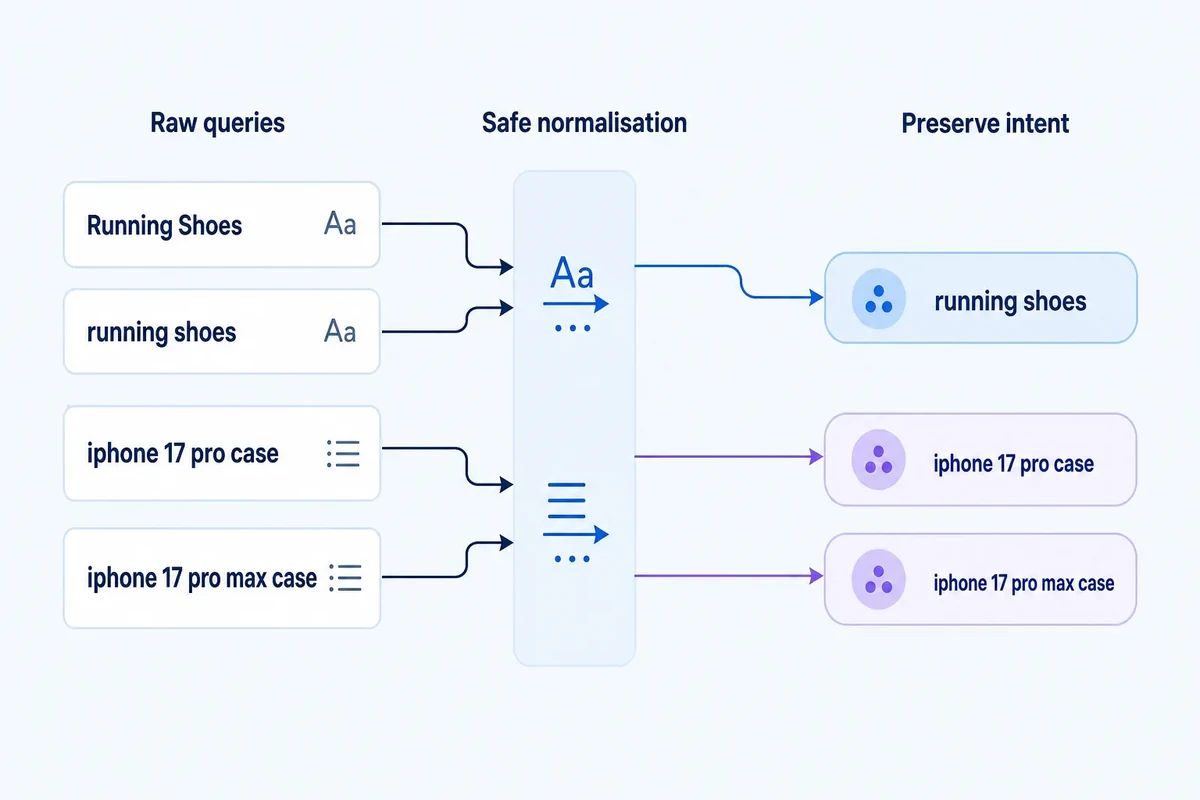
Keyword preprocessing before clustering: clean the data without erasing intent