Using keyword clusters in an SEO migration: protecting topic ownership before URLs move
A migration changes URLs, templates and internal links at once. Learn how keyword clusters can map topic ownership before launch and detect gaps, duplication and lost demand afterwards.

Farky Rafiq
Founder of ClusterIQ
Your redirect spreadsheet is ready: every important old URL has a new destination. But will customers still find the right page for their searches?
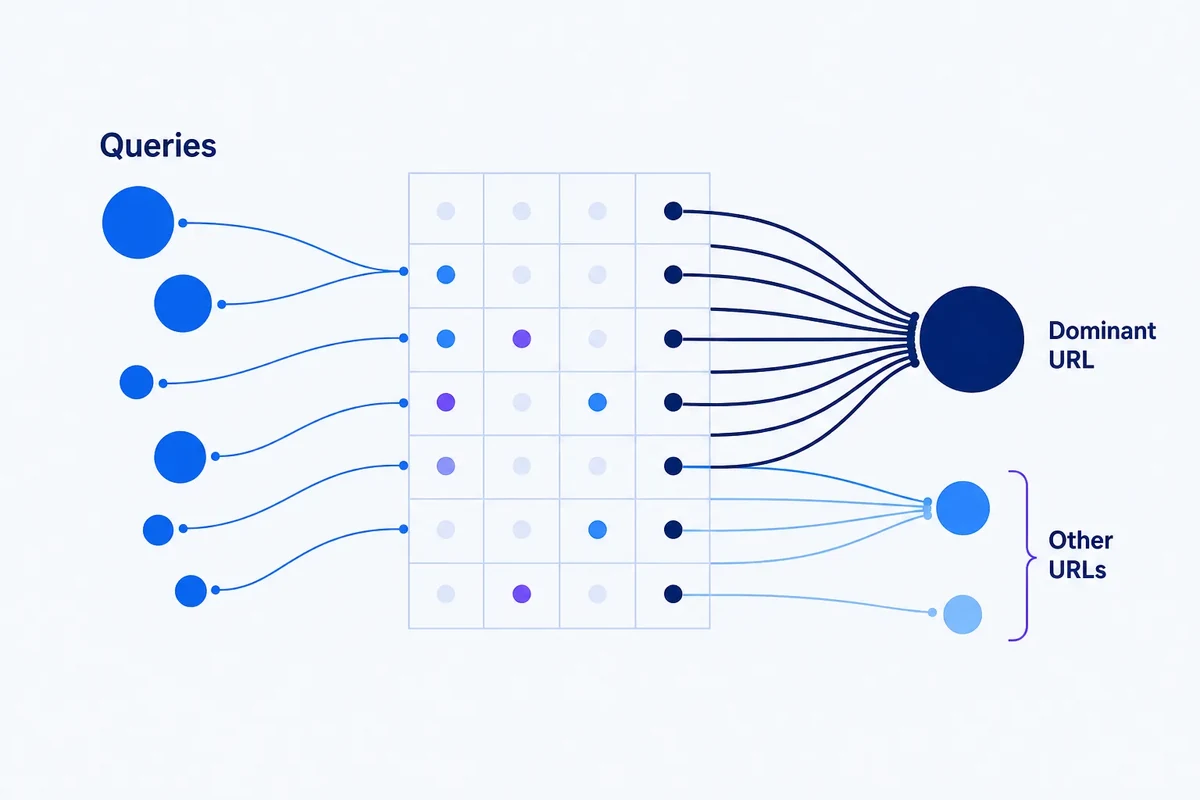
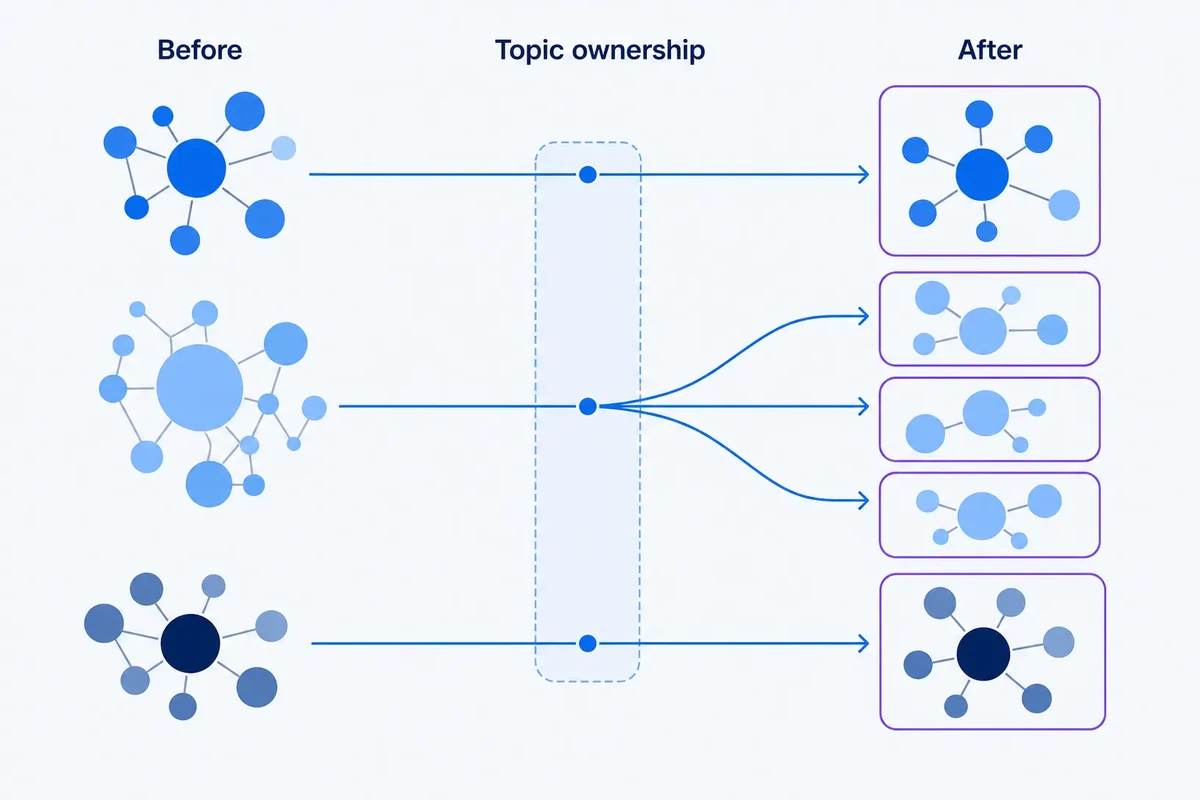
A redirect can work while a topic becomes fragmented, harder to find or assigned to the wrong page type. Keyword clusters, groups of related search queries, help you protect the search needs each page serves.
Map topics before the migration
For each important cluster, record:
- the current primary URL and secondary URLs appearing for those searches;
- query and click evidence;
- page type, such as category, product page or guide;
- internal links connecting the page to the site;
- the planned destination URL.
For 800 keywords, this lets you review related searches together rather than making 800 separate decisions. Give each cluster a consistent identifier and keep query groups stable while URLs change, so comparisons measure the same topic.
Check relevance before redirecting or combining pages
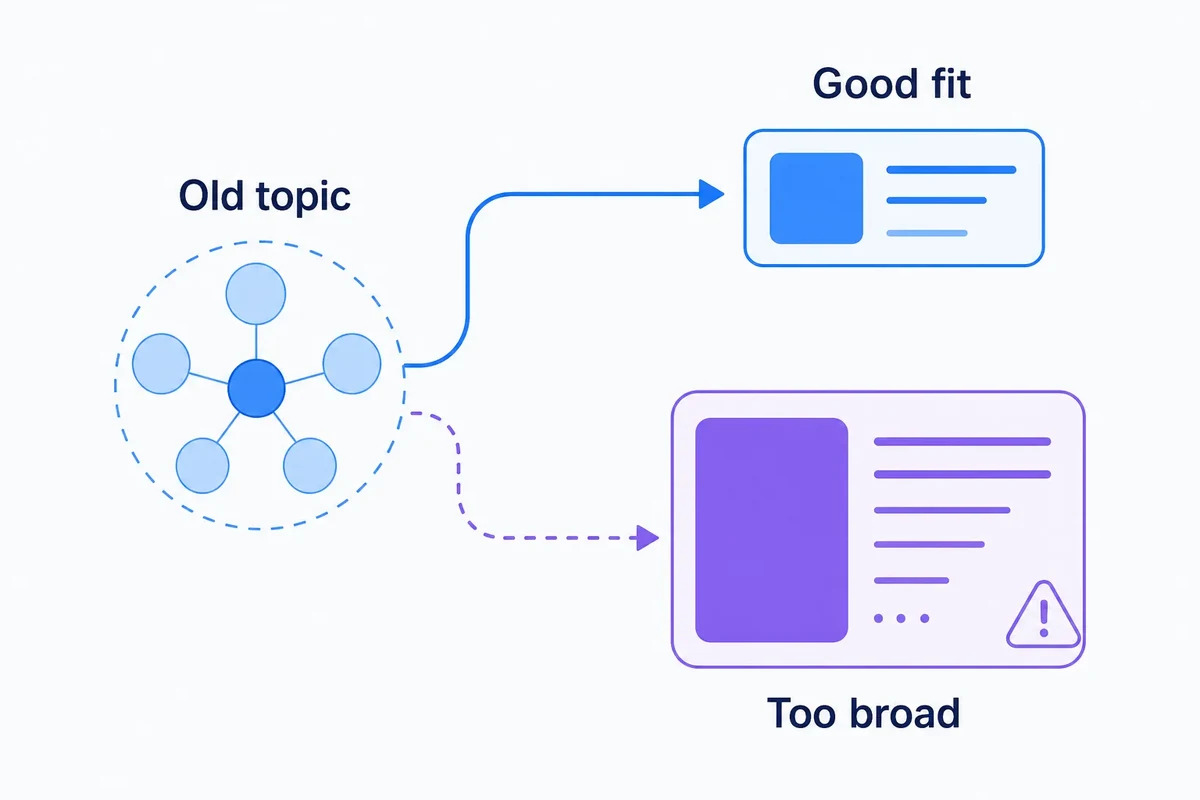
Similar URL slugs are a starting point, not proof of a suitable destination. Check whether the proposed page meaningfully covers the old page's query cluster.
Before merging pages, check whether their clusters overlap strongly, serve the same user task, refer to the same entities, such as products, brands or concepts, and suit the destination page type. This distinguishes useful consolidation from losing content that serves a distinct search need.
Worked example: one category becomes three
Suppose an old “garden furniture” category ranks for hundreds of queries covering garden dining sets, outdoor sofas and sun loungers. The redesign creates a focused category for each.
A one-to-one redirect cannot represent that whole change. Cluster evidence shows which queries and internal links belong to each subtopic, helping you decide whether supporting old URLs, hub pages or content need different destinations instead of sending everything to one page.
Make high-value clusters launch acceptance tests
Build migration quality assurance, or QA, around top commercial clusters, informational clusters bringing substantial clicks, brand-critical topics and groups vulnerable in previous migrations.
Require an explicit pre-launch pass for each:
- the destination is valid, live and indexable;
- relevant redirects are covered and requests follow the intended path;
- internal links provide a route to the destination;
- the canonical setup is correct;
- the destination uses the expected page type.
Navigation and template changes can make important pages less prominent even when redirects work. Compare their internal-link networks before and after launch, including how relevant pages connect to them.
Keep the technical foundations and a benchmark
Google's site-move guidance recommends mapping old URLs to new locations and using permanent server-side redirects when pages move. Clusters add relevance checks; they do not replace this work.
Before launch, save a fixed keyword and page dataset, representative queries, cluster-to-URL mappings and internal-link metrics. This benchmark helps assess whether declines reflect temporary search-engine reprocessing or a genuine loss of a clear page for a topic.
Monitor Search Console by cluster
After launch, check whether representative queries appear against the intended new URLs. Investigate:
- old URLs continuing to appear unexpectedly;
- clusters without a clear primary page;
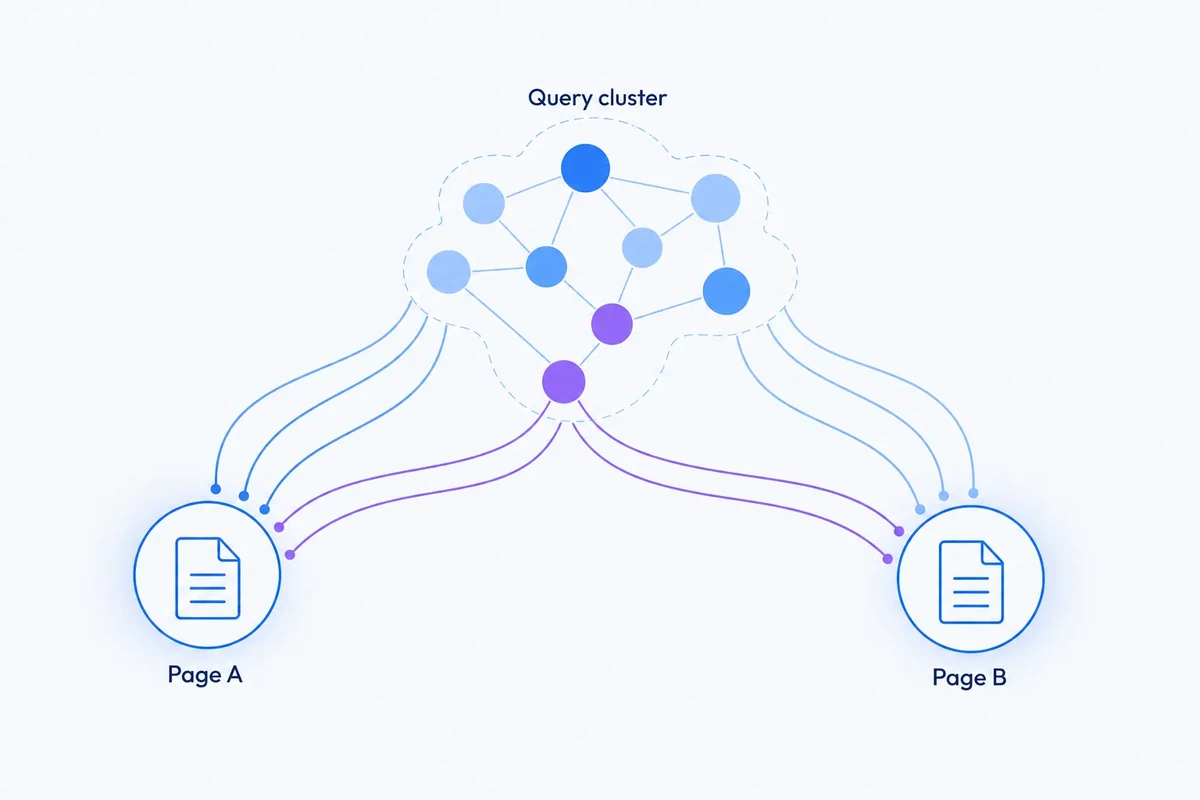
- several new URLs competing for one cluster;
- strong queries shifting to less relevant pages.
Steady overall traffic can hide losses in commercially important topics. Track clusters and topic families, broader groups of related clusters, to see where search demand and performance have changed.
Report clearly and investigate focused losses
Summarise each topic as retained, improved, declined or lost, and flag primary-page changes. Keep representative queries and URLs beneath each summary so colleagues can investigate without interpreting hundreds of keyword movements.
When considering a rollback, cluster reporting can show whether problems concentrate in a topic family, template or site section. That narrows technical and editorial investigation more effectively than total traffic alone. Retain the old cluster-to-URL map until performance stabilises.
A practical migration workflow
- Save the pre-migration benchmark.
- Cluster queries and map current and planned URLs.
- Review topic coverage, mergers and redirect suitability.
- Test internal links, canonicals and indexability.
- Require acceptance-test passes for priority clusters.
- Launch and monitor query-to-page associations.
- Compare cluster performance using stable identifiers.
Practitioner principle: redirects move URLs. Migration QA should also prove that important topics retain a clear, useful home.
ClusterIQ Conclusion
Keyword clusters help preserve what pages are useful for, not just where they live. Combined with redirects, crawl checks and Search Console monitoring, they support better merger decisions and reveal changes in topic ownership after launch, keeping migration QA closer to how people search.
Related ClusterIQ analysis
For release-readiness checks, see SEO migration acceptance criteria by keyword cluster.
Sources and further reading
Farky Rafiq
Founder of ClusterIQ
I've worked in digital marketing since 2005 and founded Liquid Silver in 2011. These articles are where I share the methods, experiments and practical SEO thinking behind ClusterIQ.
Put the idea into practice with your own keyword data
ClusterIQ helps turn raw SEO exports into clean, structured working datasets you can inspect, refine, report on and take into the next stage of your workflow.
Keep reading
Redirect validation with keyword clusters: checking whether old topics still have the right destination
Keyword cannibalisation: how clustering helps find overlap without inventing a problem