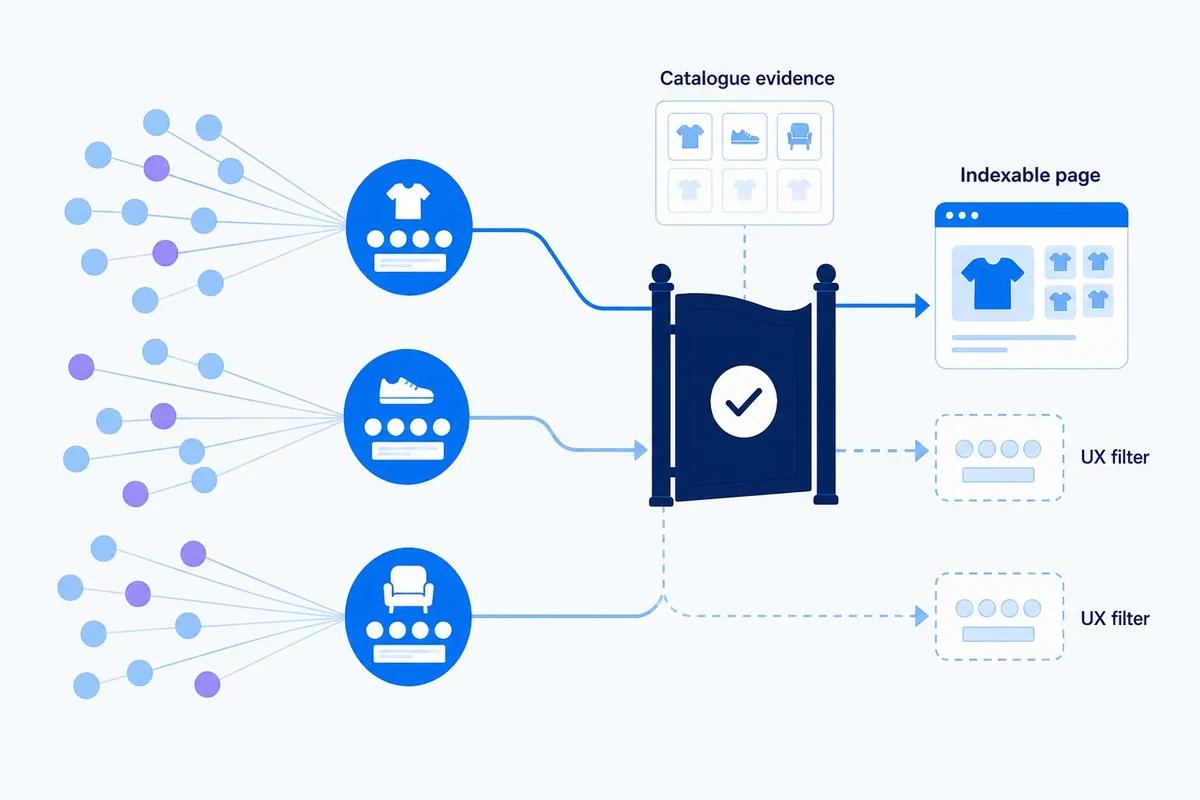
SEO migration acceptance criteria by keyword cluster: proving that topic ownership survived the move
A migration can pass technical checks and still lose important topic ownership. Learn how ClusterIQ can turn priority clusters into acceptance criteria before and after launch.

Farky Rafiq
Founder of ClusterIQ
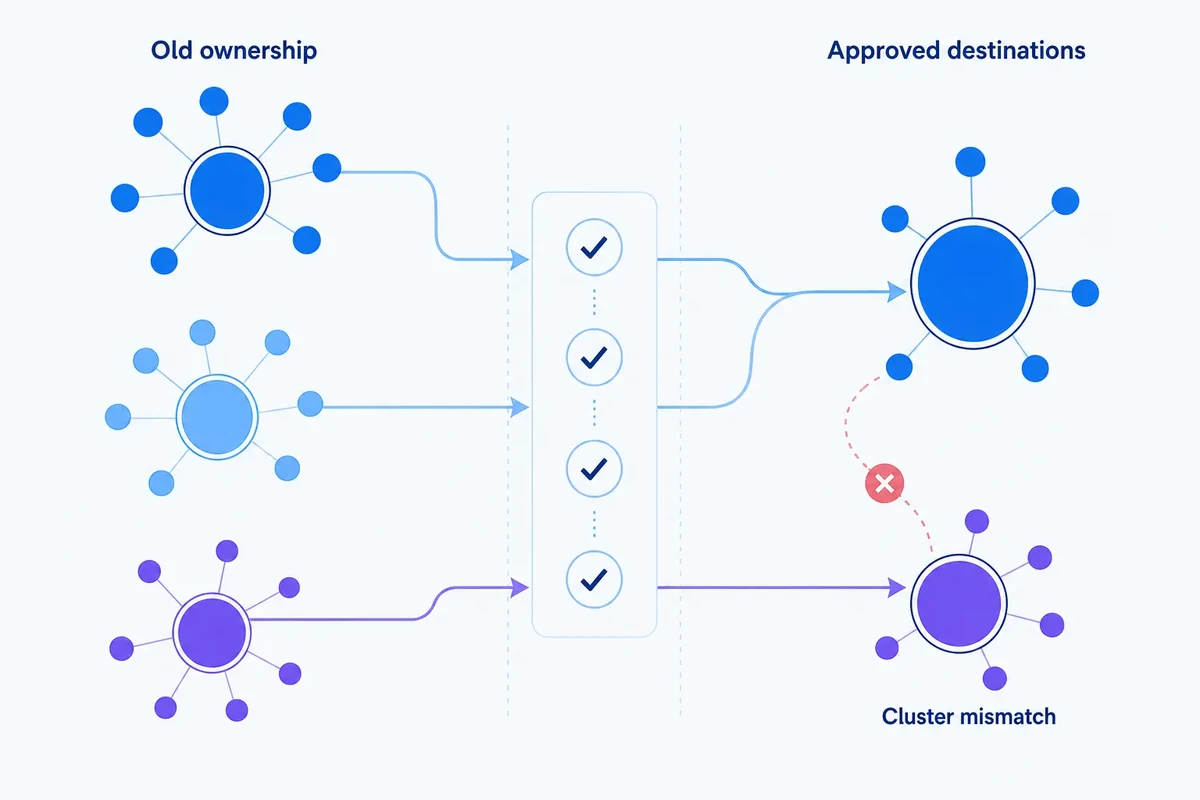
A migration is not finished just because every planned redirect returns a 301 status and the new sitemap validates without errors. While those technical checks are essential, they do not actually prove that the site has successfully preserved the specific pages and relationships that drive your search demand. You can have a technically perfect launch that still results in a devastating loss of topical authority.
ClusterIQ allows you to turn high-value topic clusters into formal migration acceptance criteria. This ensures that technical completion and the preservation of search purpose are tested as one unified requirement, rather than as separate, disconnected tasks.
Start before the migration
To protect what you have, you need a clear record of the status quo. For every priority cluster, you should document the pre-launch evidence set, including the current dominant URL, any secondary ranking URLs, the specific page type, and the most important queries within that group. You also need to note the Search Console performance baseline, the internal-link parents, and the planned destination for the move.
Having this data mapped out before you touch a single redirect file gives you a benchmark that goes beyond simple URL strings. It captures the intent and the value you are trying to move.
Define the intended post-migration state
Instead of just checking if a page exists, a cluster-based approach sets specific criteria for success. For a cluster to pass, you might require that the old URL redirects directly to the approved destination without chains, that the destination returns a 200 status, and that it is fully indexable and self-canonical. You should also verify that the correct template is present, that parent and sibling links have been updated, and that the destination appears in the appropriate sitemap. Each of these is a testable, binary requirement.
Worked example: category consolidation
Imagine a scenario where three old categories are being consolidated into one new category. On paper, this looks like a simple three-to-one mapping. However, ClusterIQ might show that while two of those old URLs genuinely share a single query cluster, the third actually owns a distinct, high-value subgroup of keywords. If you proceed with the consolidation, you risk losing the specific relevance required to rank for that third group. An acceptance review can catch this over-broad consolidation before launch, allowing you to either preserve the third page or create a more appropriate, targeted destination.
Redirect validation needs semantic fit
It is entirely possible for a redirect to be technically perfect but semantically poor. If you point a specific product cluster at a generic category page, you might satisfy the server, but you will likely lose your rankings. ClusterIQ's redirect validation compares the topic ownership of the old URL with the content of the destination page to ensure the search intent remains aligned.
Canonical state needs its own check
A common migration pitfall occurs when a new URL returns a 200 status but declares a canonical tag pointing to a completely different page. This effectively tells search engines to ignore your new destination. This should trigger a failure in your cluster acceptance test until the intended ownership is clarified and the tags are corrected.
Internal links must move too
Redirects are a safety net for users and bots following old paths, but they do not fix your site's navigation. To maintain topical authority, you must update internal links so that parent categories, guides, and key contextual sources point directly to the new destination. Relying on redirects for internal navigation dilutes link equity and slows down the crawling of your new structure.
Use the cluster as the monitoring unit after launch
Once the site is live, shift your focus from individual keywords to the cluster as a whole. Compare impressions, clicks, the dominant URL, and the ranking distribution. By monitoring at the cluster level, you avoid overreacting to volatility in a single keyword while the broader topic is transferring normally. It provides a much clearer picture of whether the migration is actually working.
Define observation windows before launch
Search engines need time to process changes. Rather than panicking on day two, set expected checkpoints. A typical cadence might include a technical QA on day 1, an ownership and crawl review in week 1, and a performance transfer analysis between weeks 2 and 4. Larger sites or slow-moving sections may require a longer window before you can declare the move a success.
Use severity based on business value
Not all clusters are equal. A high-value cluster losing its only indexable destination is a critical incident that requires immediate intervention. Conversely, a low-value long-tail group showing temporary volatility is expected. Using business value to categorise these issues allows you to prioritise your response without losing sight of the technical diagnosis.
Migration acceptance should include page type
If a commercial category page is replaced by an informational article, the intended architecture has changed. Even if your visibility remains stable in the short term, you may find that conversion rates drop because the page no longer satisfies the user's transactional intent. ClusterIQ can flag these template mismatches as migration defects.
Track many-to-one redirects as groups
When dozens of URLs are being collapsed into one, it is easy to miss the fact that you might be merging several distinct cluster families. Group-level QA is significantly faster and safer than reviewing hundreds of individual redirect rows in a spreadsheet, as it highlights when unrelated topics are being forced together.
Use log data for important destinations
Server logs provide the ground truth of bot behaviour. They can confirm whether crawlers are actually reaching your new pages or if they are getting stuck in redirect chains or hitting old URLs that should have been retired. This is a vital supplement to Search Console, which often lags behind real-time crawl activity.
Keep a rollback or remediation plan
For your most critical clusters, you need a plan for when things go wrong. Define exactly what happens if a destination is unavailable, if ownership moves to the wrong page, or if a template error blocks indexing. Acceptance criteria are only truly effective when the actions for failure are decided in advance.
Do not declare success from site-wide traffic alone
It is a mistake to assume a migration went well just because total traffic is stable. You could be losing your most profitable categories while gaining unrelated, low-value traffic elsewhere. Cluster-level reporting exposes these local failures that site-wide metrics often hide.
Preserve the migration evidence
Once the dust settles, store your mappings, approved destinations, and acceptance results. This documentation is invaluable for the next migration, ensuring that future teams inherit this knowledge rather than having to reconstruct it from scratch.
Practitioner principle: a migration is successful when the new site preserves the intended user and search destinations, not merely when the redirects execute.
ClusterIQ Conclusion
Keyword clusters provide a much more robust framework for SEO migrations. By using ClusterIQ to connect redirects, canonicals, and internal links to the actual topic ownership each page is meant to preserve, you can move from "hoping it works" to "knowing it passed."
Protect a small set of critical clusters with stricter gates
Not every part of a site requires the same level of scrutiny. You can identify a protected set of clusters based on revenue, strategic importance, or current visibility. These high-priority groups should require manual sign-off on destination mapping and indexation state before the migration is considered complete. This tiered approach keeps your QA process practical, allowing automated checks for the long-tail while focusing human expertise on the pages that drive the business.
Build a pre-launch and post-launch acceptance matrix
For these protected clusters, you can create a matrix that tracks the expected state on both sides of the launch. This includes everything from the old canonical and internal-link parents to the post-launch crawl observations and emerging Search Console owners. This matrix makes omissions visible before they become traffic incidents, providing a clear, evidence-backed handover between SEO and engineering teams.
Use cluster transfer curves after launch
For your most important topics, track how visibility moves from the old URLs to the new ones over time. While the transfer isn't always instant, the trend should clearly move towards the approved target. If the transfer stalls, you can use the combined evidence of redirects and crawl data to diagnose the issue quickly, giving your team an actionable plan rather than just a list of ranking drops.
Sources and further reading
Farky Rafiq
Founder of ClusterIQ
I've worked in digital marketing since 2005 and founded Liquid Silver in 2011. These articles are where I share the methods, experiments and practical SEO thinking behind ClusterIQ.
Put the idea into practice with your own keyword data
ClusterIQ helps turn raw SEO exports into clean, structured working datasets you can inspect, refine, report on and take into the next stage of your workflow.
Keep reading
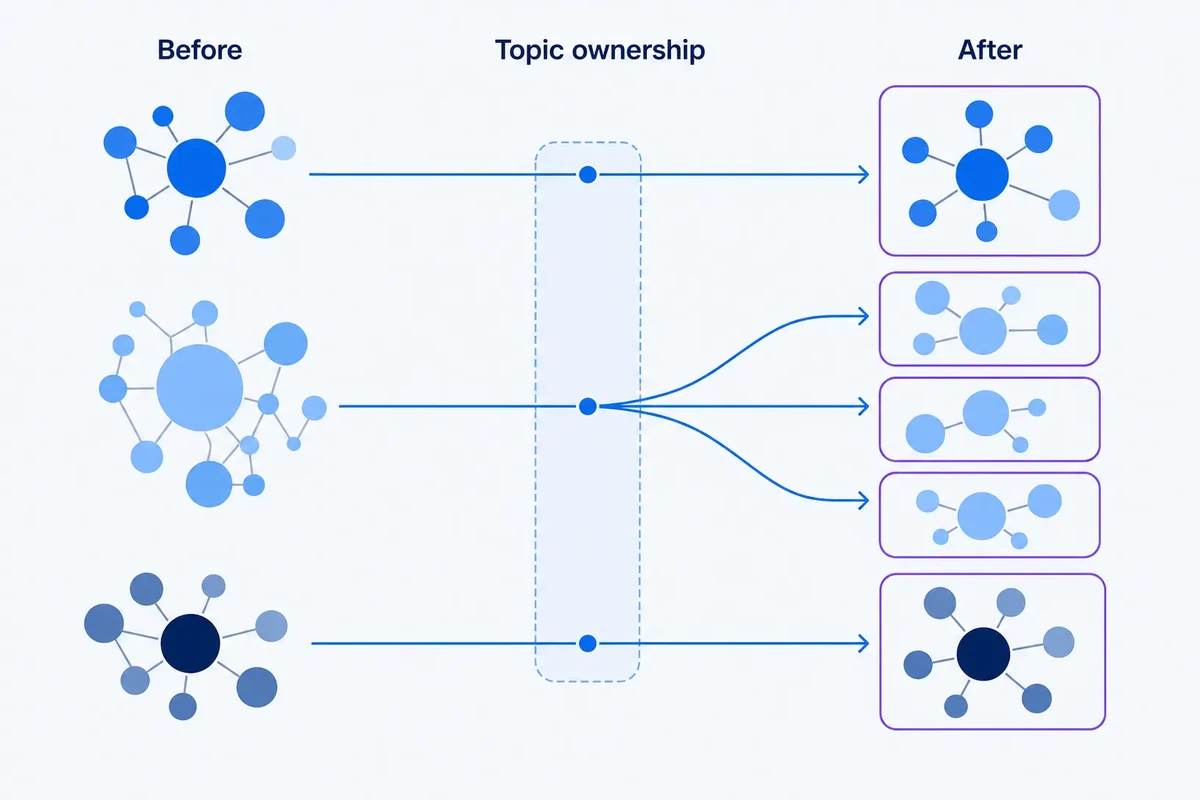
Using keyword clusters in an SEO migration: protecting topic ownership before URLs move
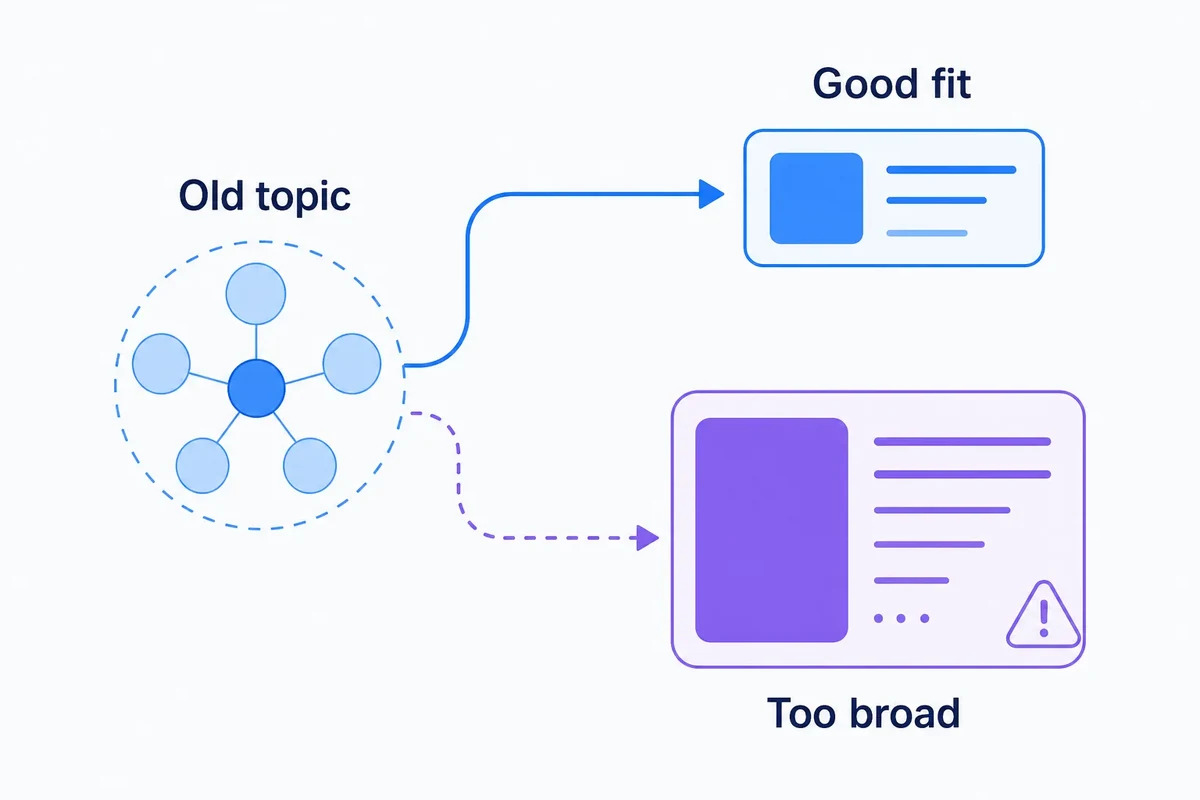
Redirect validation with keyword clusters: checking whether old topics still have the right destination