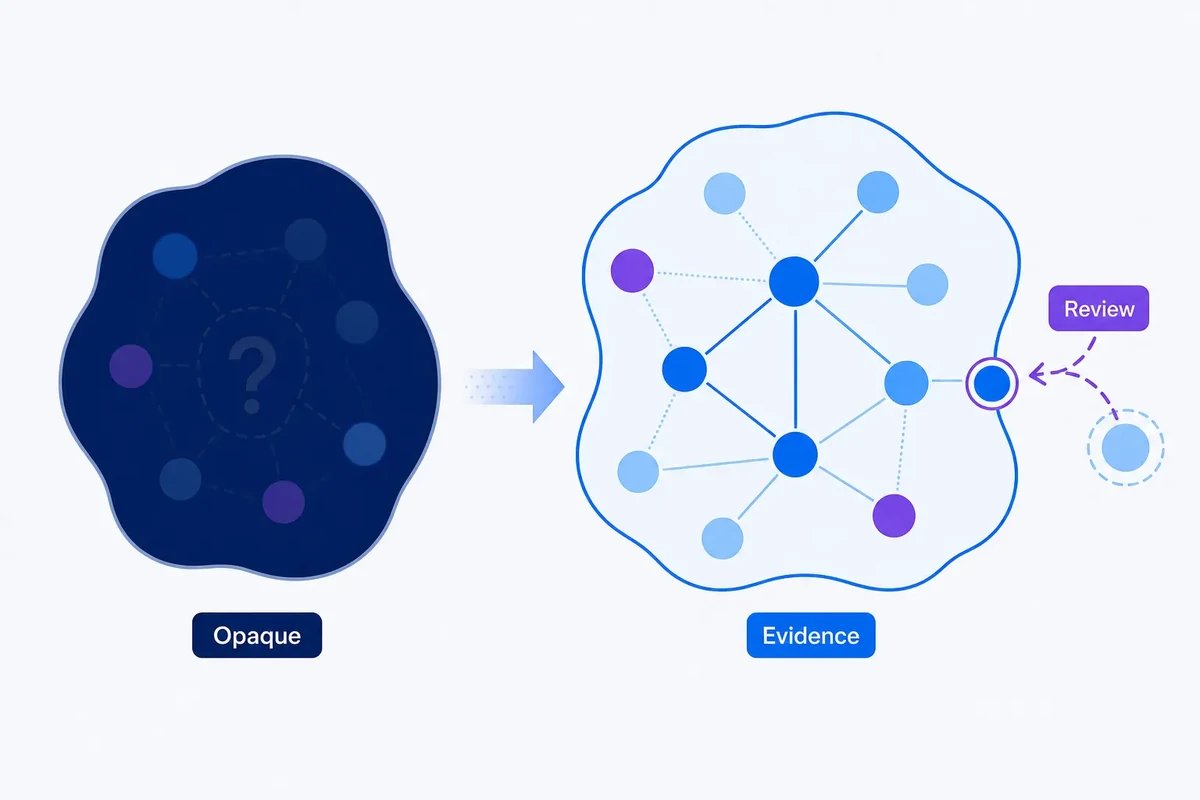
Acronyms in keyword clustering: when short forms hide several different topics
Acronyms can connect related language or create severe ambiguity. Learn how ClusterIQ can resolve abbreviations using context, entities and market evidence without expanding them blindly.

Farky Rafiq
Founder of ClusterIQ
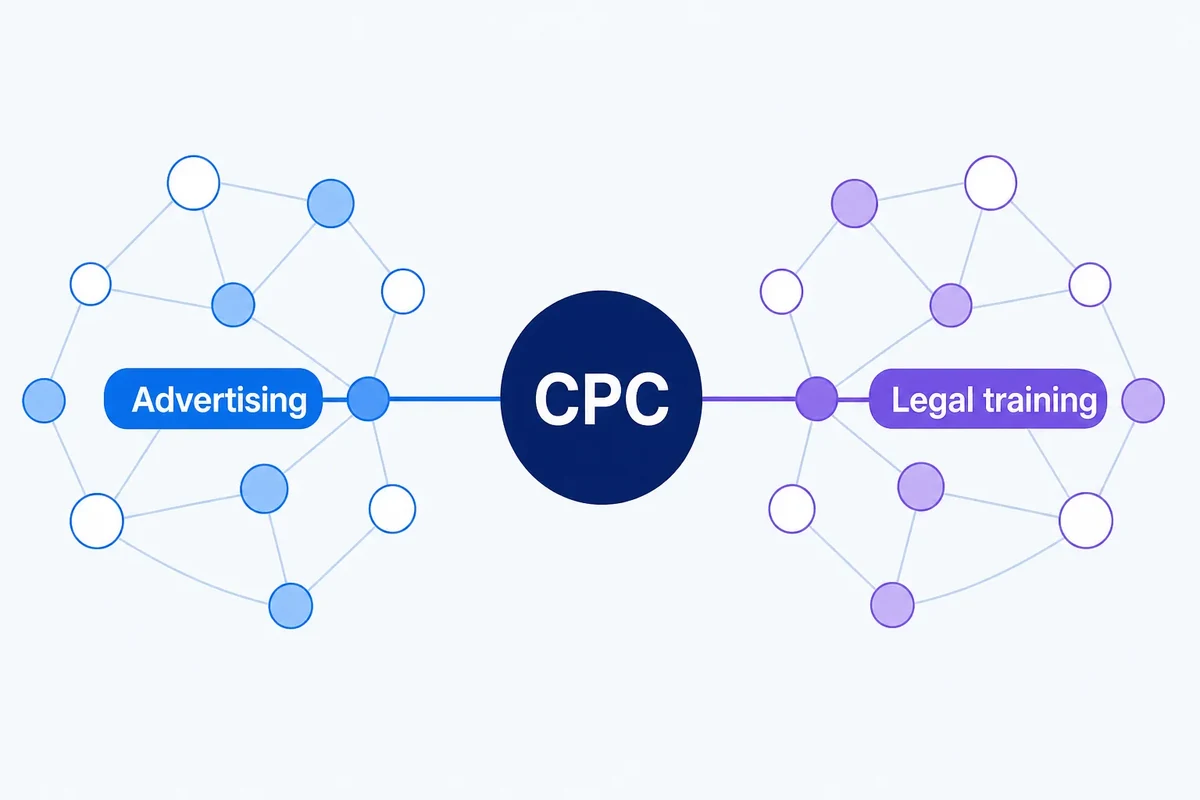
Acronyms are a double-edged sword in SEO. They compress complex ideas into a few letters, but they also introduce significant ambiguity. While "CRM" is usually safe within a B2B software context, "CPC" might mean cost per click to a performance marketer, but something entirely different to a legal professional or a logistics manager. When you are staring at a spreadsheet of three thousand keywords from Ahrefs or Search Console, these short strings can easily lead to messy, inaccurate clusters.
For a tool like ClusterIQ, the solution isn't as simple as plugging in a generic dictionary to expand every abbreviation. Without context, automated expansion often does more harm than good.
Why acronyms are difficult for embeddings
Modern SEO relies heavily on vector embeddings to understand meaning. However, very short strings provide very little signal. A general-purpose embedding model might associate an acronym with its most common global usage, ignoring the specific niche of your dataset. This is a major risk when you are working across different industries that share the same shorthand.
Keep the acronym and the resolved meaning separately
To maintain accuracy, we shouldn't just overwrite the original data. For every acronym identified, ClusterIQ can store the raw form alongside its potential expansions, the resolved meaning, and a confidence score based on the evidence found. By keeping the original query untouched, we ensure the tool respects how users actually search while still understanding the intent behind the letters.
Context from neighbouring words is the first clue
Context is the best tool we have for disambiguation. A query like "CPC advertising" is easy to categorise, whereas "CPC legal training" points in a completely different direction. Often, the surrounding words in a single query provide enough evidence to resolve the meaning without needing external data. When an acronym appears entirely on its own, we look at the broader dataset or the specific page it maps to rather than forcing a generic expansion.
Worked example: ERP
Imagine a keyword list containing:
- ERP software
- ERP implementation
- ERP system pricing
- what is ERP
Site context can resolve ambiguous standalone acronyms
If you are working on a site that exclusively sells industrial pumps, an acronym specific to that sector should be resolved differently than if it appeared in a dataset for SEO software. This is a workspace-specific rule. It allows for high precision within a project without turning a niche definition into a universal rule that breaks other datasets.
Do not expand before semantic encoding automatically
It is tempting to replace every instance of "SEO" with "search engine optimisation" before processing, but this can actually confuse embedding models. They are often trained on natural language where both forms coexist. We prefer testing three strategies: using the raw acronym, using the acronym plus the expansion, or treating the expansion as a separate entity feature. The third option is usually the most effective, as it preserves the user's natural language while providing the necessary structure for the machine to understand.
Acronym aliases help lexical retrieval
Once we are confident in a meaning, ClusterIQ can link "SEO" and "search engine optimisation" through an alias table. This helps in grouping related terms during the initial retrieval phase without forcing the two queries to become identical, which is vital for maintaining clean reporting and content briefs.
Ambiguous acronyms should stay ambiguous
Sometimes, there just isn't enough information. If an isolated acronym has multiple valid meanings and no surrounding context, the safest path is to leave it unresolved. We can then route these to a manual review or treat them as outliers. Manufacturing certainty where none exists is a quick way to ruin a content plan.
Use page evidence
Search Console data is a goldmine here. If a cryptic acronym query consistently leads users to a page with a clear title, specific breadcrumbs, and defined entities, that page provides the evidence we need to disambiguate the term. We treat this as strong evidence of intent, even if the page itself needs further optimisation.
Cluster-level consistency can expose mistakes
We can validate our interpretations by looking at the "neighbours". If an acronym query is sitting in a cluster where every other term clearly relates to a specific topic, the interpretation is likely correct. If that same acronym is bridging two unrelated groups of keywords, our confidence score should drop, signalling that the term might be misplaced.
International markets complicate abbreviations
Acronyms rarely travel well across borders. The same three letters can mean something entirely different in French or German than they do in UK English. We store the market and language alongside the resolution to prevent a UK-specific expansion from being incorrectly applied to a global dataset.
Acronyms affect labels as well as membership
There is a difference between how we cluster data and how we report it. A business might want "PPC" to appear in their internal dashboards, even if the underlying system understands it as "pay-per-click advertising". ClusterIQ keeps these display labels and canonical meanings separate to suit the needs of different stakeholders.
Build an acronym dictionary from evidence
Rather than relying on a static list, a robust dictionary should be built from:
- Your specific product catalogues.
- Existing site glossaries.
- Approved page titles and metadata.
- Manual overrides from experienced SEOs.
- Patterns found in high-confidence clusters.
Practitioner principle: expand an acronym only when the surrounding evidence supports the meaning. The shortest strings often need the most context.
ClusterIQ Conclusion
Handling acronyms correctly is vital for professional keyword clustering. Short forms can either be the glue that connects synonymous terms or the wedge that drives unrelated concepts together. By using context, entity recognition, and site-specific evidence, ClusterIQ resolves these abbreviations while respecting the inherent ambiguity of search data.
How ClusterIQ would validate this before production use
We don't just check if a method looks right once. We use a frozen set of representative queries and pages to compare how a new configuration changes actual clustering decisions. This review covers obvious wins, tricky boundary cases, and high-value page mappings. We look at the internal metrics, but we also prioritise the practical SEO outcome. If a change improves a technical score but moves a high-value keyword into a nonsensical cluster, it isn't ready for release. By testing against historical examples, we ensure that every update is a genuine improvement rather than just a different way of being wrong.
Sources and further reading
Farky Rafiq
Founder of ClusterIQ
I've worked in digital marketing since 2005 and founded Liquid Silver in 2011. These articles are where I share the methods, experiments and practical SEO thinking behind ClusterIQ.
Put the idea into practice with your own keyword data
ClusterIQ helps turn raw SEO exports into clean, structured working datasets you can inspect, refine, report on and take into the next stage of your workflow.
Keep reading
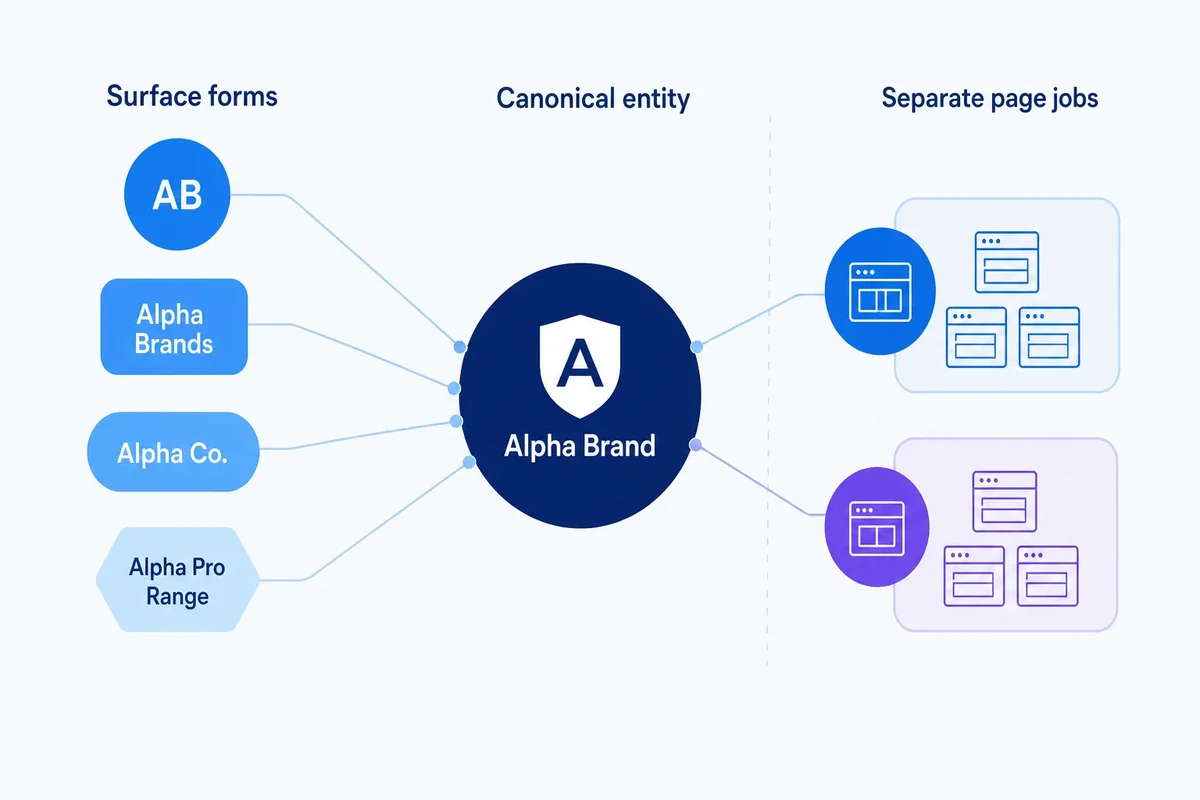
Brand aliases and entity resolution in SEO: keeping nicknames, legal names and product ranges connected
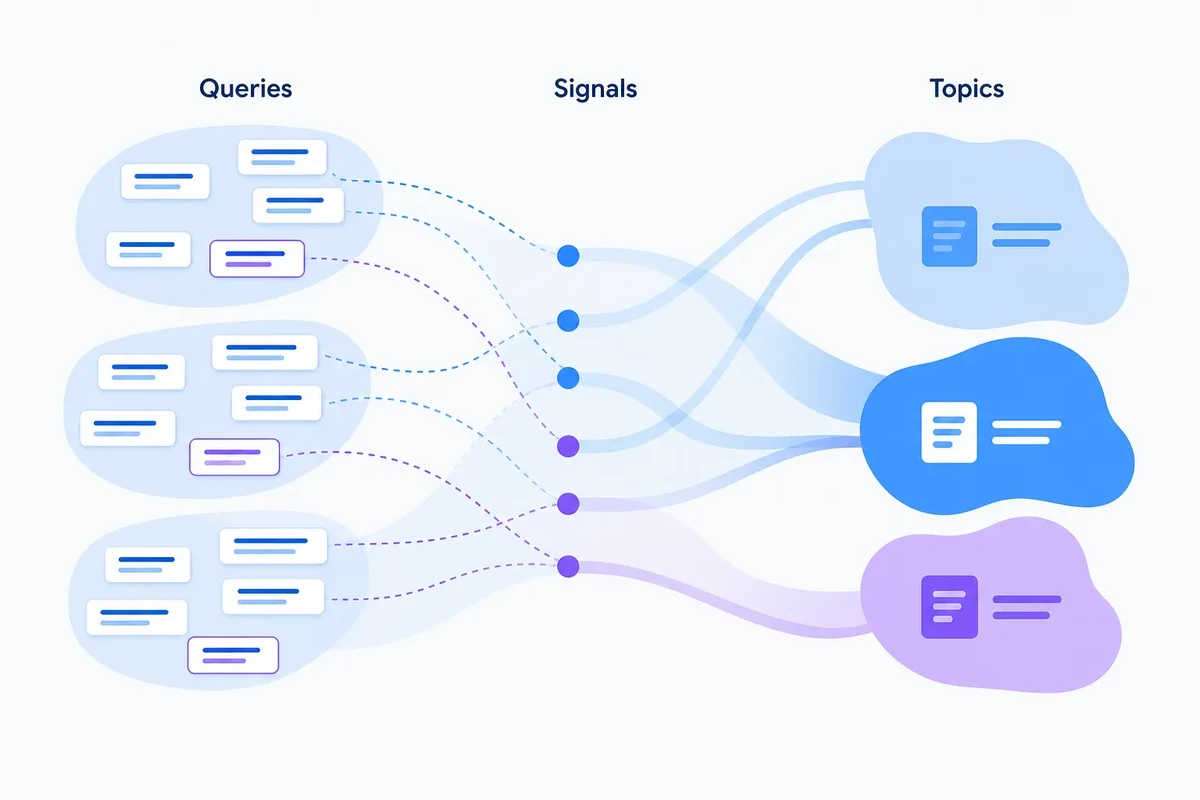
Keyword clustering vs topic clustering: what’s the difference?