Why black-box AI clustering is not enough for SEO
AI can group keywords quickly, but unexplained clusters are difficult to validate or implement. Learn why SEO needs evidence, reproducibility, confidence and practitioner control.

Farky Rafiq
Founder of ClusterIQ
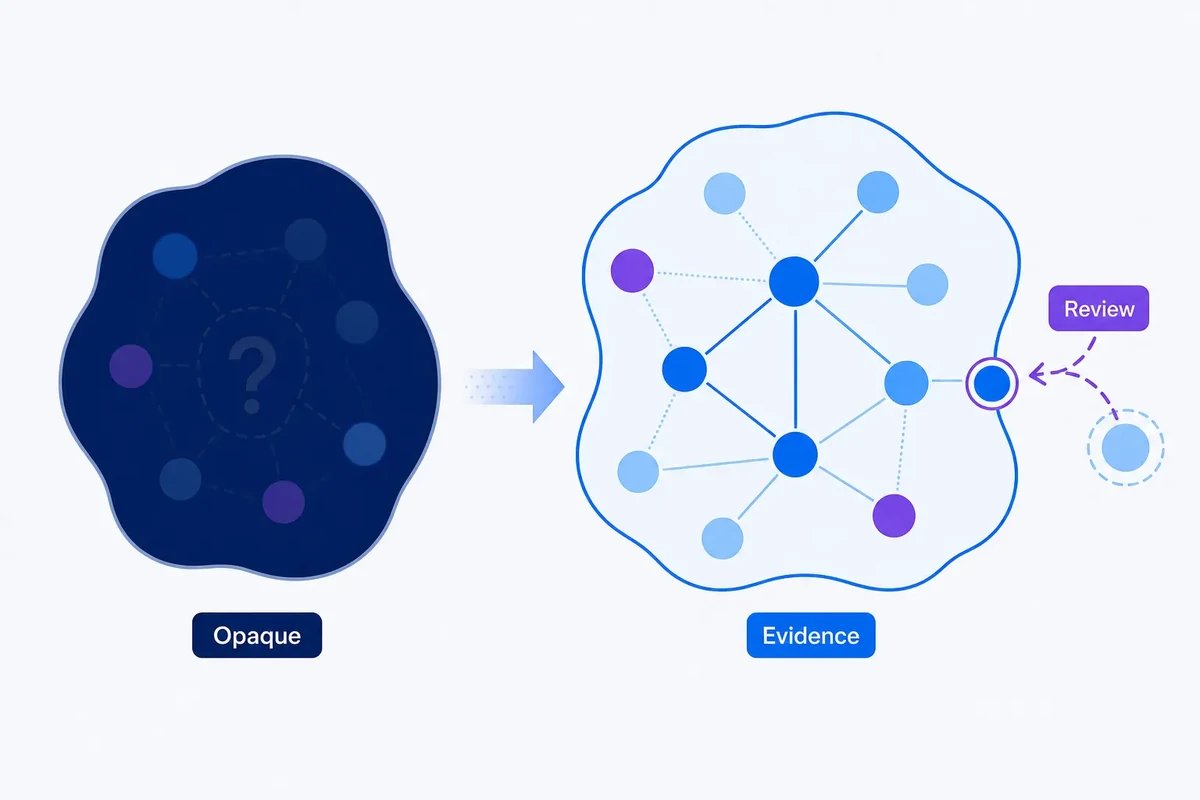
AI can group keywords in the blink of an eye. The real challenge for an SEO is whether they can actually trust and verify those groups before using them to overhaul a website. A language model can generate a list of categories that look perfectly reasonable in seconds, which is great for a quick brainstorm. However, it is far less convincing when that same output is used to map out new URLs, merge existing pages, or redesign a site taxonomy involving thousands of high value queries.
ClusterIQ is built on a specific philosophy: use machine intelligence to sharpen professional judgement while keeping the underlying relationships, uncertainties, and controls visible to the person doing the work.
Plausible labels can hide weak groups
Generative models are exceptionally good at writing fluent, professional sounding labels. This can be deceptive, making a cluster feel solid before anyone has actually checked the keywords inside it. A heading like "enterprise project management software" might look perfect on a spreadsheet, even if the group itself is a messy mix of pricing queries, basic tutorials, free templates, and unrelated services. Your first quality check should always be the individual keywords and how they relate to one another, not how polished the summary sounds.
The representation matters
Before a system can decide two keywords are similar, it needs a way to represent them mathematically. This might involve looking at the literal words, using sentence embeddings to capture meaning, identifying specific entities, or analysing search engine results page (SERP) overlap. Often, it is a combination of these signals.
Every method has its own strengths and blind spots. If the process is hidden inside a black box, you cannot tell if a strange grouping happened because of the semantic meaning, the exact phrasing, or a conflict between different entities. Knowing the "why" helps you spot and fix modelling errors.
Similarity is not page equivalence
Keywords like "CRM pricing", "best CRM software", and "how CRM works" are obviously related. However, that does not mean you should try to target all three with a single page. Search intent, the required page type, and the current evidence from Google results often create firm boundaries within a single topic. This is why ClusterIQ makes a clear distinction between topic relatedness and operational keyword clustering.
Thresholds need to be inspectable
Every clustering tool has a rule, whether it tells you or not, about how much similarity is "enough" to form a group. When using embeddings, this might be a specific similarity score. With generative AI, that boundary is often invisible. If you cannot see or adjust that threshold, explaining why one keyword was included while another was left out becomes guesswork. The ClusterIQ threshold workflow treats this limit as a variable to be tested and refined rather than a hidden, magic number.
Confidence should describe evidence, not decorate the interface
A percentage score can look very official even when it is not actually based on statistical probability. Instead of just showing a number, ClusterIQ preserves hard evidence: how strongly a keyword belongs to a group, how well its neighbours agree, whether the entities are compatible, and how stable the group remains across different runs. These factors allow for clear, plain English statuses like "strong", "moderate", or "review required".
SEO decisions need reproducibility
If a cluster changes because a model was updated, you need to be able to explain that shift to a client or a stakeholder. This requires keeping track of the source data, the rules used to clean it, the model version, and any manual overrides. Reproducibility is what transforms a clever AI output into a professional, auditable system you can stand behind.
Worked example: the expensive wrong merge
Consider an e-commerce team tackling 50,000 product queries. They use an AI tool that groups several related ranges under sensible looking labels. Based on this, they decide to consolidate three separate categories into one. After the site goes live, they realise that a specific word in the queries represented a vital product distinction, and the original categories were actually serving different commercial needs. The problem was not just a bad cluster; it was that the result dictated changes to URLs and internal links that hurt the business. A system that highlights entities and page ownership gives you a much better chance of catching these nuances before they cause damage.
Language models still have a useful role
The goal is not to get rid of language models entirely. They are incredibly useful for specific, bounded tasks like naming a cluster, classifying intent, or summarising evidence. The key is to keep the actual decision making logic, the calculations, and the irreversible actions outside of the generative layer. You want the AI to assist your workflow, not to be the workflow.
Human review should focus on consequence
Not every group of keywords requires the same level of attention. A small group of low volume queries used for blog inspiration can tolerate a bit of messiness. However, a cluster that will be used to delete URLs or restructure a high revenue section of the site needs rigorous checking. ClusterIQ helps by pointing you toward the high value cases where the boundaries are blurry, rather than making you manually approve every obvious match.
Practitioner overrides are part of the method
You should be able to move a keyword, split a community, or rename a group without losing the original model data. Overrides should be recorded as deliberate decisions, complete with a reason and a version stamp. This makes the final result more transparent and professional, as it shows the human expertise applied to the raw data.
Explainability should be local and actionable
When you are deep in a project, you need answers to very specific questions: why is this keyword here? Which other keywords support this grouping? What page currently owns this demand? Explainable keyword clustering turns these practical needs into core features, ensuring you always have the evidence to back up your strategy.
Benchmarks matter more than impressive demos
It is easy to make any tool look good with a few cherry picked examples. Real reliability comes from testing against a human benchmark that includes tricky things like synonyms, different intents, and ambiguous queries. When we change a model or a parameter, we test it against these stable examples to ensure the quality is actually improving across the board.
Do not turn every cluster into a page
Automated systems can lead to "content inflation" if you assume every single group needs its own URL. ClusterIQ separates the analytical topic model from the actual implementation. A cluster might suggest you improve an existing page, merge two others, or perhaps do nothing at all. The data informs the strategy, but it does not dictate a one size fits all approach.
Technical SEO needs the same evidence discipline
Clustering affects more than just content plans; it influences site migrations, canonical strategies, and sitemap management. These are technical areas where mistakes are expensive. By preserving the link between the analytical cluster and the proposed technical action, you ensure that every change to the site architecture is backed by clear evidence.
ClusterIQ is designed around practitioner agency
The aim of ClusterIQ is not to turn SEOs into data scientists. It is to show enough of the "workings out" so that an experienced marketer can understand and control the results. We keep the data traceable and the relationships inspectable so you can make better decisions with confidence.
The value is in the decision layer
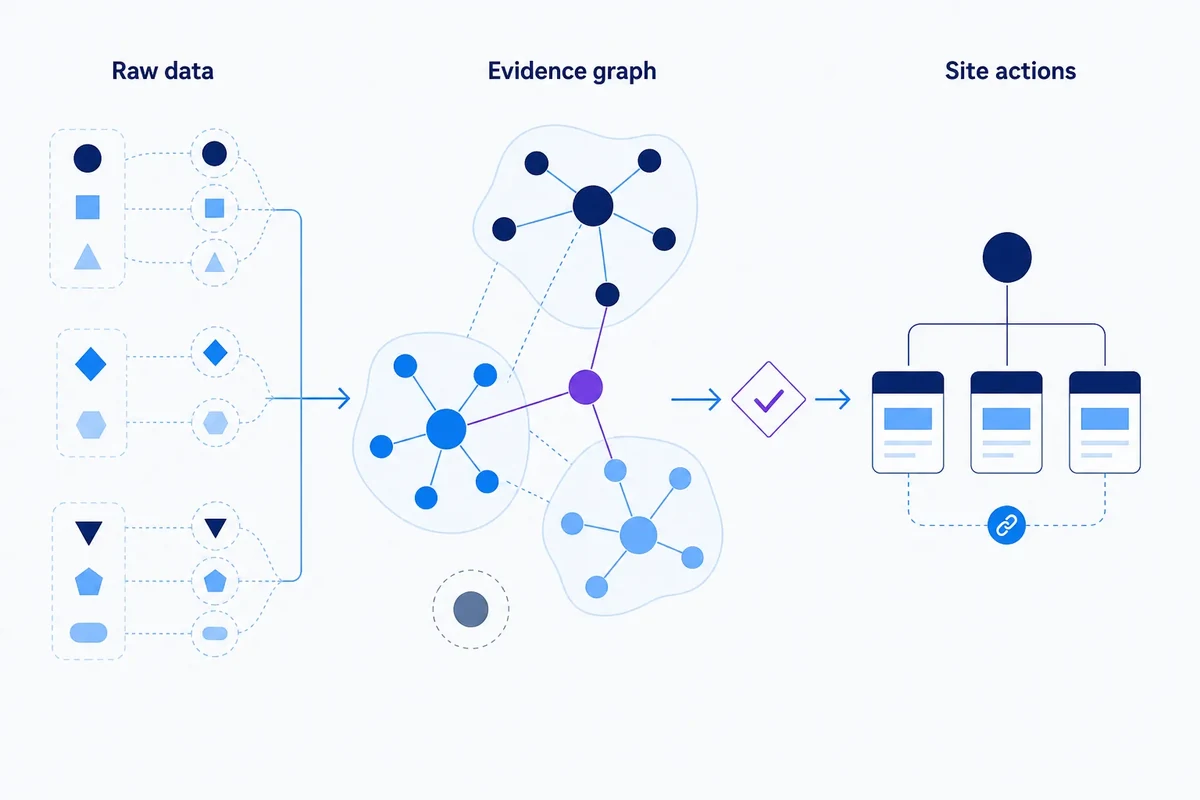
Grouping keywords is only half the battle. The harder part is deciding which queries truly belong together, which page should target them, and what the specific action should be. ClusterIQ is built to bridge the gap between raw data analysis and those final, high stakes implementation decisions.
Use automation where it is strongest
Automation is brilliant for processing huge datasets, finding hidden relationships, and flagging anomalies. Human intelligence is best used where business context is vital or where the evidence is conflicting. The most effective SEO workflow is one that deliberately combines the two.
ClusterIQ principle: do not hide complexity behind an AI label. Organise it so the practitioner can see the evidence that matters and make a better decision.
ClusterIQ Conclusion
Black box AI tools can give you fast results that look good on the surface, but that is rarely enough for serious SEO work that involves structural site changes. ClusterIQ focuses on explainability, reproducibility, and human control. We believe the goal of keyword clustering is not to replace your judgement, but to give that judgement a much firmer foundation of evidence. For teams that need more than just a generated spreadsheet, that transparency is exactly the point.
Sources and further reading
Farky Rafiq
Founder of ClusterIQ
I've worked in digital marketing since 2005 and founded Liquid Silver in 2011. These articles are where I share the methods, experiments and practical SEO thinking behind ClusterIQ.
Put the idea into practice with your own keyword data
ClusterIQ helps turn raw SEO exports into clean, structured working datasets you can inspect, refine, report on and take into the next stage of your workflow.
Keep reading
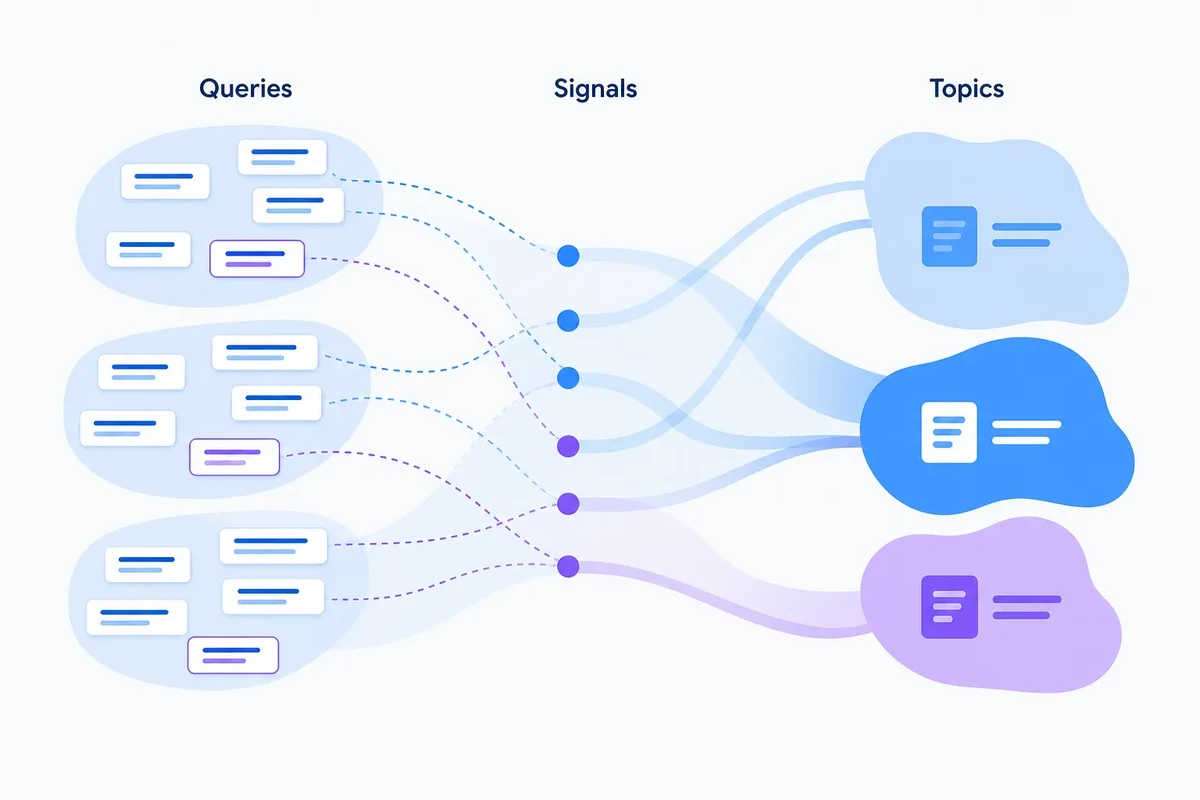
Keyword clustering vs topic clustering: what’s the difference?
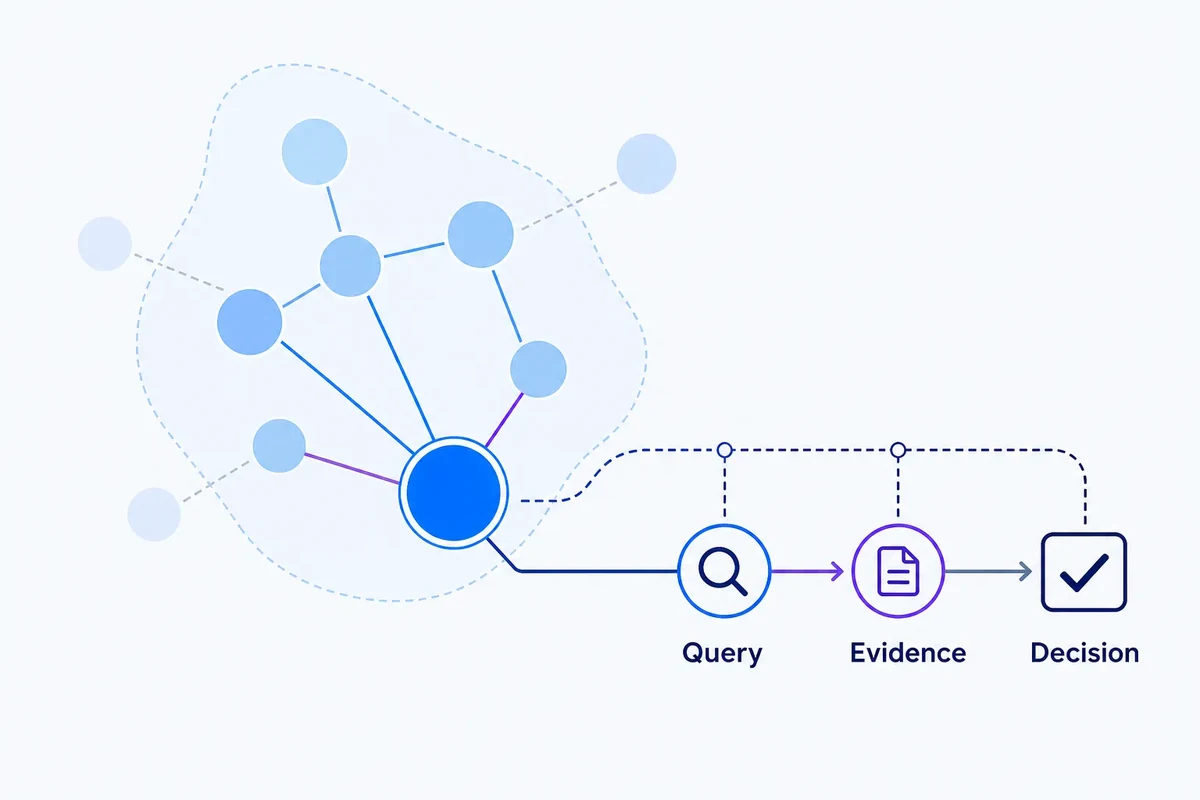
Explainable keyword clustering: what an SEO should be able to inspect before trusting a group