Explainable keyword clustering: what an SEO should be able to inspect before trusting a group
A cluster should be more than a label and a confidence score. Learn what evidence an SEO should be able to inspect before using a group to change pages, content or taxonomy.

Farky Rafiq
Founder of ClusterIQ
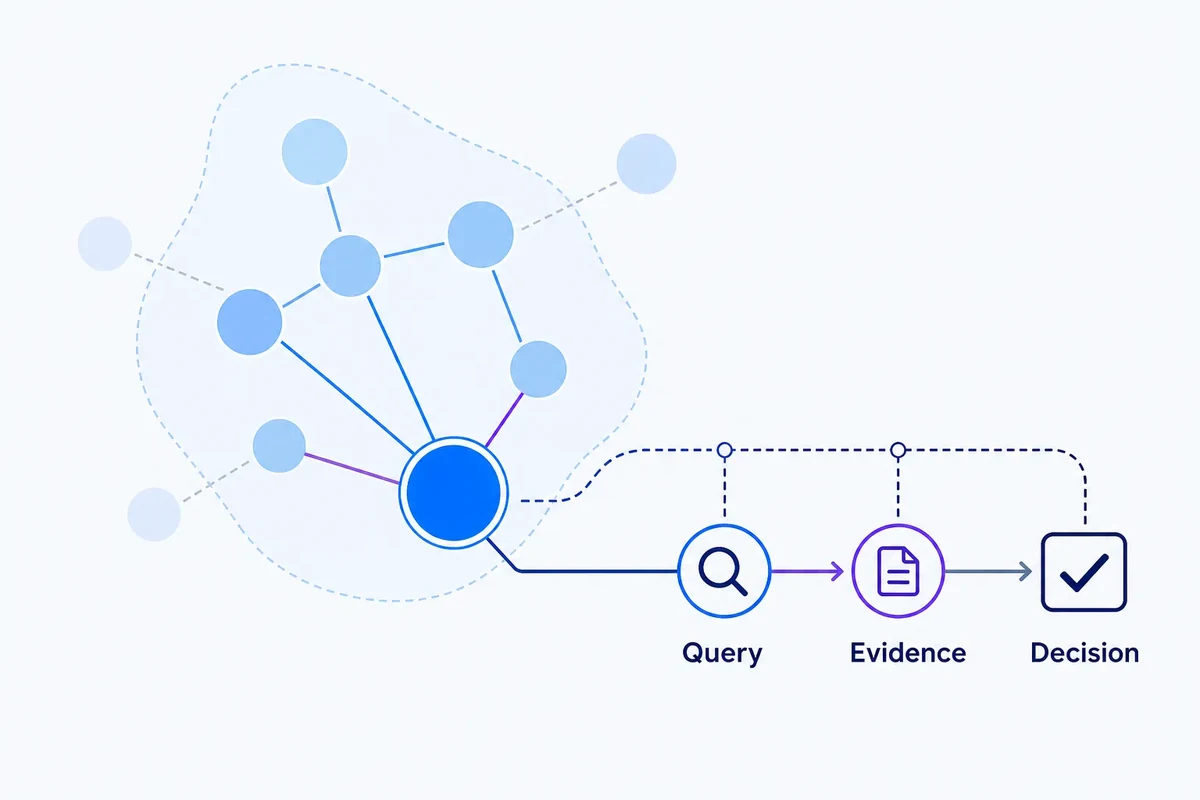
A keyword cluster is far easier to trust when you can actually see how it was built. For most of us working in SEO, a "black box" that spits out a list of groups is a liability, not an asset. If you cannot explain to a client or a head of content why five hundred specific keywords were grouped under one URL, you cannot truly defend your strategy.
Explainability does not mean we need to see complex machine-learning theory or raw vector dimensions. Instead, it means preserving a clear trail of evidence from the initial query through to the final page recommendation. ClusterIQ is designed to make this reasoning transparent without cluttering your workspace with unnecessary data.
Start with the raw observation
Every decision should be traceable back to the original data point. When you are looking at a cluster of two thousand keywords exported from Ahrefs or Search Console, you need to see the raw context for every row. This includes the original query, any normalised versions used for processing, the specific market or language, and the search metrics that matter.
If the software changed the input during a cleaning phase, you should be able to see exactly what happened. Transparency at this stage ensures that a "near-match" or a typo-corrected query hasn't been misidentified before the clustering even begins.
Show the representation that matters
You do not need to see a 768-dimensional mathematical vector on your screen to understand a relationship. However, you do need to know why two keywords were linked. Was it because of semantic embeddings, lexical similarity, shared entities, or SERP overlap? Perhaps it was a combination of these signals.
Knowing this distinction explains why two queries that look different visually might be grouped together, or why two nearly identical strings were kept separate because their search intent differs. This clarity is vital when you are deciding whether to create one long-form guide or two distinct landing pages.
Nearest neighbours are one of the best explanations
When you are inspecting a query within a cluster, seeing its "nearest neighbours" is incredibly helpful. Rather than a vague confidence score, you can see that a query belongs in a group because its closest relatives are terms A, B, and C, which all share the same product entity and search result patterns.
This is a practical way to validate a group. If the neighbours make sense to a human expert, the cluster is likely robust. If the neighbours feel unrelated, you know exactly where the logic has tripped up.
Explain graph edges where graphs are used
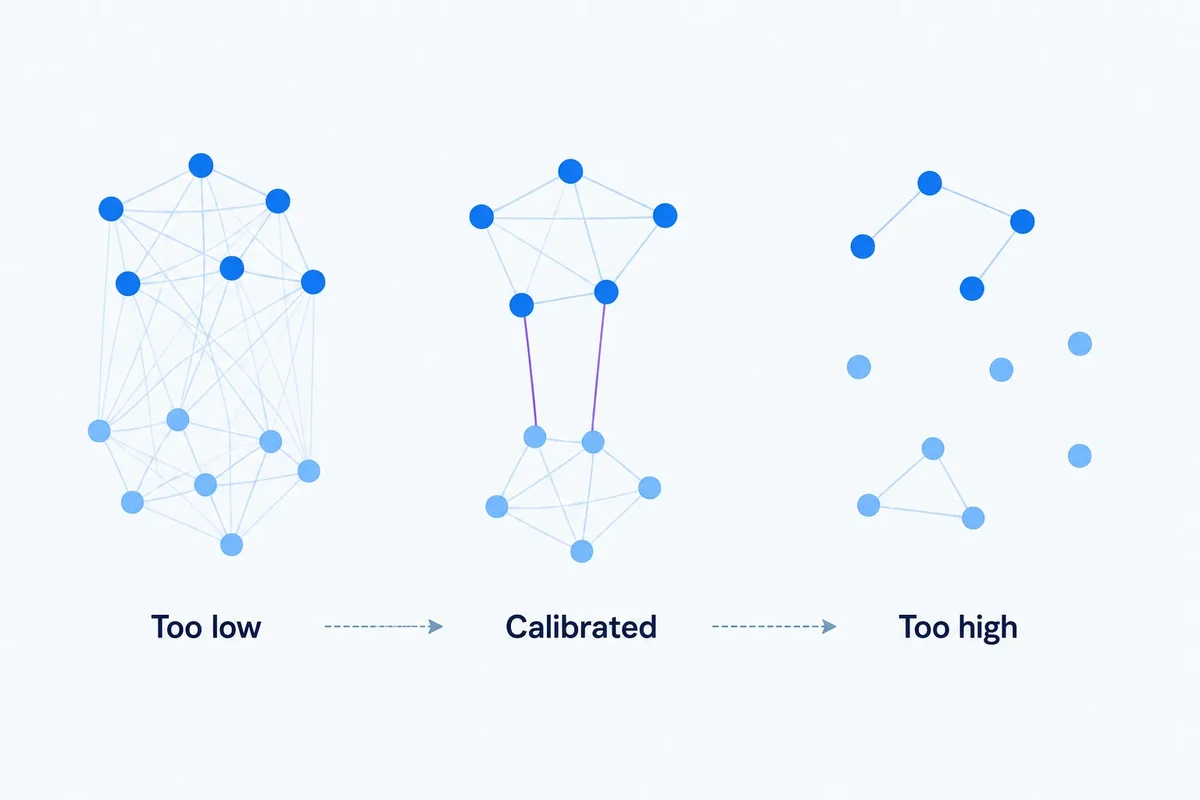
In a weighted graph, the connection (or edge) between two keywords carries the most important information. ClusterIQ can show the specific components of that connection, such as the semantic score, intent compatibility, and lexical agreement. Weighted keyword graphs are far more useful when you can see the individual signals that make up the total weight.
Cluster membership needs context
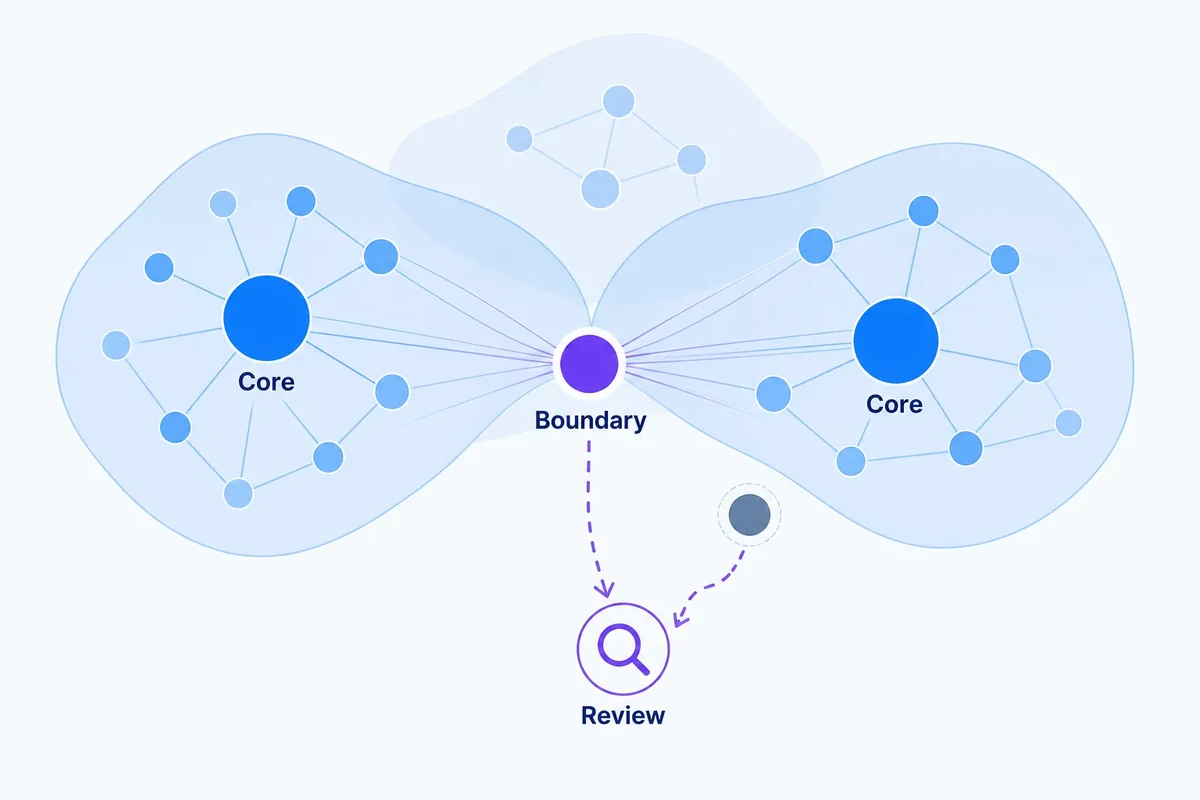
A simple label often hides the nuance of how a keyword fits into a group. Is it right in the centre of the topic, or is it an ambiguous case sitting on the boundary? Useful context includes membership strength, stability across different runs, and whether the keyword almost ended up in a different group. Using soft membership allows ClusterIQ to highlight these core members versus the outliers that might require a manual eyes-on review.
Worked example: why was this query grouped here?
Imagine you are looking at the query "800mm matt black shower screen". A clear explanation would show that the topic entity is "shower screen", the width attribute is "800mm", and the finish is "matt black". It would show that its nearest neighbours are three other queries specifically about 800mm black screens. Because the product-attribute agreement is strong, the cluster remains stable. You can see the logic without needing to understand the underlying maths.
Explain why it did not go somewhere else
Sometimes the most useful information is why a keyword was excluded from a different group. For that same shower screen query, ClusterIQ might show that a neighbouring cluster for "900mm black shower screens" was rejected because the width attribute conflicted. This tells you exactly which piece of evidence swung the decision, which is invaluable when refining a content plan.
Labels need their own explanation
A cluster can be perfectly grouped but have a confusing name. To fix this, you need to see the representative queries and dominant entities that generated the label. This follows the logic in ClusterIQ's cluster-labelling guide, ensuring that the heading on your report actually reflects the intent of the keywords beneath it.
Page mappings need a second explanation layer
Grouping keywords is one task; deciding which URL should own them is another. For every page mapping, you should be able to see the semantic fit, page-type compatibility, and existing Search Console ownership. A strong cluster does not always mean a perfect URL match, and the system should explain why a specific page was recommended over another.
Do not expose precision the model does not have
Explainability is not about showing six decimal places. If a score isn't a literal probability, it is better to use labels like "strong", "moderate", or "review required". This prevents us from falling into the trap of "fake certainty" and keeps the focus on practical decision-making.
Visualisation and tables should support each other
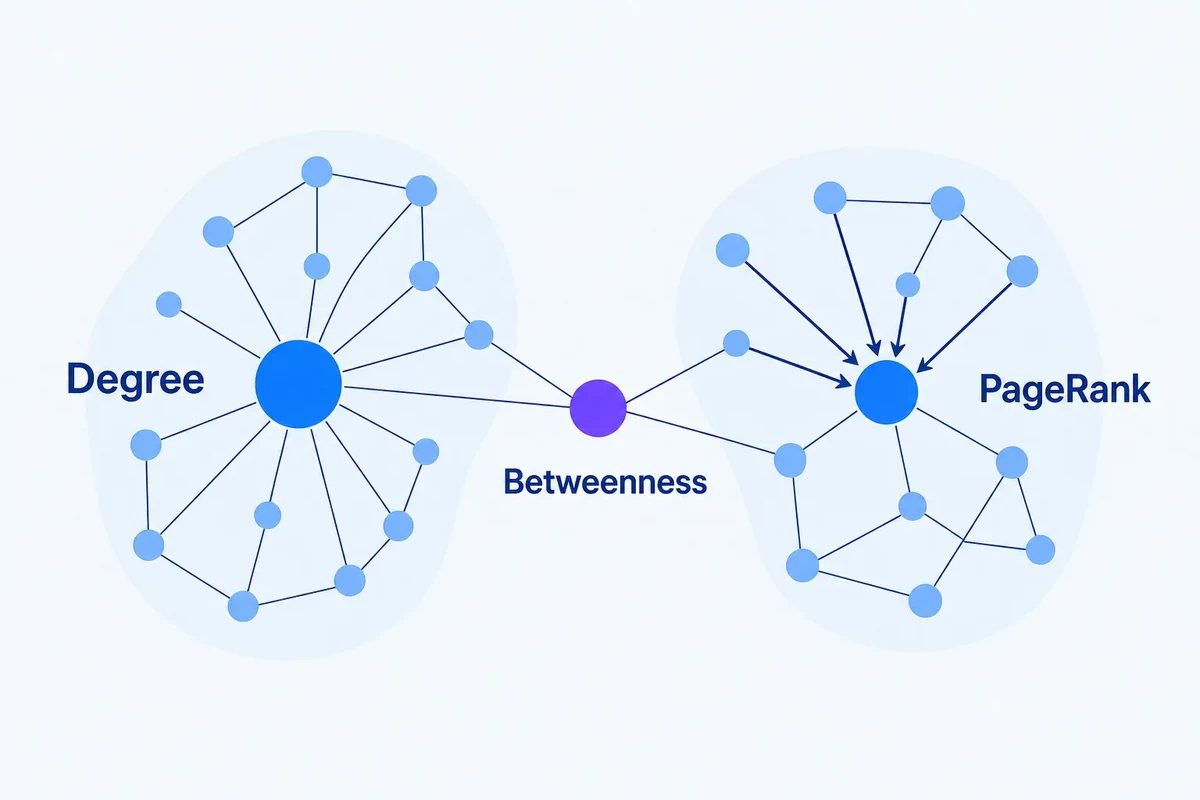
Graphs are excellent for spotting broad communities and the "bridges" between topics, while tables are better for the nitty-gritty of metrics and final decisions. Graph layouts should be an exploratory tool, allowing you to move seamlessly between a high-level map and the row-level evidence.
Explain transformations, not only results
If the system removed a duplicate or resolved a brand alias during preprocessing, that should be visible in the audit trail. Many unexpected clustering results actually stem from these early transformations, so having a record of them is essential for troubleshooting.
Human overrides belong in the explanation
If you manually move a query, the system should record that. Practitioner overrides should be clearly marked so you can distinguish between the model's original output and your expert adjustments. This ensures the final report is an honest reflection of the work done.
Reproducibility is part of explainability
You cannot truly explain a result if you cannot recreate it. By saving the specific models, parameters, and seeds used, ClusterIQ ensures that you can understand which version of your analysis created a specific set of clusters. This is vital for long-term projects where you might need to revisit a decision months later.
Explainability should end in an action
The goal isn't just to admire the tech; it is to make a decision. A good explanation helps you decide whether to approve a cluster, split a group, or merge two topics. It should make your job easier, not just make the software look clever.
Practitioner principle: an explainable cluster should let an SEO answer “why is this query here?” and “what evidence would make me change it?”
ClusterIQ Conclusion
Explainable keyword clustering is about keeping the evidence chain intact. By exposing neighbours, entities, and confidence levels, ClusterIQ builds trust through transparency. This moves us away from black-box automation and gives practitioners the control they need to deliver high-quality SEO strategies.
Make explanations consistent across workflows
The same reasoning should follow a keyword from the initial clustering through to content planning and reporting. If a relationship is described as "strong semantic match" in one view, that same terminology should appear when you are reviewing page recommendations. This consistency helps you learn how the system thinks, making the entire workflow more intuitive and reliable.
Sources and further reading
Farky Rafiq
Founder of ClusterIQ
I've worked in digital marketing since 2005 and founded Liquid Silver in 2011. These articles are where I share the methods, experiments and practical SEO thinking behind ClusterIQ.
Put the idea into practice with your own keyword data
ClusterIQ helps turn raw SEO exports into clean, structured working datasets you can inspect, refine, report on and take into the next stage of your workflow.
Keep reading
Soft clustering and confidence scores: handling ambiguous keywords honestly
Graph centrality for SEO: finding hubs, bridges and misleadingly important keywords