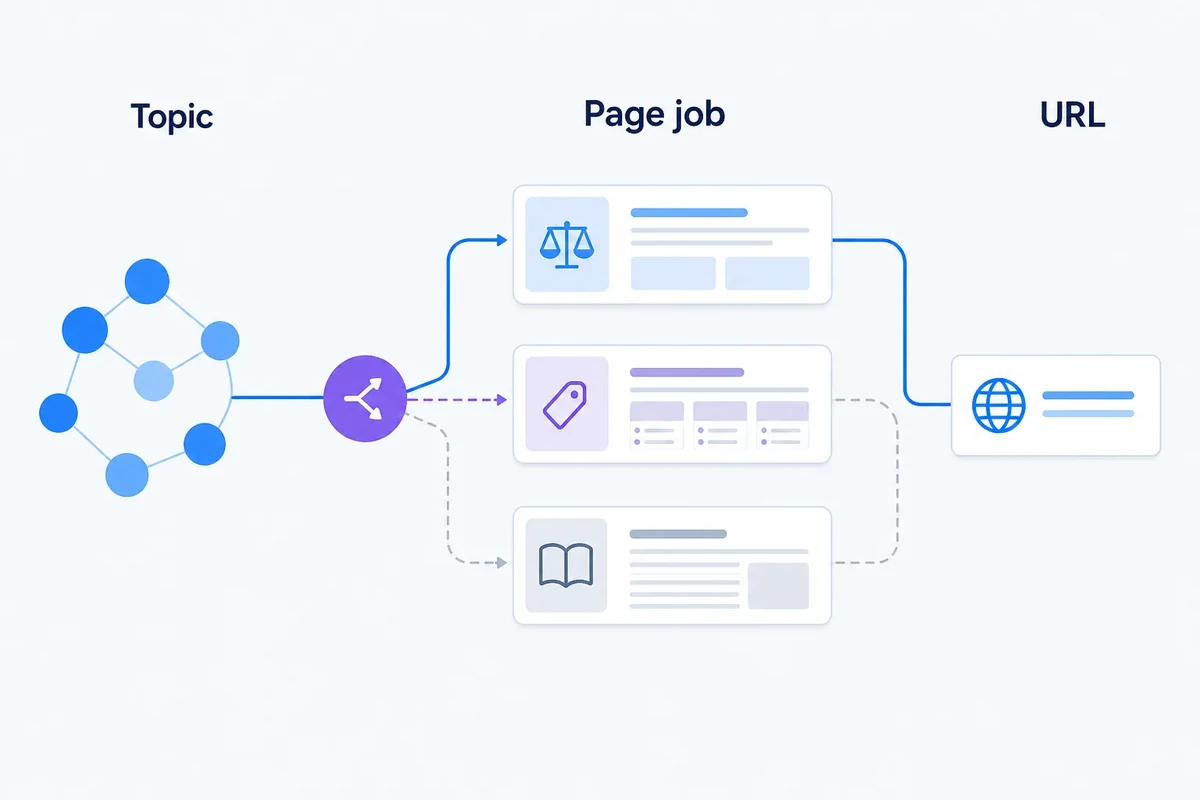
Chunking long pages for SEO embeddings: preserving section relevance without fragmenting the page
Long pages can exceed model limits or dilute specific topics in one embedding. Learn how section-aware chunking improves retrieval while preserving the page as the SEO decision unit.

Farky Rafiq
Founder of ClusterIQ
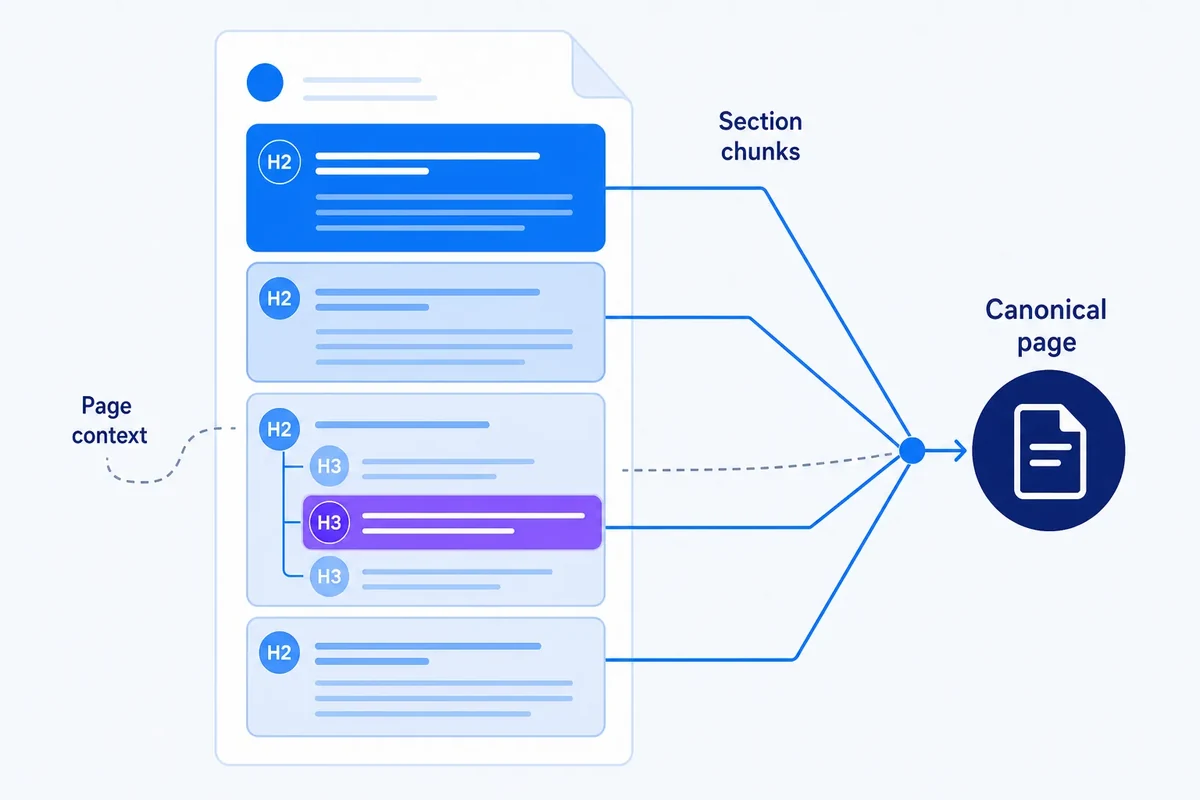
Long-form content presents a unique challenge for modern SEO tools. When we try to represent a 5,000-word guide as a single mathematical vector, we run into a "dilution" problem. A specific, highly valuable section on a niche topic can easily get lost in the noise of the broader page summary.
Embedding models often have a strict limit on how much text they can process at once. If a model only reads the first 512 or 1,024 tokens, anything appearing later in the document effectively does not exist to the system. Chunking is the process of breaking that page into smaller, manageable units. For ClusterIQ, the goal is to achieve precise, section-level retrieval without mistakenly treating every fragment as a separate SEO page.
Why truncation is dangerous
If a model cuts off halfway through a comprehensive article, your most technical insights might be ignored. A detailed FAQ, a complex specification table, or a troubleshooting guide located at the bottom of the page will contribute nothing to the embedding. This means the page might fail to rank or map for queries where that specific section is actually the perfect answer.
Fixed-length chunks are simple and crude
A common shortcut is to split text every few hundred words, perhaps with a small overlap. While this is easy to set up, it is often clumsy. It might slice a heading away from its paragraph or break a single coherent concept into two separate pieces. It serves as a basic starting point, but it rarely provides the best representation for sophisticated SEO work.
Section-aware chunking follows document structure
Rather than arbitrary cuts, we can use the natural boundaries already present in your HTML. These include:
- H2 and H3 headings;
- Product modules;
- FAQ blocks;
- Data tables;
- Introductory summaries.
ClusterIQ uses these structural markers to create chunks that make sense, keeping them within sensible limits while respecting the original author's logic.
Carry parent context into the chunk
A standalone section titled "Sizing" is ambiguous. Is it about shoes, server bandwidth, or font CSS? To make an embedding useful, the chunk needs to bring some "baggage" from its parent page. This includes the page title, the main H1, and perhaps the breadcrumb path. By including this metadata, the local section remains interpretable even when viewed in isolation by the model.
Worked example: a 5,000-word buying guide
Imagine a massive guide covering keyword research, clustering, intent, and implementation. A single global embedding will accurately describe the broad topic but might underplay the specialist section on "Louvain resolution parameters."
With section-aware chunking, a query for that specific technical term can point directly to the graph analysis section. Crucially, the final SEO recommendation still points to the parent guide URL, ensuring your internal reporting doesn't get cluttered with fragments.
Chunks are retrieval evidence, not indexable units
This is a vital distinction. ClusterIQ may store and search these small vectors to find the best match, but the final SEO decision is always tied to the canonical page. We use chunks to find the evidence, not to suggest you should fragment your site architecture into hundreds of tiny pages.
Overlap can protect boundary context
When using fixed chunks, overlapping the text ensures that a concept mentioned right at the cut-off point is captured in both segments. However, too much overlap creates near-duplicate data, which can cause one page to overwhelm your results. It is better to measure how overlap affects the diversity of your results rather than just picking a default percentage.
Aggregate chunk scores back to the page
Once we have scores for various sections, we have to decide how they represent the whole page. We might look at the single highest-scoring chunk, an average of the top three, or a weighted mix of the best section and the overall page summary. This choice determines which pages the system deems most relevant for a given keyword list.
Maximum score can overreward one incidental mention
If a page mentions a topic just once in passing, it might produce one very strong chunk match. To avoid "false positives" where a query is actually peripheral to the page's purpose, we often combine the best chunk score with a measure of how well the rest of the page covers the topic.
Use title and heading evidence separately
The page title and H1 are the strongest indicators of what a page is actually about. A high-scoring chunk buried deep in the footer should not automatically override a title that suggests a completely different primary role. ClusterIQ balances these structural signals against raw chunk similarity.
Chunking is particularly useful for support and documentation
Large documentation files often answer dozens of distinct procedural questions while remaining one logical resource. Chunking allows a search to find the exact paragraph that solves a user's problem without requiring every single question to have its own dedicated URL.
It can also improve ecommerce mapping
Ecommerce category pages are often a mix of product grids, buying advice, and delivery FAQs. Chunk-level analysis helps us distinguish whether a keyword is supported by the commercial core of the page or just by an informational module at the bottom.
Store chunk provenance
To keep the data transparent, every vector should be stored with its history. This includes:
- The parent page ID and canonical URL;
- The full heading path (e.g., H1 > H2);
- The specific text range and chunk position;
- The version of the embedding model used.
This allows ClusterIQ to show you exactly which part of a page justified a specific keyword mapping.
Re-chunk when templates change materially
If you redesign your site and change how headings or tabs are structured, your chunks will change even if the words stay the same. It is important to version your chunking strategy so that your SEO reporting remains consistent over time.
Benchmark chunking against whole-page vectors
Before committing to the complexity of chunking, test it against simpler whole-page embeddings. Check if it actually improves your accuracy for long-tail queries or specialist topics. If a single page vector performs just as well, you might not need the extra moving parts.
Practitioner principle: chunks help the retrieval system find the relevant part of a page. They should not silently redefine the page as several SEO assets.
ClusterIQ Conclusion
Section-aware chunking is a powerful way to represent long, complex pages without breaking your site's logical architecture. By retaining the context of headings and page titles, we can aggregate local relevance back to the canonical URL, leading to smarter, more accurate SEO mapping decisions.
Failure modes are part of the feature, not an appendix
A truly useful implementation surfaces where the logic might fail. We look closely at boundary queries, rare entities, and ambiguous phrases. If the evidence for a mapping is weak, ClusterIQ is designed to show that uncertainty rather than forcing a "clean" but incorrect answer. This might mean leaving a keyword unassigned or presenting several candidate URLs for a human to review.
By classifying these failures, we can see if a problem stems from the initial text processing or the final ranking. This ensures that any adjustments address the root cause, making the entire system more reliable for large-scale keyword sets and complex content plans.
Sources and further reading
Farky Rafiq
Founder of ClusterIQ
I've worked in digital marketing since 2005 and founded Liquid Silver in 2011. These articles are where I share the methods, experiments and practical SEO thinking behind ClusterIQ.
Put the idea into practice with your own keyword data
ClusterIQ helps turn raw SEO exports into clean, structured working datasets you can inspect, refine, report on and take into the next stage of your workflow.
Keep reading
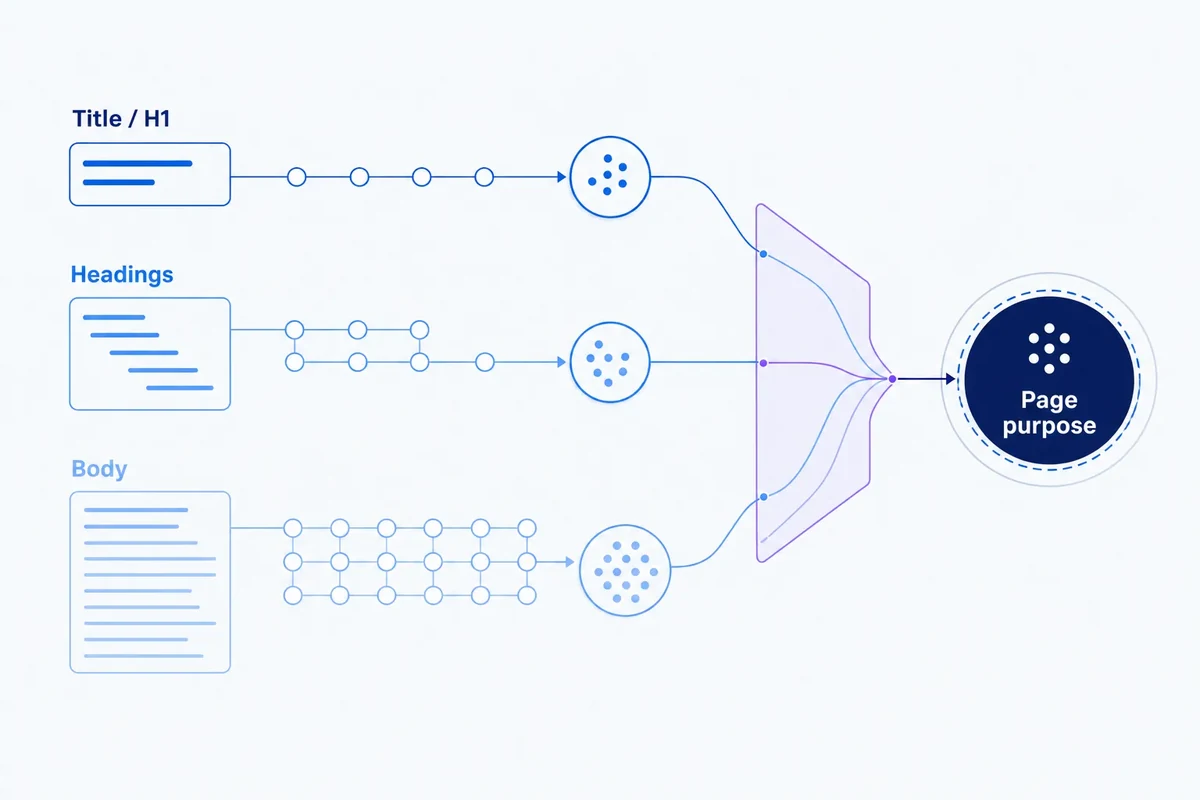
Weighting titles, headings and body text in page embeddings for SEO
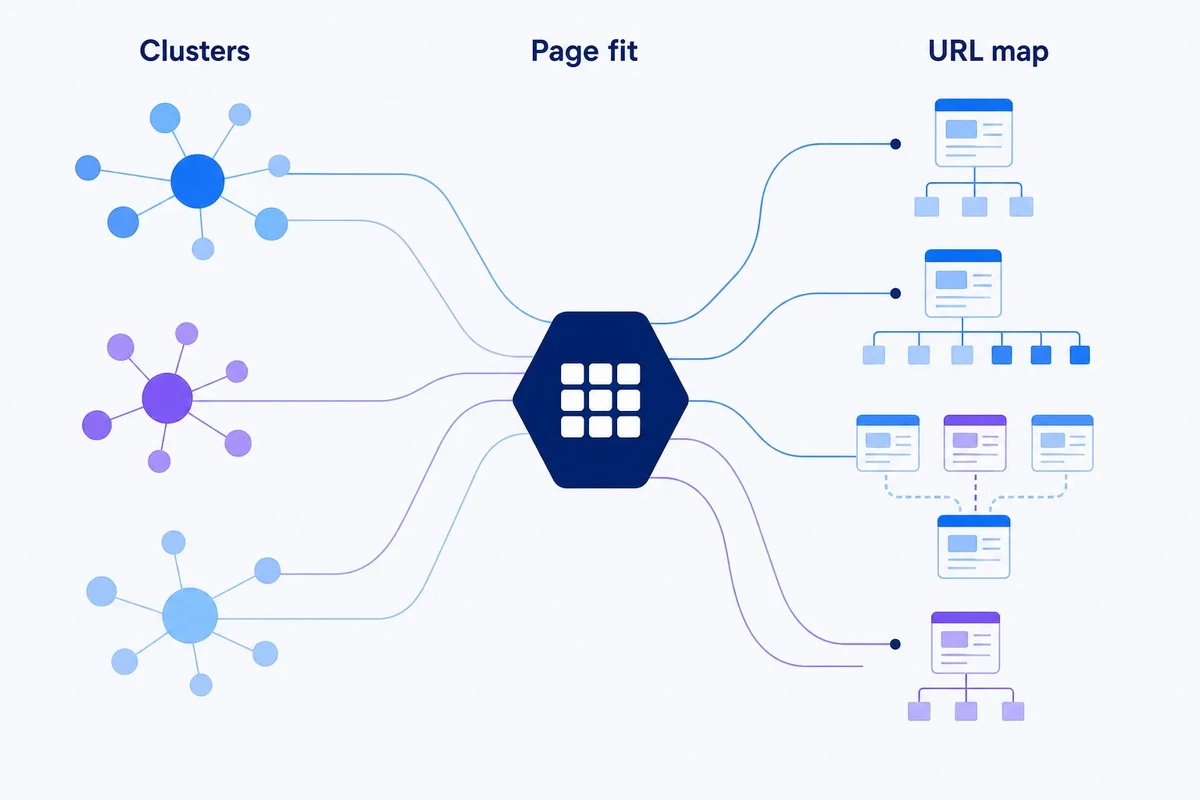
From keyword clusters to URL mapping: turning groups into site architecture