Seasonal keyword clustering: separating recurring demand from temporary noise
Seasonal demand can change query volumes and even the language around a topic. Learn how to compare clusters over time without treating every seasonal spike as a new topic.

Farky Rafiq
Founder of ClusterIQ
You export 1,500 keywords in November to plan your website’s content, and Black Friday phrases seem to dominate every group. Do you need to reorganise your topics, or are you just seeing a busy few weeks?
Keyword datasets capture demand at a particular moment. Christmas, school holidays, tax deadlines, weather and product launches can all change which queries appear and how often people search for them.
If you group keywords using only a peak-period export, temporary language can start to look like permanent topic structure.
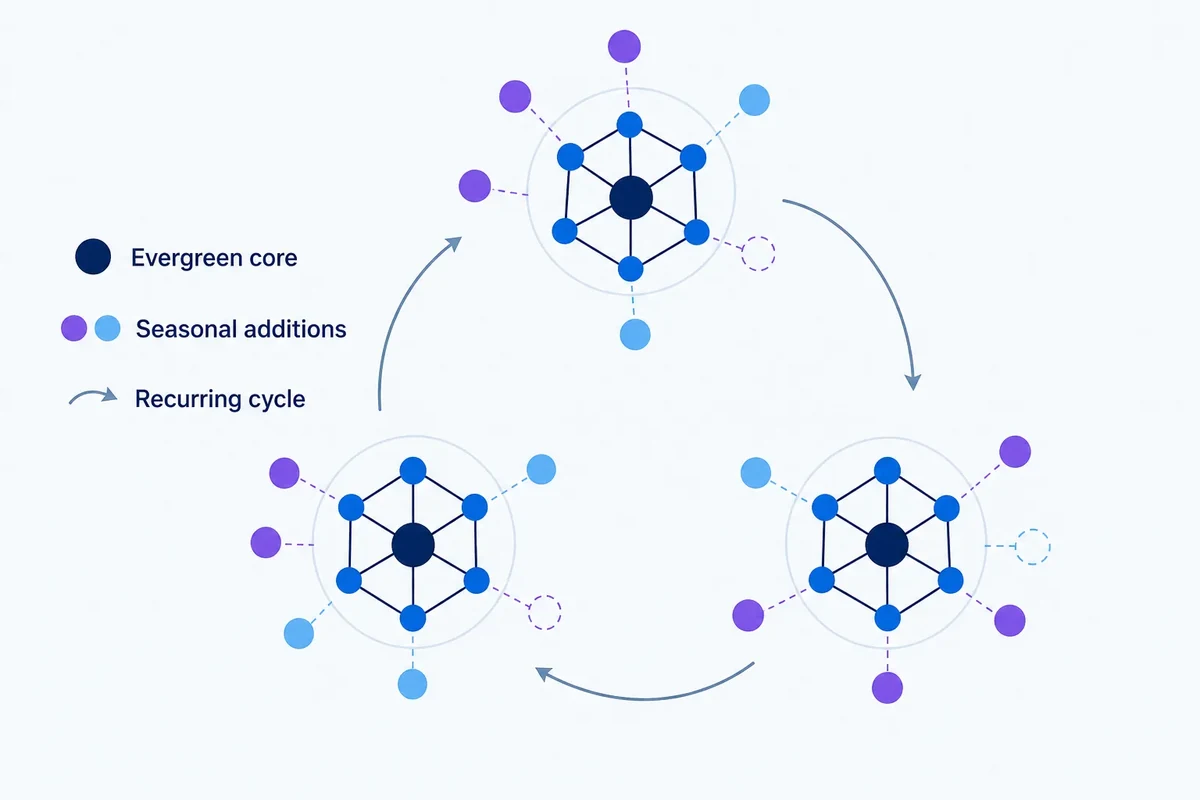
Separate topic identity from seasonal intensity
A topic can stay the same even when demand for it changes dramatically.
“Outdoor heaters” may attract searches all year, but search volume and the words people add to that phrase can shift with the weather and season.
The cluster ID, the identifier you use to track that keyword group, does not necessarily need to change just because demand has risen or fallen.
Use repeated time windows
Rather than relying on one annual export, compare data from consistent periods:
- month by month;
- quarter by quarter;
- the same seasonal window year on year.
These comparisons help you separate recurring patterns from one-off events.
Track membership as well as volume
A seasonal cluster can change in two different ways:
- the queries already in the group become more popular;
- new queries with seasonal modifiers join the group.
Report these separately. More searches for the same phrases is a change in volume. A different mix of phrases is a change in cluster membership.
Seasonal modifiers can deserve their own subclusters
Seasonal wording can create recognisable groups such as:
- Christmas gifts;
- summer sale;
- winter running;
- Black Friday deals.
If that wording reflects a recurring task for the customer, with distinct content or merchandising needs, a seasonal subgroup may be useful.
If it only reflects a temporary rise in searches that the same page already serves, creating a separate cluster may add little value.
Search Console provides date comparison evidence
You can filter and compare Google Search Console performance data across date ranges. Use those comparisons to check whether seasonal query groups return and which pages serve those searches.
Do not retrain the whole architecture from one spike
A short-lived surge can make a topic look more central or substantial than it usually is. Depending on your clustering method, it can pull centroids, the representative centres of clusters, towards seasonal language. It can also increase graph density, meaning more connections between keywords, or create communities that appear unusually large.
To keep a persistent topic model representative over time, use one or more of these approaches:
- a longer time window that captures a representative mix of demand;
- balanced sampling across periods, so one peak does not dominate;
- seasonal labels stored as metadata alongside the core topic;
- separate seasonal analyses layered on top of a stable core model.
New seasonal language can be early market evidence
Not every unfamiliar query is noise to filter out.
A new modifier that keeps appearing may signal:
- new behaviour around products;
- new terminology;
- new regulations;
- new promotional patterns.
Keep these queries visible, then check whether they persist in the next relevant seasonal cycle.
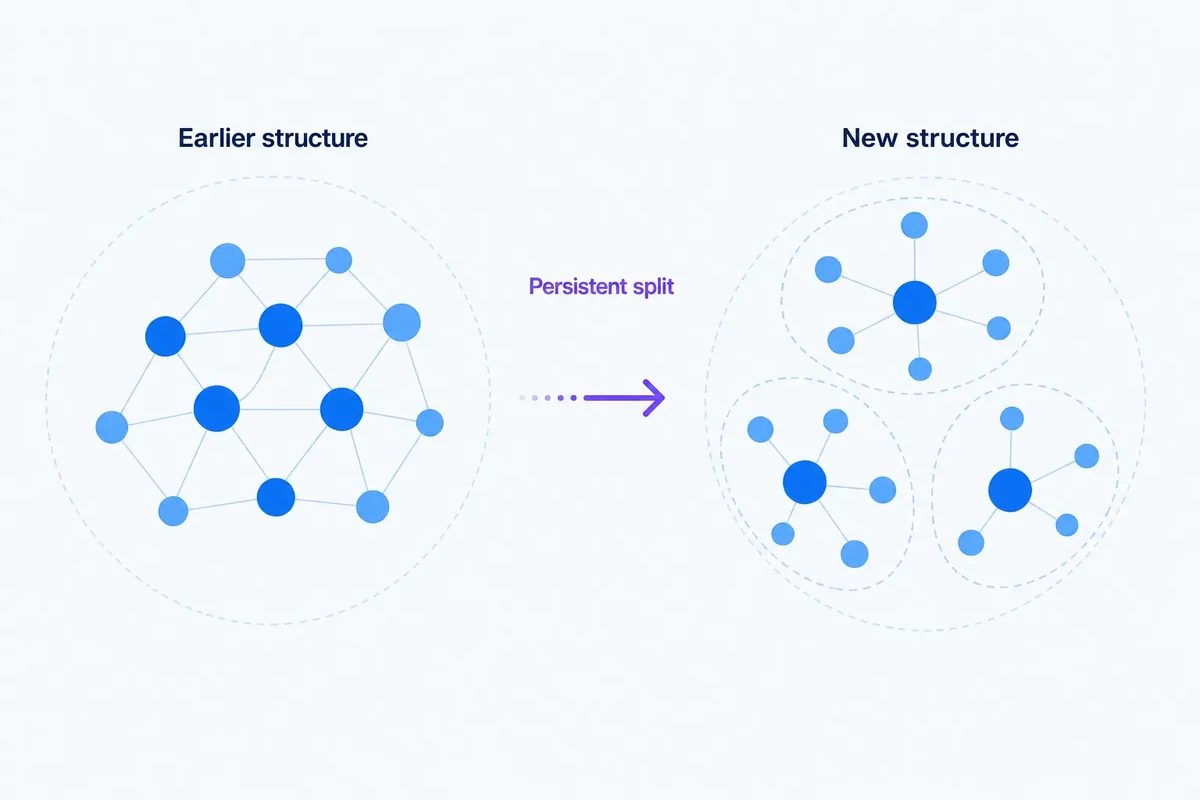
Use cluster lineage
If you rerun clustering each month, do not treat every new set of cluster IDs as unrelated to the last. Map the groups back to a stable topic history, often called cluster lineage.
Track:
- the persistent core of queries;
- seasonal additions;
- temporary outliers;
- changes in volume;
- changes in page ownership, meaning which page serves the cluster.
Seasonality can affect page strategy
A recurring seasonal cluster may justify:
- a seasonal landing page you can reuse;
- temporary merchandising on an evergreen category page;
- an annual guide that you update rather than recreate;
- no separate page at all.
The cluster shows how demand is organised. Your editorial and commercial strategy determines what to do with it.
Practitioner principle: seasonality changes the intensity and vocabulary of demand. Do not let it rewrite your permanent topic map unless there is evidence that the underlying structure has really changed.
ClusterIQ Conclusion
Seasonal keyword clustering becomes useful when you treat time as part of the analysis, not just a date on the export.
Compare repeated windows, keep stable topic IDs and distinguish changes in cluster membership from changes in volume. You can then act on seasonal demand without mistaking it for a permanent change in how your website should be organised.
Worked example: Black Friday inside an evergreen category
A television retailer reviewing 2,000 keywords may see searches for “Black Friday TV deals” surge each November. The way its products are categorised has not changed. The seasonal wording around demand has.
A stable model can keep televisions as the evergreen category and attach Black Friday as a seasonal subtopic. The retailer can then reuse the same seasonal landing page each year rather than create a new URL for every campaign.
Compare like with like
Year-on-year comparisons are often more useful than comparing a seasonal peak with the month immediately before it. If a query cluster returns every November, that recurrence tells you more about its seasonal nature than one dramatic monthly growth percentage.
Seasonal clusters need publication timing as well as topic structure
If a recurring topic needs a dedicated page or guide, build preparation time into your editorial workflow. Accurate clustering is less useful if the content only goes live after peak demand has arrived.
Use historical demand curves for each cluster to plan when research, content updates and internal-link changes should happen before the next seasonal rise.
Keep seasonal labels separate from evergreen labels
A topic called “televisions” can keep its evergreen identity while also carrying seasonal labels such as Black Friday or Christmas. That avoids renaming the core cluster whenever promotional language dominates the query mix.
Use seasonal confidence before creating permanent URLs
A modifier that appears strongly one year may not return the next. Look for repeated evidence or a clear business need before turning a temporary seasonal cluster into a permanent landing page within your site structure.
This matters particularly for promotional wording, which may be driven by a campaign rather than a recurring customer need.
Archive the seasonal evidence
Save the query set and performance data from each season. That history gives you a firmer basis for next year’s planning and stops the team treating every returning pattern as a brand-new discovery.
Sources and further reading
Farky Rafiq
Founder of ClusterIQ
I've worked in digital marketing since 2005 and founded Liquid Silver in 2011. These articles are where I share the methods, experiments and practical SEO thinking behind ClusterIQ.
Put the idea into practice with your own keyword data
ClusterIQ helps turn raw SEO exports into clean, structured working datasets you can inspect, refine, report on and take into the next stage of your workflow.
Keep reading
Turning keyword clusters into content briefs without writing the article twice
Branded vs non-branded keyword clustering: separate demand without splitting the topic