Turning keyword clusters into content briefs without writing the article twice
A useful content brief should transfer evidence and editorial decisions, not pre-write generic prose. Learn how cluster data can create tighter, more useful briefs.

Farky Rafiq
Founder of ClusterIQ
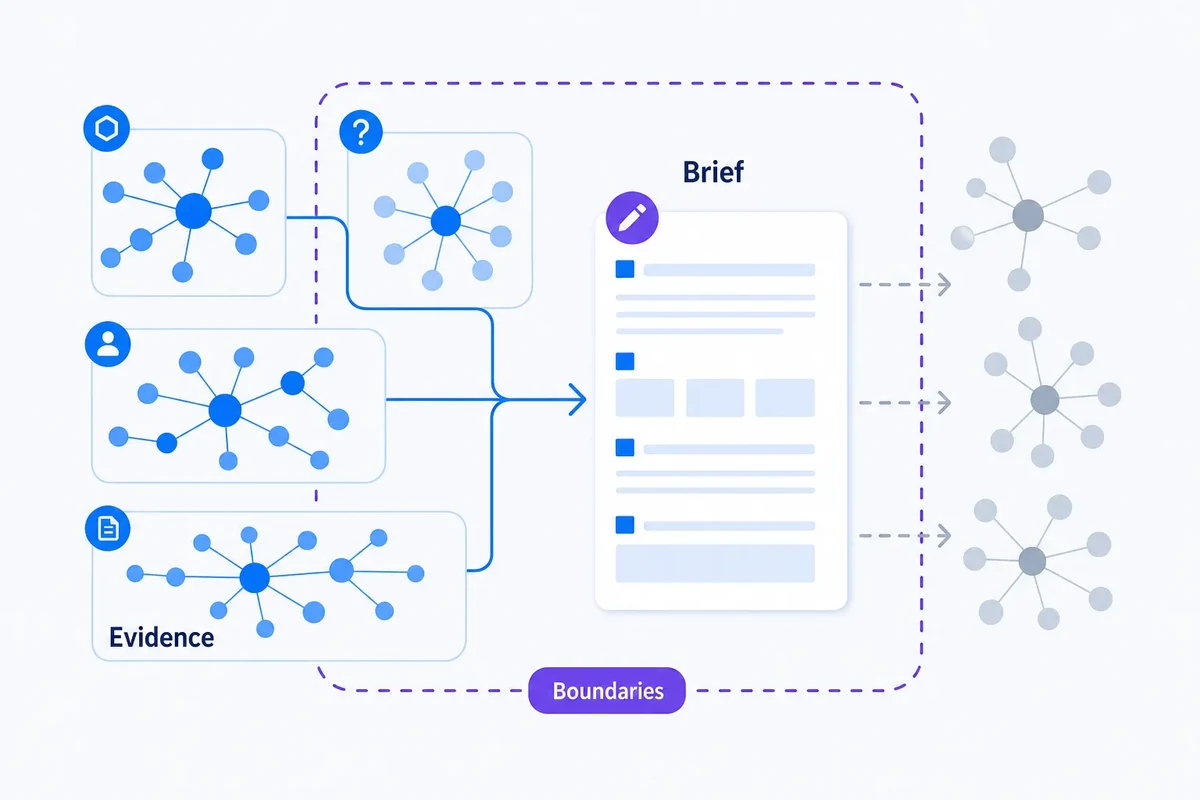
A good content brief should make the writer's job clearer, not write the article for them.
Keyword clusters are useful here because they give you far more context than a primary keyword and a list of variations. The challenge is turning that evidence into editorial direction rather than a bloated SEO checklist.
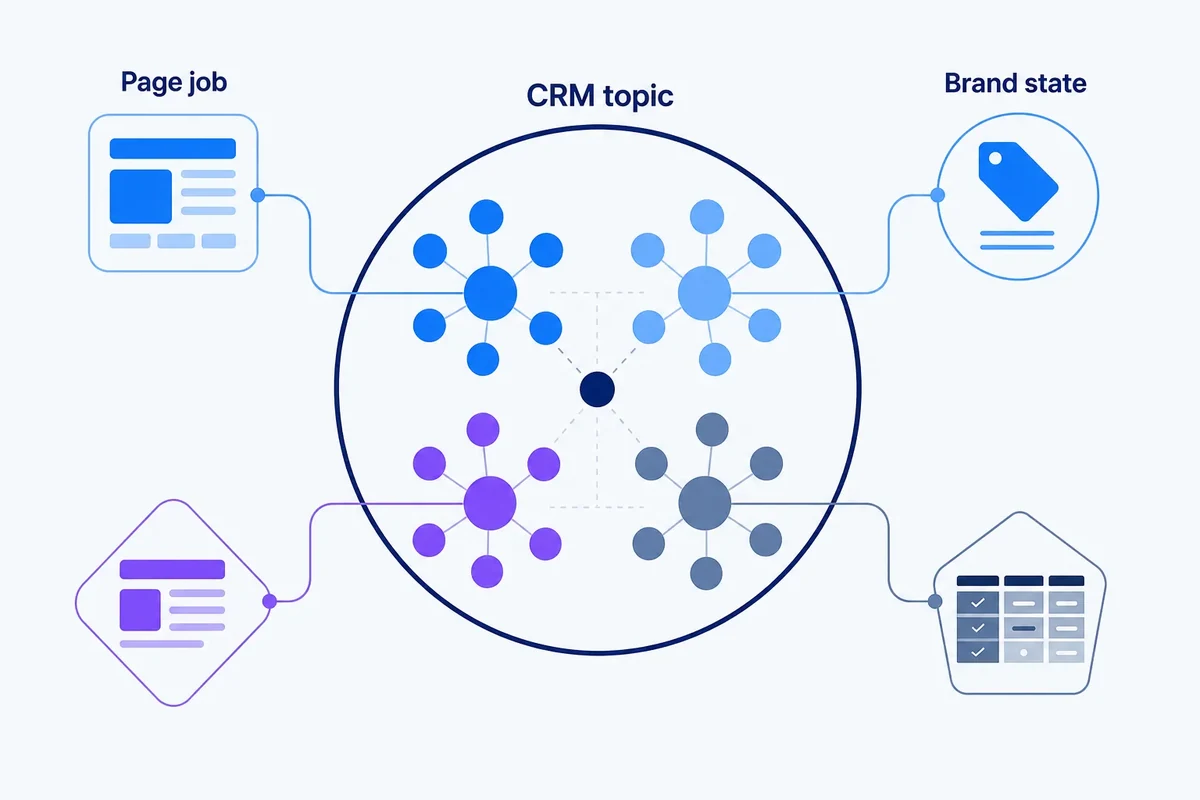
Start with the job the page has to do
The first line of the brief should answer one question:
What should this page help the user do?
That matters more than starting with search volume.
For example, the page might need to help someone:
- understand a method;
- compare options;
- choose a product;
- solve a problem;
- find a local service;
- complete a transaction.
Use the cluster to define scope
Include in the brief:
- representative queries;
- important subclusters;
- entities;
- intent or task evidence;
- boundary topics that should stay out;
- neighbouring pages.
The exclusions are often just as important as the inclusions, because they stop two briefs drifting into the same territory.
Don't dump every keyword into the headings
A cluster can contain hundreds of terms.
The writer doesn't need to work every single one into the copy.
Instead, group the evidence into:
- core concept;
- supporting questions;
- entities and terminology;
- comparison dimensions;
- examples worth covering.
Let questions reveal missing sections
Long-tail queries and query modifiers often surface practical concerns readers actually have.
Use them to spot candidate sections, FAQs or examples, but only where they genuinely support the main job of the page.
The fact that a question exists doesn't automatically earn it its own heading.
Include your evidence sources
A research-led brief should point the writer towards:
- primary documentation;
- academic or technical sources;
- first-party product data;
- relevant internal expertise;
- existing site data.
This improves factual quality and reduces the temptation to just paraphrase competitors.
Internal links belong in the brief
The topic graph can suggest:
- a parent page;
- related supporting pages;
- a commercial destination;
- a deeper technical explanation.
Give the writer the reason for each link, not just the URL.
Add a differentiation statement
Every brief should explain how the page differs from its nearest neighbours.
For example:
This article explains how similarity thresholds are calibrated. It should not repeat the general explanation of cosine similarity except where necessary for context.
One sentence like that can prevent a lot of cannibalisation.
State the page type explicitly
Specify whether the output is a:
- concept explainer;
- methodology guide;
- comparison;
- case study;
- commercial landing page;
- documentation page;
- tool page.
That shapes the structure far more effectively than a generic instruction like "write an SEO article".
A good brief leaves room for expertise
If the brief dictates every heading, paragraph and conclusion, the writer becomes little more than a formatter.
Instead, define:
- evidence that must be covered;
- questions that must be answered;
- claims that need support;
- boundaries with other pages;
- editorial voice.
Then let the writer build the best possible argument around that.
Brief QA can be automated
Check whether the brief contains:
- a clear page job;
- the target cluster;
- intent and page type;
- required entities;
- a source pack;
- internal links;
- a differentiation note;
- prohibited overlap.
Semantic QA can then assess whether the scope is coherent and distinct from adjacent briefs.
Practitioner principle: a cluster-based brief should transfer decisions and evidence. It should not turn a thoughtful writer into a keyword-placement machine.
ClusterIQ Conclusion
Keyword clusters make better content briefs because they define a page in relation to the surrounding topic system, not in isolation.
Use the cluster to set scope, intent, entities, evidence and boundaries. Keep the brief compact enough that the writer still has to think.
The result is content that belongs in the architecture, rather than an isolated article built around a single phrase.
Worked example: brief boundaries in practice
For an article about cosine similarity, the brief might require an explanation of vector direction, normalisation and threshold calibration. It can explicitly rule out a full comparison of K-means, HDBSCAN and graph clustering, because that belongs to a neighbouring article.
Those exclusions help the writer go deeper instead of rebuilding the entire subject from scratch around every keyword.
Add acceptance criteria to the brief
Before writing starts, define what a successful draft has to do. For example: answer the primary question in the opening section, use at least two primary sources, include one practitioner example, explain a limitation, and link to the parent methodology page.
This makes editorial QA far more consistent across a scaled content programme.
Separate evidence from instructions
A strong brief distinguishes what the data shows from what the editor has decided. "These queries cluster together" is evidence. "Use one comparison table and keep implementation details out" is an editorial instruction.
Keeping those two layers separate makes the brief easier to challenge, and stops model outputs being presented as mandatory writing rules.
Briefs should evolve with the corpus
When neighbouring articles are published or merged, update the brief library so future work reflects the current architecture. Otherwise an old brief can quietly reintroduce overlap that the clustering system had already resolved.
Sources and further reading
Farky Rafiq
Founder of ClusterIQ
I've worked in digital marketing since 2005 and founded Liquid Silver in 2011. These articles are where I share the methods, experiments and practical SEO thinking behind ClusterIQ.
Put the idea into practice with your own keyword data
ClusterIQ helps turn raw SEO exports into clean, structured working datasets you can inspect, refine, report on and take into the next stage of your workflow.
Keep reading
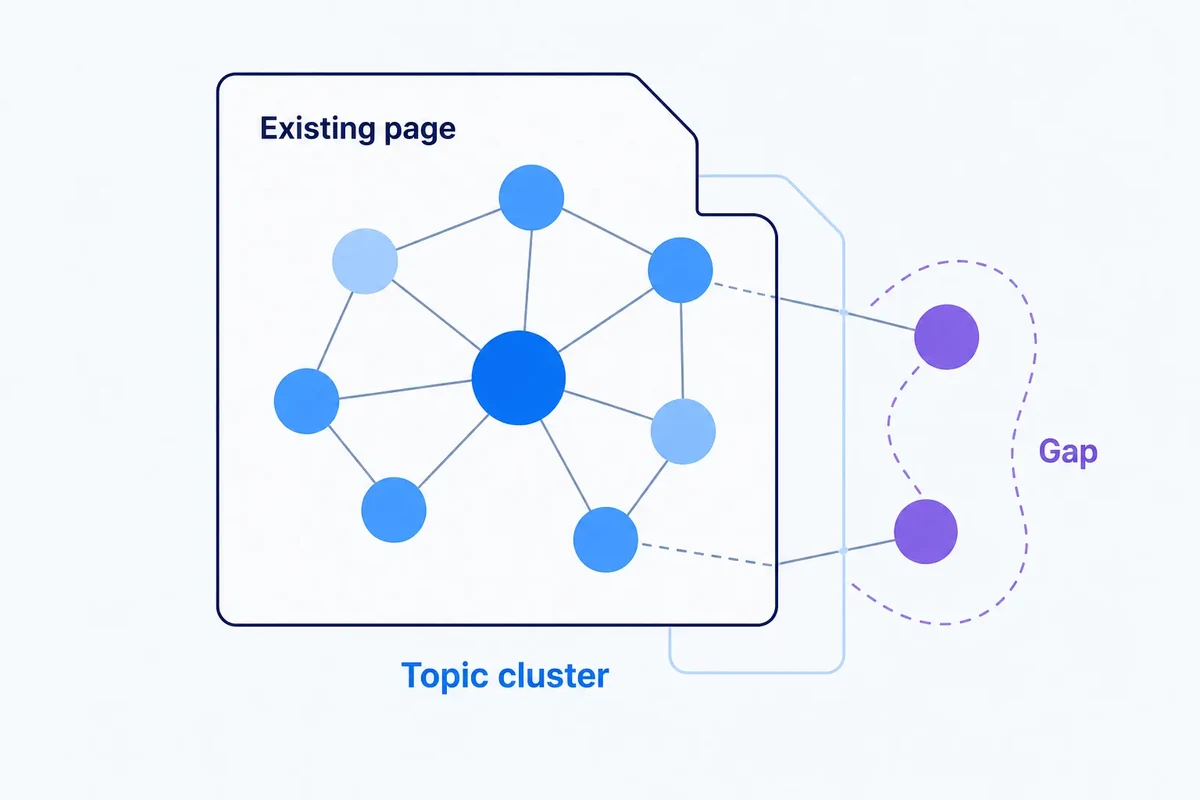
Content gap analysis with keyword clusters: finding missing coverage without manufacturing articles
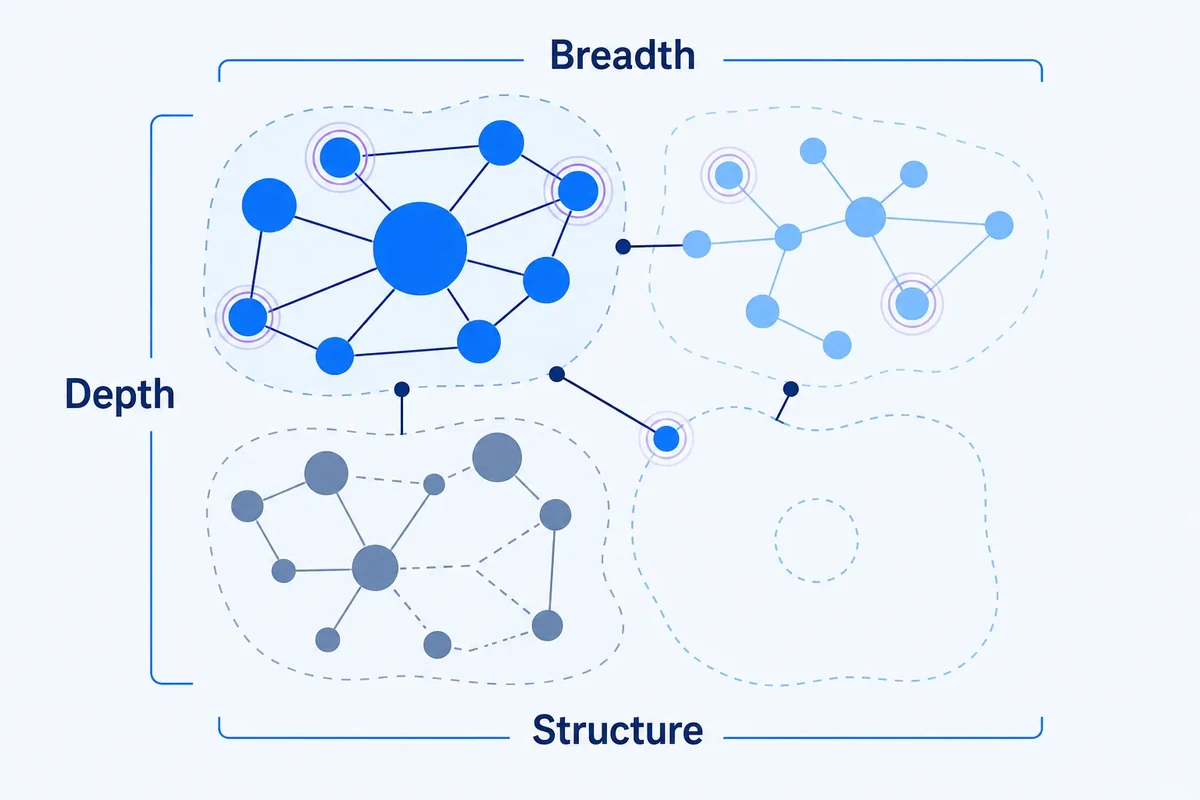
Measuring topical coverage with clusters without inventing a fake authority score