Content gap analysis with keyword clusters: finding missing coverage without manufacturing articles
Clusters can expose missing topics, but every gap is not a new article. Learn how to separate absent coverage, shallow coverage and fragmentation before adding pages.

Farky Rafiq
Founder of ClusterIQ
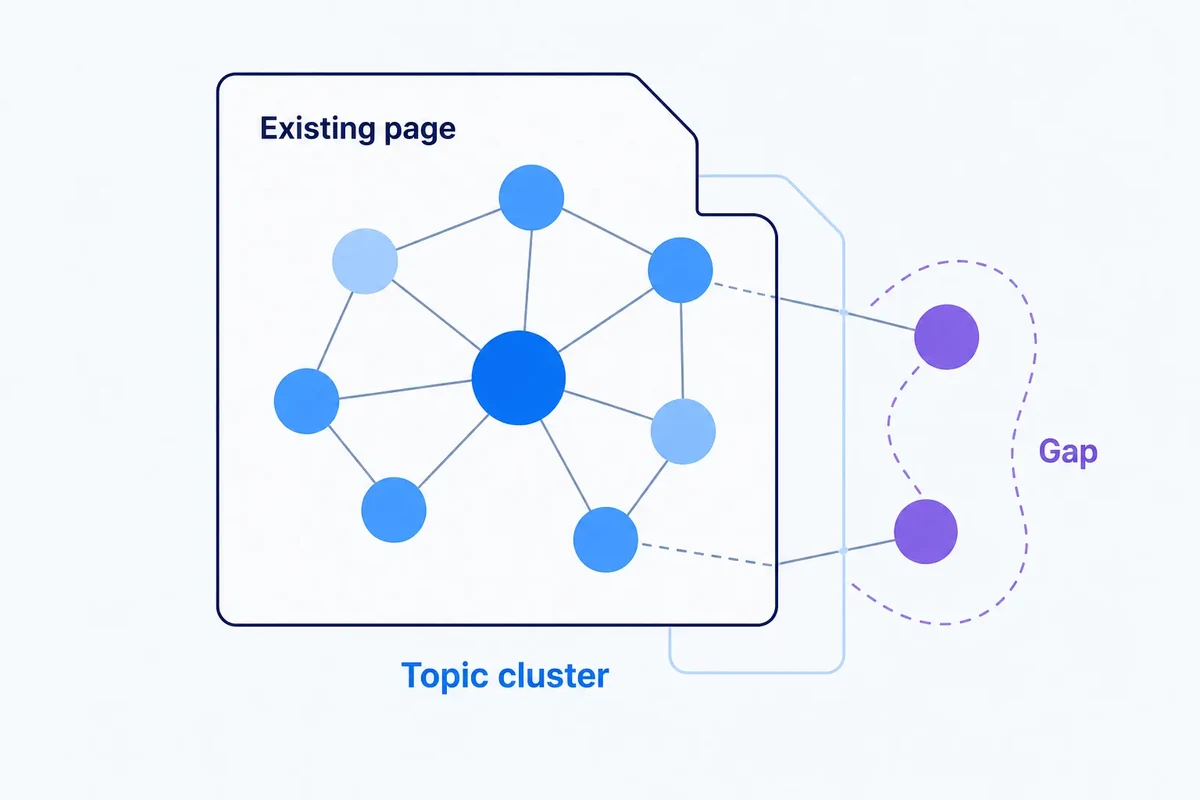
Content gap analysis becomes a lot more useful once you treat the topic or task, rather than a single keyword, as your unit of analysis.
A missing keyword doesn't necessarily mean missing content. A strong existing page might already satisfy the underlying need, just using different words.
Clusters help because they group related demand into something much closer to an actual editorial decision.
There are at least three kinds of gap
Missing coverage: the site has no page that meaningfully serves the cluster.
Shallow coverage: the right page exists but only covers part of the topic or task.
Fragmented coverage: several weak pages are splitting one coherent need between them.
Only the first type clearly points towards a new page, and even then, the topic still has to justify one.
Start with the existing URL map
For each cluster, attach candidate existing pages using:
- current ranking URLs;
- Search Console query-page relationships;
- embedding similarity between clusters and pages;
- a manual content inventory.
The workflow in mapping clusters to existing URLs with embeddings is a good fit here.
Define what "covered" actually means
A page shouldn't count as coverage just because it mentions the topic in passing.
Instead, ask:
- does the page serve the same user task?
- is the page type appropriate?
- does it cover the important entities and subquestions?
- is the content current?
- is it internally linked and indexable?
- does Search Console show relevant visibility?
Cluster-level demand is a prioritisation signal
Adding up demand across related queries can reveal opportunities that individual low-volume terms hide on their own.
But be careful about simply summing every provider's volume figure and treating the total as precise.
Use demand comparatively, alongside:
- business value;
- existing authority;
- implementation effort;
- current rankings;
- strategic relevance.
Competitive gaps need interpreting, not copying
A competitor might cover a topic you don't because:
- they have a different product range;
- their audience is different from yours;
- the topic simply isn't strategically relevant to you;
- they're publishing content fairly indiscriminately.
Competitor coverage is evidence that something is possible, not a mandate to copy it.
Look for gaps in the topic graph itself
If several strong existing pages surround a missing concept in your topic graph, that gap can be more interesting than an isolated high-volume keyword sitting on its own.
The missing node might complete a user journey or connect two clusters that are currently separate.
Graph position adds structural context that raw demand figures can't give you.
Don't create pages when improving one would do
If an existing page already owns the cluster but lacks depth, expand it.
If two pages weakly share the same topic, consolidating them may work better.
If one page has the right job to do but poor headings or internal links, fix those first.
All of this is cheaper than creating new content, and it reduces the risk of building fresh overlap.
A useful gap score has several parts
Rather than one opaque number, keep separate dimensions such as:
- coverage status;
- cluster demand;
- commercial value;
- current visibility;
- implementation effort;
- topical importance;
- confidence in the gap.
A dashboard can rank opportunities using these dimensions while still letting the practitioner see exactly why each one surfaced.
Content gaps can exist inside pages too
Cluster analysis isn't only about deciding whether to create new URLs.
A broad page might be missing sections, comparisons, FAQs or examples. Subclusters can turn into section-level recommendations rather than entirely new pages.
That's one of the best safeguards against content inflation.
A practical workflow
- Build or review the topic clusters.
- Map each cluster to existing candidate URLs.
- Classify coverage as strong, shallow, fragmented or missing.
- Attach demand and business value.
- Review neighbouring clusters for overlap.
- Choose improve, consolidate, create or ignore.
- Design internal links before publishing new content.
Practitioner principle: a gap is the absence of a useful answer or page role, not the absence of an exact keyword on the site.
ClusterIQ Conclusion
Keyword clusters make content-gap analysis much more meaningful because they shift the conversation from individual phrases to coherent user needs.
The strongest process is one that separates missing coverage from shallow and fragmented coverage. That keeps the output focused on genuinely better site coverage rather than just more URLs.
Worked example: missing topic or weak existing page?
Say a cluster around "semantic keyword clustering" maps most strongly to an existing general clustering guide. The page mentions semantic similarity but doesn't go into embeddings, thresholds or limitations in any real depth.
That gap could be handled by expanding the existing guide, or by creating a dedicated article, depending on whether the new material has a genuinely distinct user job. The cluster alone doesn't decide that. The content architecture does.
Review gaps against neighbouring planned content
A gap can vanish once you take another planned page into account. Before commissioning anything, compare the candidate brief with neighbouring topics in the roadmap. This stops you producing several articles from different research batches that all end up making the same final argument.
Use a "no new page" outcome deliberately
A mature gap-analysis workflow should allow the result "no action". Some clusters are too small, too peripheral, or already served well enough by another page. Recording that decision stops the same opportunity resurfacing every time you rerun the analysis.
Sources and further reading
Farky Rafiq
Founder of ClusterIQ
I've worked in digital marketing since 2005 and founded Liquid Silver in 2011. These articles are where I share the methods, experiments and practical SEO thinking behind ClusterIQ.
Put the idea into practice with your own keyword data
ClusterIQ helps turn raw SEO exports into clean, structured working datasets you can inspect, refine, report on and take into the next stage of your workflow.
Keep reading
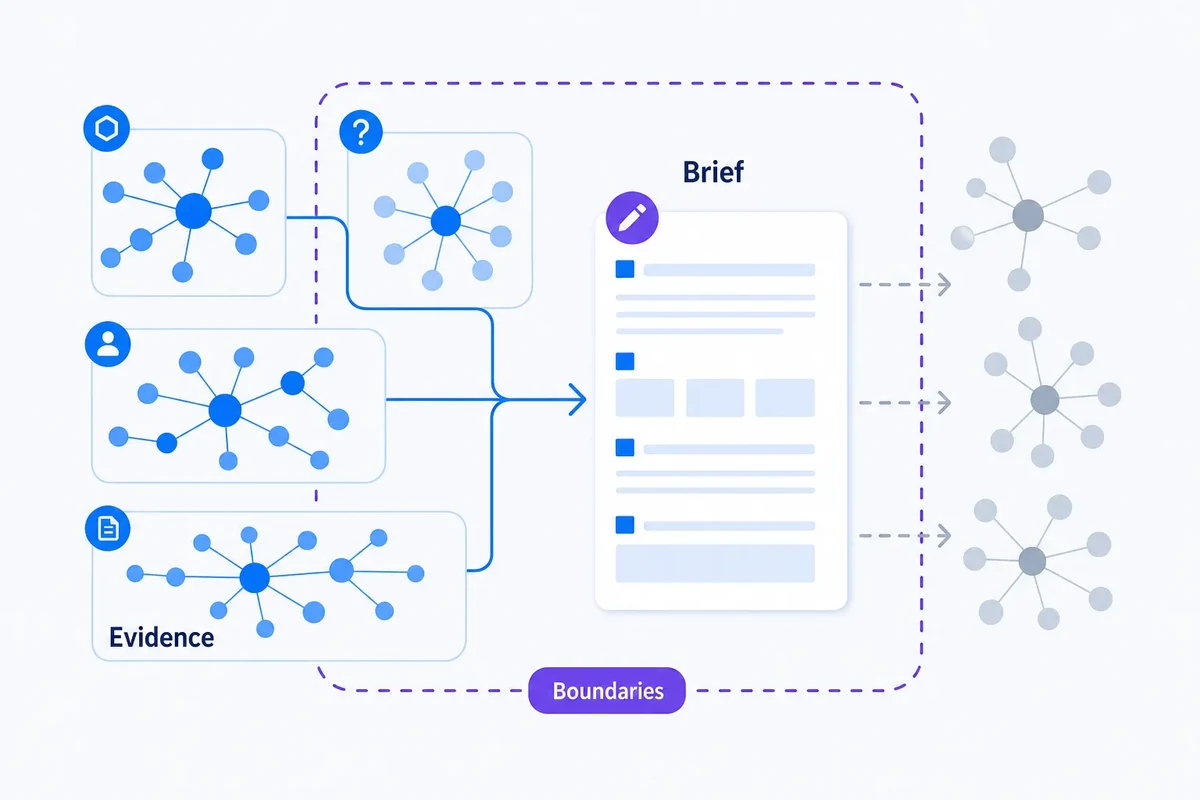
Turning keyword clusters into content briefs without writing the article twice
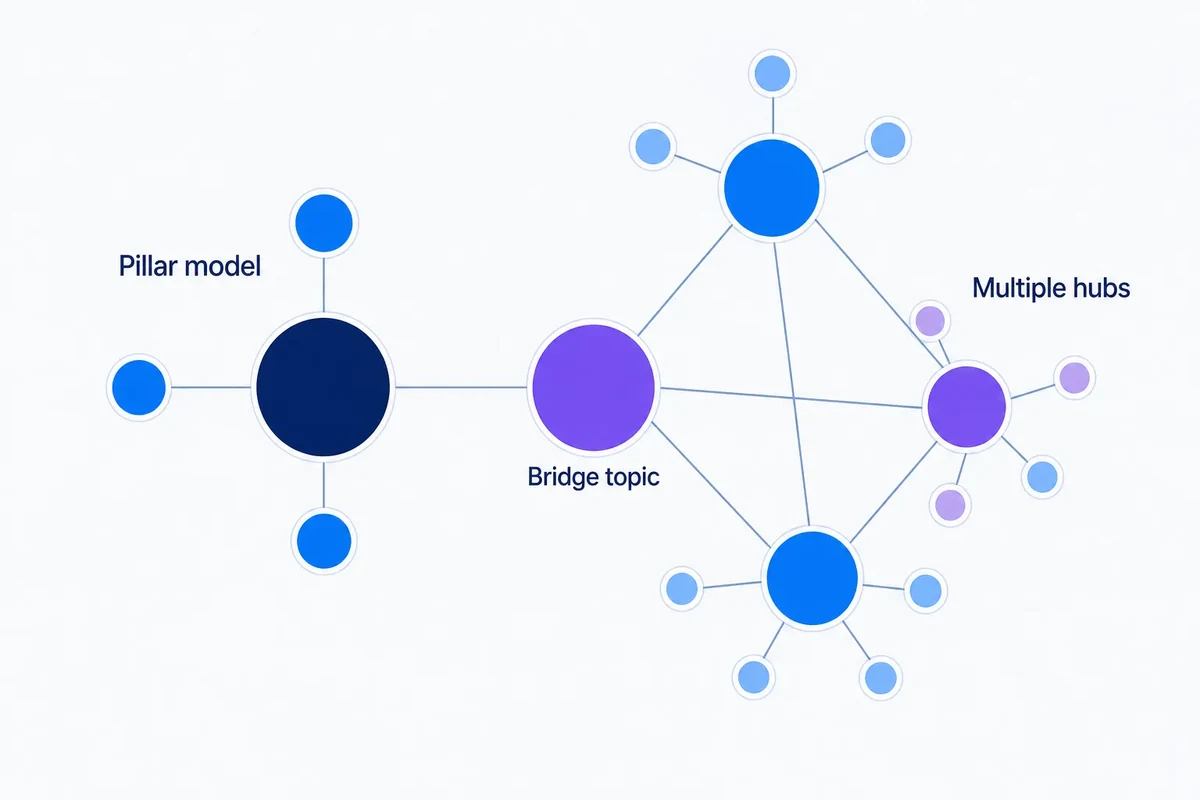
Pillar pages and topic clusters: when the classic content model breaks down