Content decay vs topic decay: knowing whether the page got weaker or the demand moved
Traffic can fall because a page lost performance or because the underlying topic changed. Learn how ClusterIQ separates page decay from demand and cluster change before recommending a refresh.

Farky Rafiq
Founder of ClusterIQ
When a page loses traffic, rewriting it can feel like the obvious next step. But the page may still be doing its job. Demand might have fallen, the topic might have split into subtopics, or another URL might now rank instead.
ClusterIQ can separate page change from topic change before recommending action. That helps avoid commissioning a rewrite that cannot solve the problem.
Content decay is page-relative
Content decay means the page has become weaker. Signs to investigate include losses in:
- clicks;
- impressions;
- ranking distribution;
- query coverage;
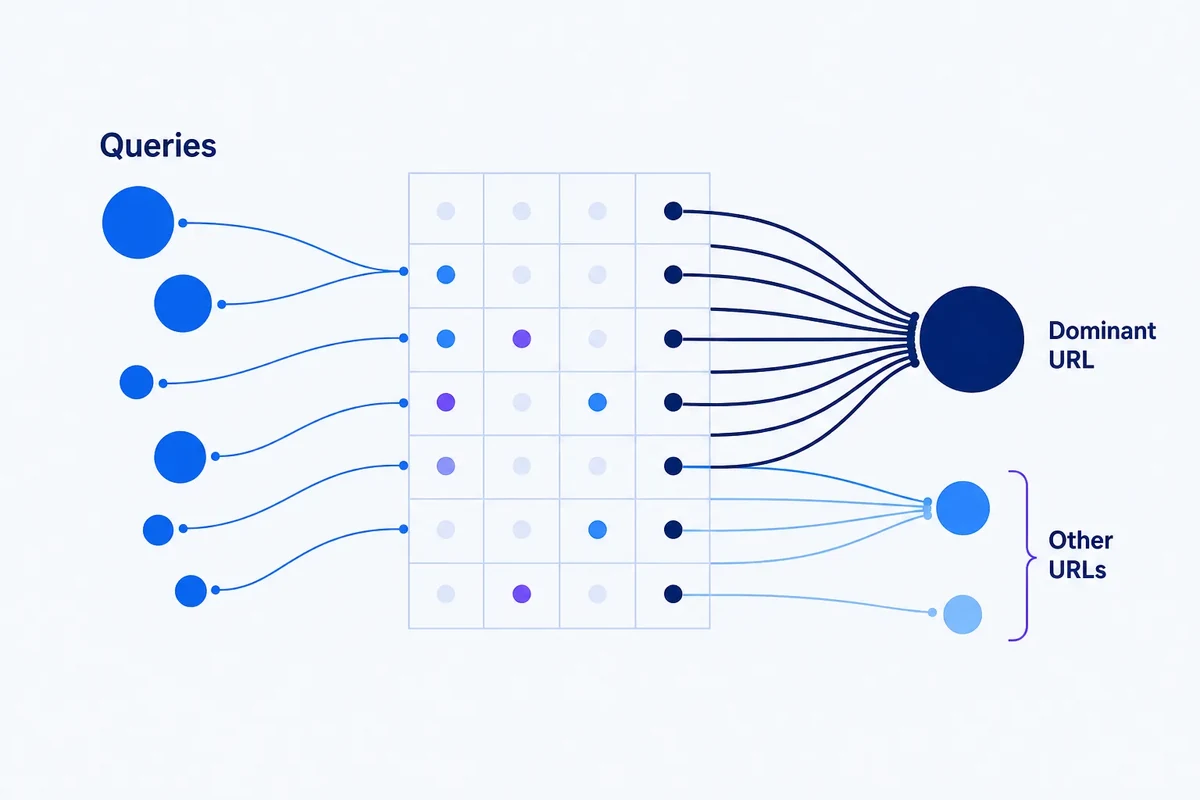
- dominant ownership.
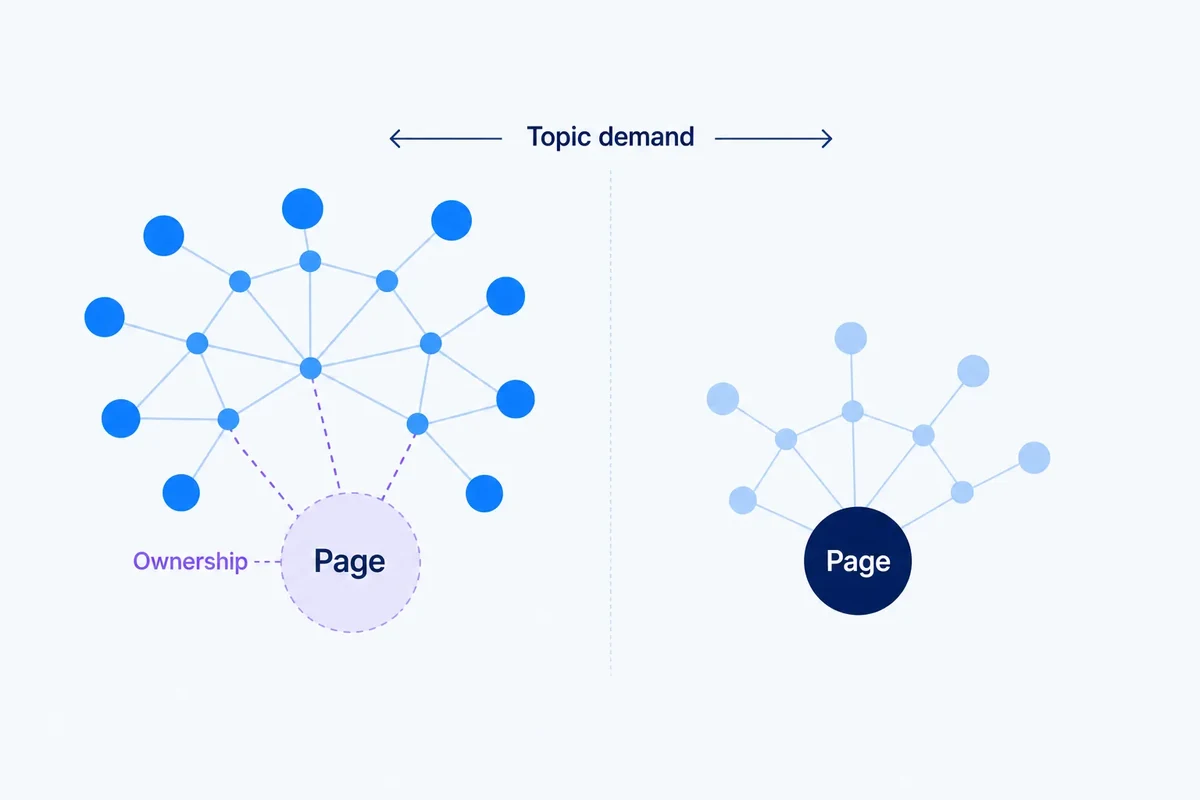
If demand across the keyword cluster remains stable, the issue is more likely page performance or which URL owns those searches.
Topic decay is demand-relative
The whole topic may shrink because:
- a product became obsolete;
- terminology changed;
- seasonal interest fell;
- the market moved;
- a temporary trend ended.
Making a page longer cannot bring back demand that no longer exists.
Worked example: stable rankings, lower impressions
A guide keeps roughly the same spread of ranking positions, but impressions across its keyword cluster fall 35% year on year.
Search Console and external trend evidence both point to declining topic demand.
A brief to “recover lost traffic” through rewriting may be the wrong response. The guide could still serve a smaller market perfectly well.
Compare page performance with cluster performance
Start with a few hundred related keywords from Search Console, Ahrefs or Semrush. Group them by topic, then track:
- page clicks and impressions;
- cluster clicks and impressions;
- the page’s share of that visibility;
- total visible query count;
- seasonality.
If the page’s share falls while cluster demand stays stable, page-level decay becomes more likely.
Ownership changes can mimic decay
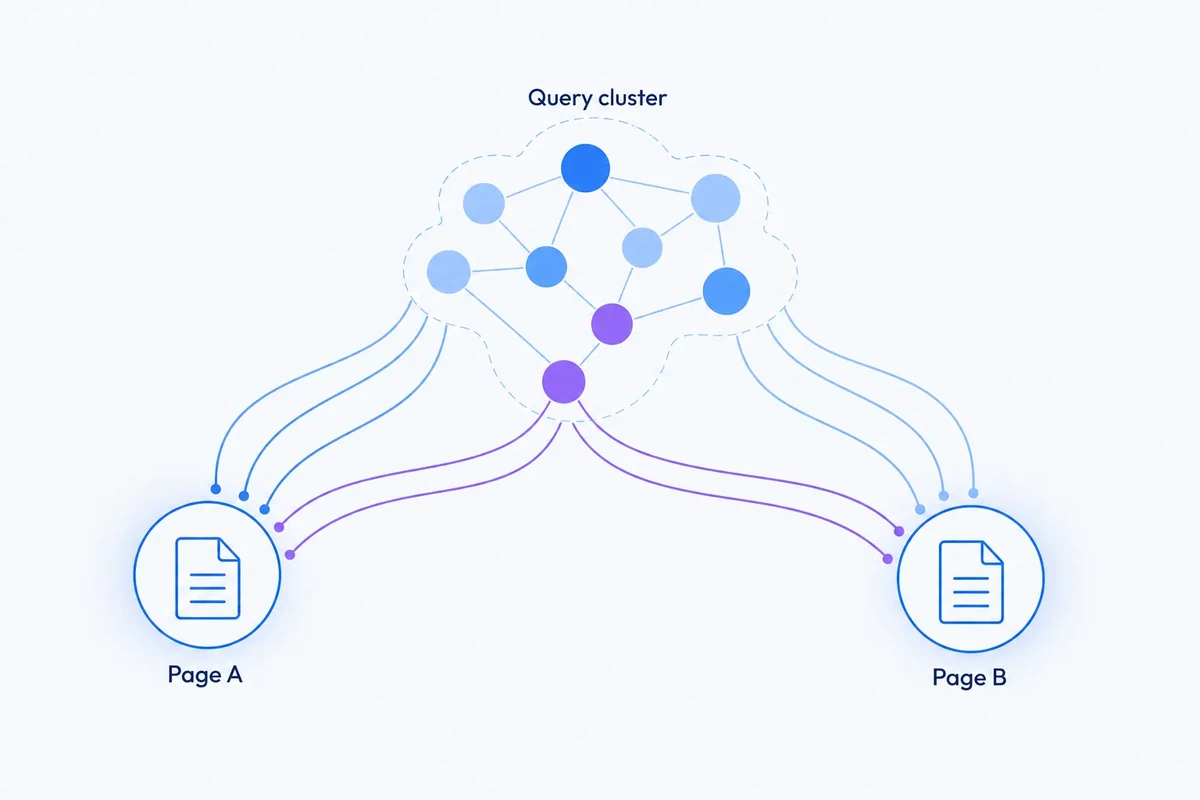
Page A may lose traffic because Page B starts ranking for the same cluster. The site’s overall cluster visibility could be unchanged.
Ownership-change analysis reveals that redistribution before the team spends time rewriting Page A.
Topic drift can change what the page needs
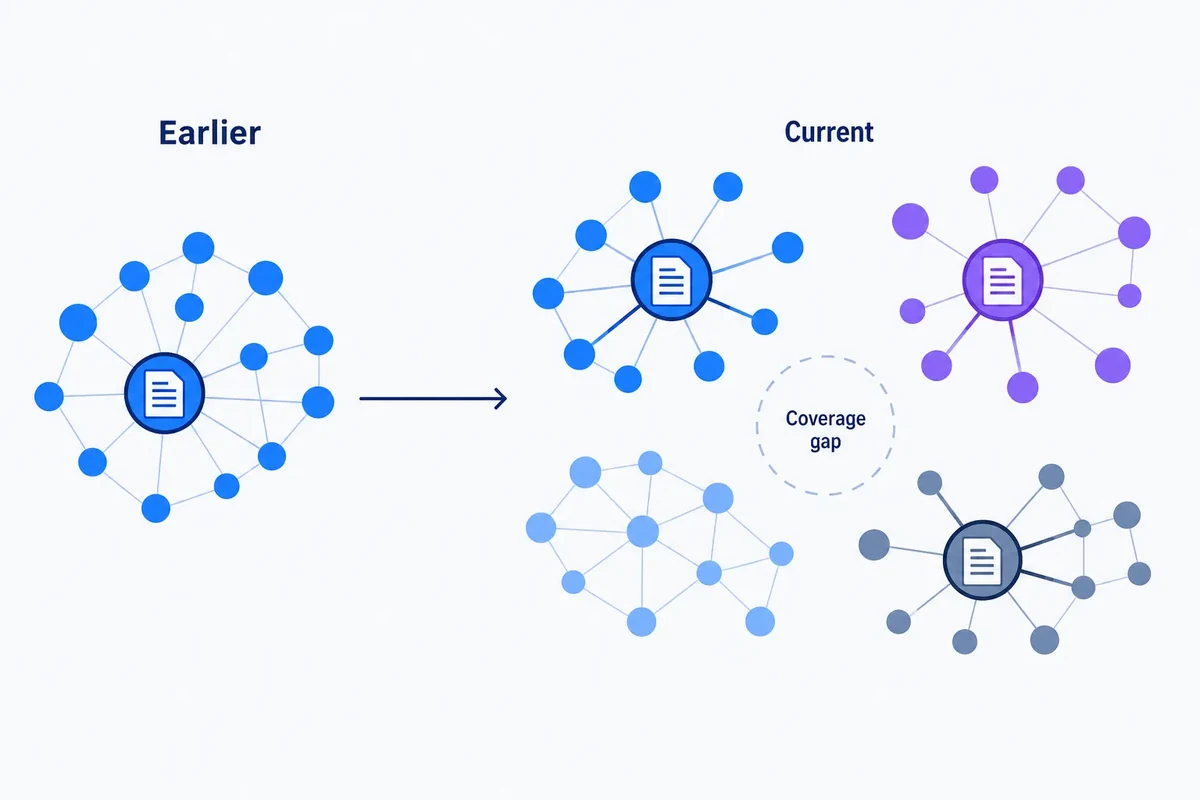
Demand can remain strong while new entities or tasks emerge within the topic.
Cluster drift can reveal that the page needs updating because its subject has evolved, rather than simply because the content is old.
Seasonality needs comparable periods
Christmas content will look weaker if you compare December with March. Use year-on-year windows or seasonal models where appropriate, rather than treating predictable movement as decay.
SERP changes can affect click opportunity
Impressions may stay stable while clicks fall because search result layouts or competing features change. Check Search Console click-through rate alongside observations of the search results.
Do not use publication age as the trigger
An old page can remain accurate and useful. Last month’s article can already be wrong. Age is, at most, a signal to review.
Refresh only the changed part
If one smaller keyword group within the cluster has grown, but the rest of the page remains sound, update the relevant section and internal links. A full rewrite may add unnecessary work.
Content decay can be structural
The weakness may sit outside the copy:
- internal links disappeared;
- the canonical changed;
- the template became slower or inaccessible;
- the page type no longer matches the search results;
- a better sibling page was launched.
Editorial changes alone will not fix these problems.
Use a decay diagnosis field
ClusterIQ can classify:
- page performance decline;
- topic demand decline;
- ownership shift;
- seasonal movement;
- topic drift;
- technical issue;
- uncertain.
Keep that diagnosis alongside the recommended action in your content plan.
Measure recovery against the diagnosis
If the work addressed ownership, measure ownership. If it filled coverage gaps, measure query and section performance. Do not expect every refresh to produce the same traffic curve.
Sometimes the correct action is no action
A shrinking topic can still be useful and strategically necessary. Keeping its content accurate without chasing historical traffic can be the sensible decision.
Practitioner principle: before refreshing a declining page, establish whether the page weakened, the topic changed or demand simply became smaller.
ClusterIQ Conclusion
Cluster-level analysis makes decay diagnosis more precise. ClusterIQ can compare page share, total topic demand, ownership and drift, so refresh decisions address the cause rather than a URL’s age or a falling traffic line.
Build the diagnosis from several periods, not one comparison
A practical ClusterIQ review should go beyond the latest month versus the previous month. Compare seasonal windows, page share of cluster impressions, total cluster demand and how queries are distributed across URLs.
For important pages, keep a change log of content updates, redirects, internal-link changes, template releases and major search result shifts. A decline beginning immediately after an event gives you a concrete lead to investigate, not automatic proof of causation.
The recommendation should name the supported cause. Replace “refresh content” with “restore lost internal links”, “consolidate competing ownership”, “update one outdated section”, “monitor seasonal decline” or “no action”. That gives the implementation team a useful task rather than a vague rewriting brief.
Use a no-change control where possible
Where similar pages exist, compare the declining page with a stable cluster that has not been materially updated. This reference helps distinguish sitewide or market movement from a page-specific issue. It is not a perfect experiment, but it adds context before commissioning work.
Sources and further reading
Farky Rafiq
Founder of ClusterIQ
I've worked in digital marketing since 2005 and founded Liquid Silver in 2011. These articles are where I share the methods, experiments and practical SEO thinking behind ClusterIQ.
Put the idea into practice with your own keyword data
ClusterIQ helps turn raw SEO exports into clean, structured working datasets you can inspect, refine, report on and take into the next stage of your workflow.
Keep reading
Refreshing old content with cluster drift and coverage evidence
Keyword cannibalisation: how clustering helps find overlap without inventing a problem