Clustering support tickets for SEO: finding real customer problems without turning private data into keywords
Support tickets contain rich problem language and product context. Learn how ClusterIQ can group recurring issues safely and connect them to public content without treating private data as keyword volume.

Farky Rafiq
Founder of ClusterIQ
Your keyword research may show what people search for, while your support inbox explains where customers get stuck. Tickets reveal installation failures, misunderstood features, compatibility problems and wording that keyword tools miss.
For ClusterIQ, that makes support data a useful research direction, provided privacy, source context and product relevance stay explicit.
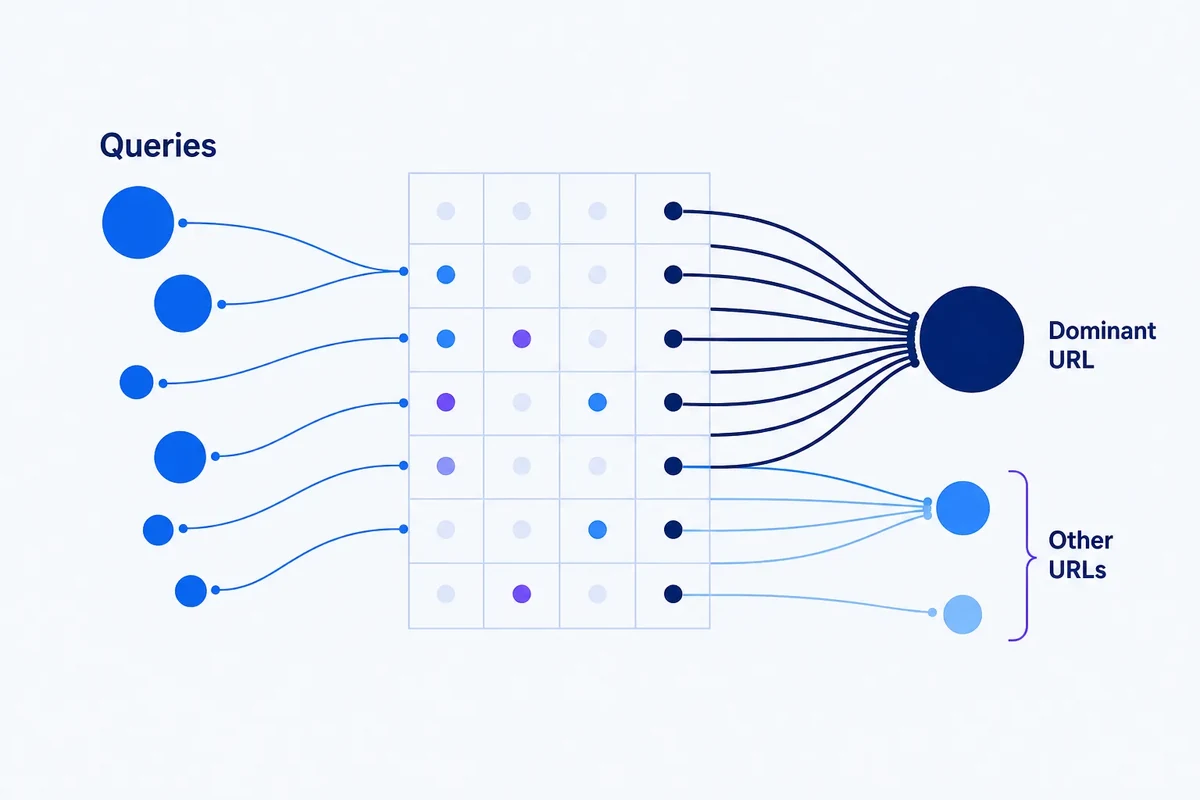
Support demand is not search demand
Ten thousand password-reset tickets do not mean ten thousand people search Google for that problem. They represent existing customers or users who needed help. Report ticket frequency separately from Search Console impressions and external keyword volume.
Privacy is the first preprocessing step
Before analysis, check tickets for sensitive information:
- names and email addresses;
- order numbers;
- postal addresses;
- account identifiers;
- personal details in free text.
Remove or protect this information before creating research datasets or embeddings, the numerical representations used to compare meaning.
Cluster the problem, not the customer
Keep the analysis focused on what went wrong:
- issue type;
- product or entity;
- task;
- error description;
- resolution category.
User identity is rarely necessary for SEO research.
Worked example: installation confusion
Imagine hundreds of tickets about installing one product range. A ClusterIQ analysis groups their different descriptions into three recurring problems:
- measurement;
- mounting hardware;
- seal alignment.
The website has one generic installation guide covering only measurement. This exposes a support-content gap and gives the team concrete subjects to assess for guide updates or separate troubleshooting pages.
Connect tickets to public search data
Compare each support cluster with:
- Search Console queries;
- external keyword research;
- internal site search;
- existing help pages.
For example, checking a few hundred relevant Ahrefs or Semrush keywords can help validate search demand. Agreement across sources strengthens the case for public content.
Some support problems should remain private
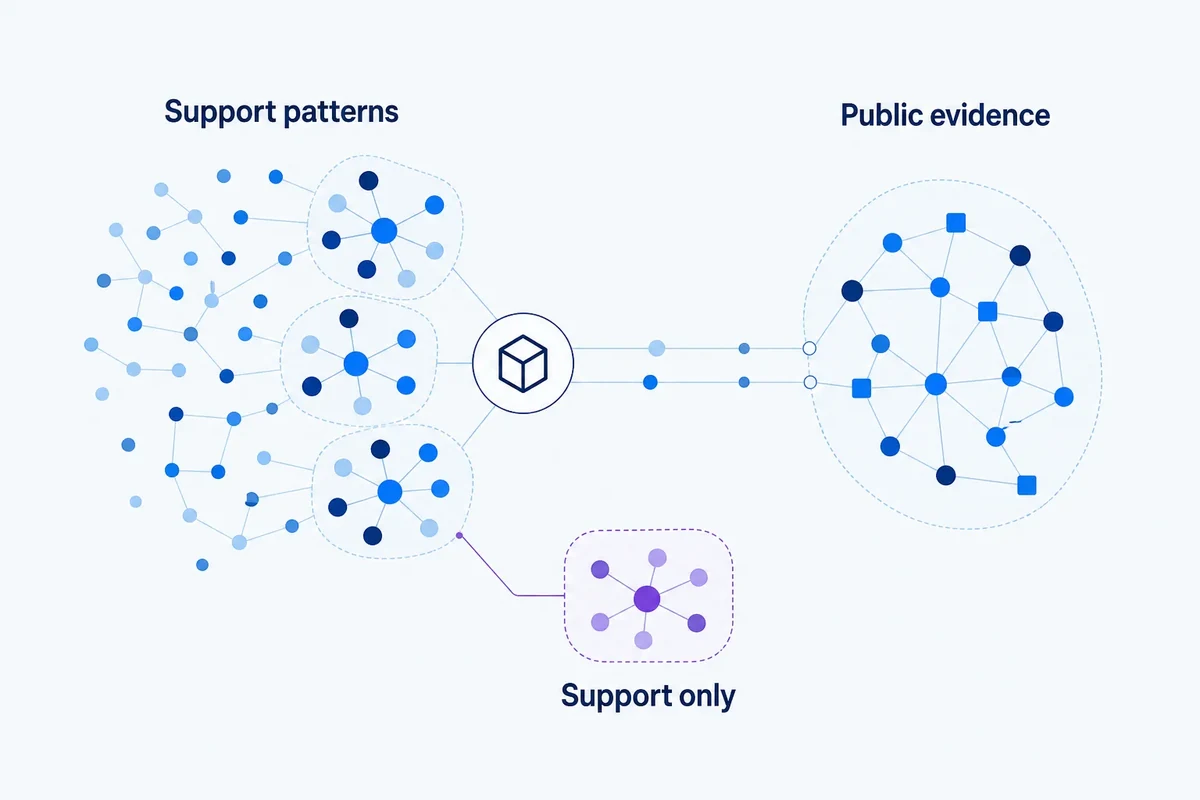
Account-specific, security-sensitive or operational issues may need better support flows, not indexable pages. “Support only” should be a valid outcome for ClusterIQ analysis, rather than treating every cluster as a content brief.
Resolution data adds another dimension
Where tickets record successful resolutions, analysis can identify which resource or action solves a recurring problem. That evidence can inform briefs and internal links without exposing individual messages or making writers read every ticket.
Product entities are crucial
“Doesn't fit” tells you little without the product, model or accessory. Entity extraction, identifying those specific items, separates similar-sounding complaints that need completely different solutions.
Ticket volume can prioritise content maintenance
A help article can rank well yet still fail customers. Persistent tickets about its topic are a reason to review it. For ClusterIQ, ticket trends can inform product and content quality, rather than measure organic performance.
Use ticket language for synonyms
Customers rarely use exactly the same terminology as internal teams. Their wording can improve:
- onsite search synonyms;
- FAQ wording;
- help-centre navigation;
- entity alias dictionaries, which connect alternative names for the same thing.
Do not publish raw ticket examples
Write public examples from aggregated patterns, not copied customer messages. Generalise and rewrite the recurring problem rather than turning someone's private account of it into website copy.
Measure change after content improvements
If a guide targets one support cluster, track:
- ticket frequency;
- internal search frequency;
- guide usage;
- organic query ownership: which page appears for the relevant queries.
Fewer support requests can be a meaningful result even when organic traffic stays unchanged.
Use time to identify product regressions
A sudden cluster spike after a product or website release may signal a defect, not a missing article. ClusterIQ should retain timestamps and release context so teams can investigate that distinction.
Combine support and topic graphs carefully
One support issue may connect to a commercial product page, troubleshooting guide and documentation section. Mapping these relationships in a graph can inform navigation and internal linking. It does not automatically justify a separate page for attracting new visitors.
Keep source provenance visible
A ClusterIQ insight should identify its evidence source: customers, onsite search or Google Search. Keeping that origin visible prevents a support pattern being presented as proof of search demand.
Practitioner principle: support tickets reveal real customer problems. Use the recurring pattern, protect the person and validate whether the problem belongs in public search content.
ClusterIQ Conclusion
Support-ticket clustering can strengthen ClusterIQ's role in content and product research. Handled safely, it connects customer problems with search, support and page evidence while keeping private data and SEO demand separate.
Use recurrence and resolution difficulty together
Volume alone can over-prioritise simple questions that are easy to resolve. Where fields exist and are appropriate to use, ClusterIQ analysis can also consider repeat contact, escalation rate and time to resolution. A smaller cluster needing repeated specialist intervention may reveal a more important problem.
Match the action to the cause. Misunderstood terms may need clearer terminology and help content. Genuine product failures belong with product or operations, not an SEO copy brief. If an answer already exists but customers cannot find it, navigation or internal search may need attention.
This keeps the work focused on customer outcomes. Public content is one possible response to a recurring problem, not the automatic destination for every theme.
Sources and further reading
Farky Rafiq
Founder of ClusterIQ
I've worked in digital marketing since 2005 and founded Liquid Silver in 2011. These articles are where I share the methods, experiments and practical SEO thinking behind ClusterIQ.
Put the idea into practice with your own keyword data
ClusterIQ helps turn raw SEO exports into clean, structured working datasets you can inspect, refine, report on and take into the next stage of your workflow.
Keep reading
Keyword cannibalisation: how clustering helps find overlap without inventing a problem
Using keyword clusters to design an SEO taxonomy without letting search volume run the site