Inventory depth as an SEO signal: when keyword demand should not create a category page
Search demand can justify investigation, but thin or unstable inventory can make a category page poor for users. Learn how ClusterIQ can combine keyword clusters with product depth.

Farky Rafiq
Founder of ClusterIQ
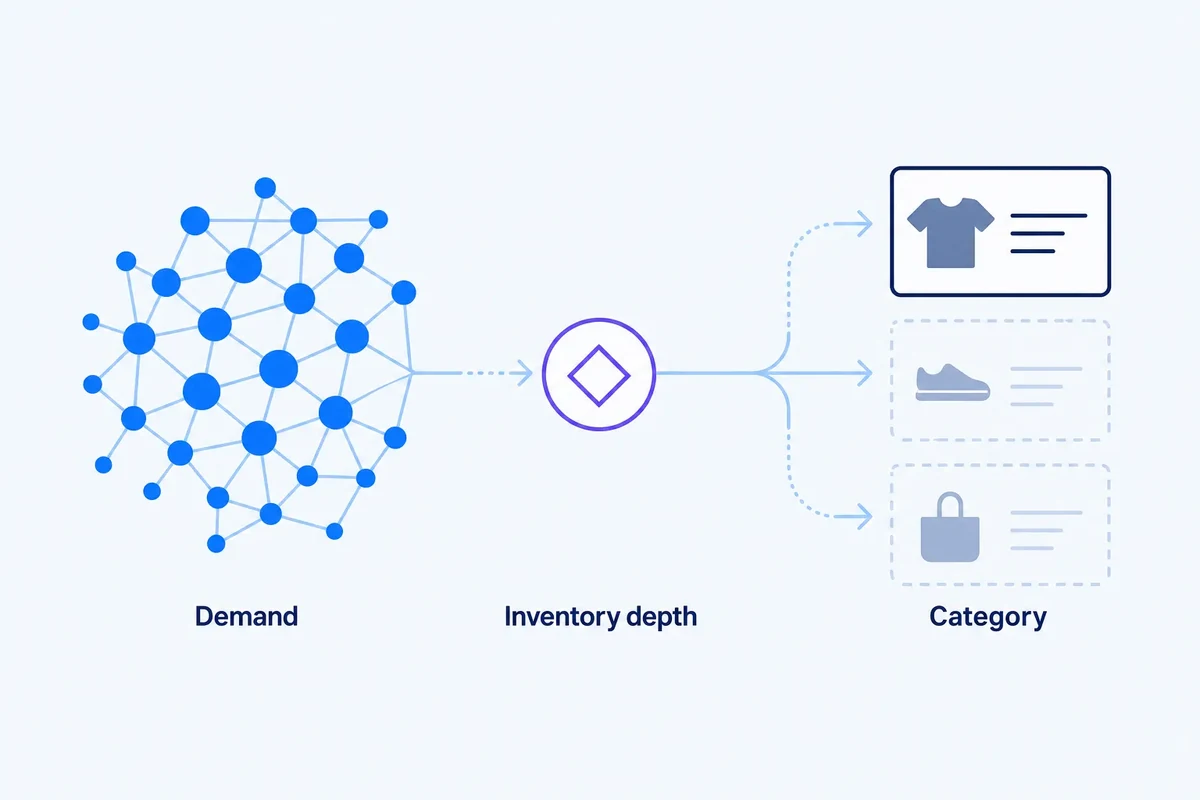
It is a common scenario when working with large datasets from Ahrefs or Search Console: you identify a cluster of several dozen keywords focused on a specific niche, such as a particular colour, material or size. On paper, the search volume makes a new category page look like a guaranteed win. However, if your product catalogue only contains two relevant items that frequently go out of stock, building a permanent home for that cluster can lead to a poor user experience and a technical SEO headache.
ClusterIQ helps refine these recommendations by treating inventory depth as a critical signal alongside search demand. By looking at what you actually have to sell, you can avoid creating "thin" pages that frustrate customers and search engines alike.
Search demand and product depth answer different questions
When we look at keyword data, we are asking: Is there an audience interested in this specific concept?
When we look at inventory, we are asking: Can we actually provide a meaningful choice for that audience?
For a category page to be successful and sustainable, you generally need a "yes" to both. High demand with no stock leads to high bounce rates; high stock with no demand leads to wasted crawl budget and bloated site architecture.
What inventory depth means
Simply counting SKUs is rarely enough to justify a new URL. When assessing whether a cluster deserves its own page, we should also consider:
- The number of genuinely distinct products rather than just minor variants.
- Consistent stock availability over time.
- The stability of the range (does it disappear every two weeks?).
- Brand diversity and price point variety.
- Planned growth in the product catalogue.
Ten different colour variants of a single toaster do not offer the same "depth" as ten different toaster models from various brands. The latter provides a much stronger justification for a standalone category.
Worked example: a promising modifier cluster
Imagine ClusterIQ identifies a high-intent cluster around "1200mm black vanity units". The search volume is significant, but the catalogue currently only has three qualifying products, two of which are currently unavailable.
The keyword demand is real, but the category opportunity is currently weak. In this situation, your best moves might be:
- Keeping the combination as a filter in your faceted navigation.
- Merchandising these specific products prominently within the broader "Vanity Units" category.
- Monitoring the inventory levels until the range becomes stable enough to support a dedicated landing page.
Inventory should be joined at attribute level
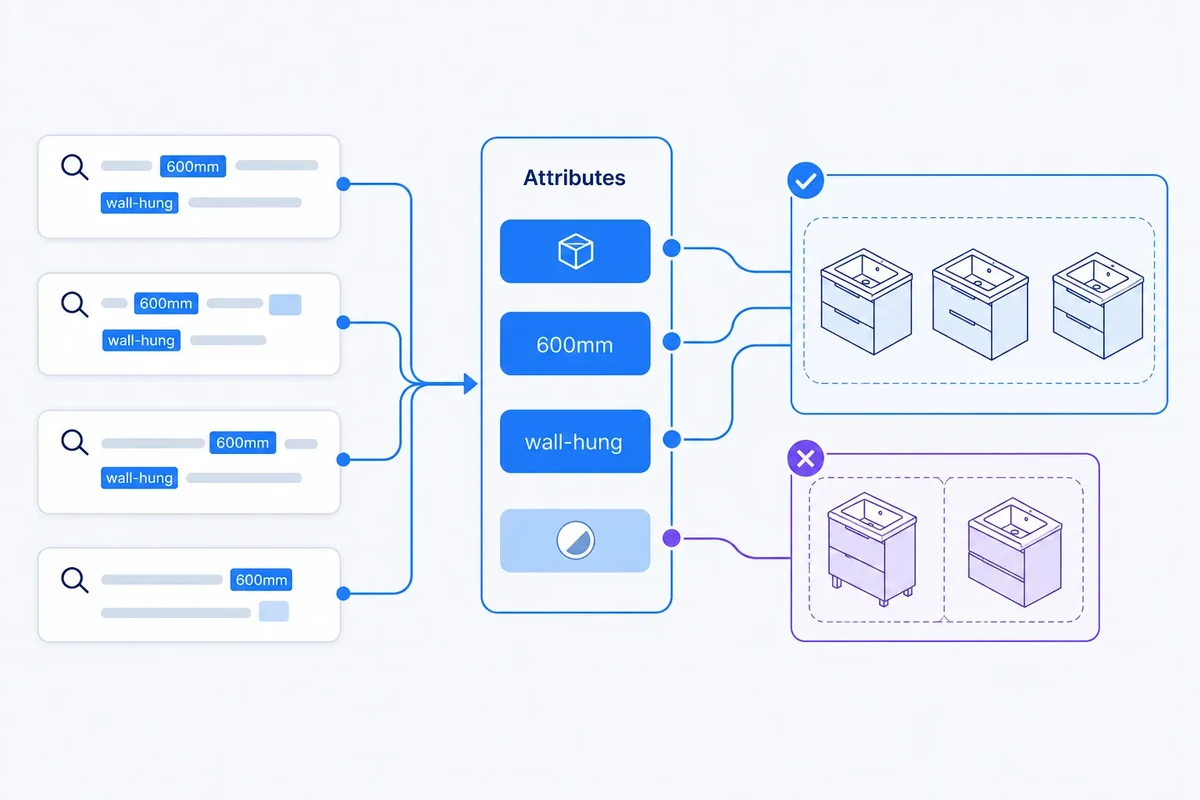
If you have used ClusterIQ to extract attributes like width, colour or material from your keyword sets, you can match these directly against your product feed fields. This allows for a direct comparison between the search demand for a specific attribute combination and the number of live products that match it. Product attribute extraction is the key to automating this analysis at scale, especially when dealing with thousands of potential landing page permutations.
Use minimum depth by category, not globally
Context matters. Five products might represent a healthy, comprehensive range for a highly specialised industrial component, but it would look incredibly sparse for a commodity item like t-shirts. Your thresholds for "enough inventory" should reflect your specific industry norms, the complexity of the purchase, and your business strategy. ClusterIQ allows for this nuanced governance rather than forcing a one size fits all rule on your entire site.
Thin inventory creates maintenance risk
A category page that frequently drops to one or zero products becomes a liability. It risks being seen as a duplicate of a product page, creates "soft 404" signals, and adds unnecessary weight to your crawl and index management. Factoring this risk into the initial page creation decision saves significant time for SEO and merchandising teams later on.
Product availability can be seasonal
Low inventory in the off-season shouldn't necessarily lead to a page being deleted. The goal is to identify if the page has a recurring, useful role. Seasonal cluster analysis helps you distinguish between a temporary dip in stock and a fundamental lack of demand, ensuring you don't accidentally kill off valuable seasonal landing pages.
Inventory depth can prioritise existing-page improvement
Sometimes, a cluster with high demand and high inventory is already being served by a generic, under-optimised category page. This is often a much better opportunity than creating a brand new URL. ClusterIQ can flag these instances where you have the products and the demand, but your current page ownership is weak, allowing you to focus on improving what you already have.
Use product-set distinctiveness
If two proposed categories share 90% of the same products, they are likely to compete with each other rather than add value. By comparing product-set overlap alongside query-cluster overlap (using metrics like Jaccard similarity), you can ensure every new page offers a unique experience to the user.
Faceted navigation raises the stakes
Faceted navigation can generate thousands of potential URLs. Inventory-aware rules are essential for deciding which of these combinations should be indexable. This approach significantly strengthens ClusterIQ's faceted-navigation workflow, ensuring you only index pages that have enough products to satisfy a searcher.
Track inventory after page creation
The work doesn't end once a page is live. You should regularly monitor SKU counts and zero-result periods. If the commercial foundation of a page disappears permanently, it is time to review whether that URL should remain in the index.
Do not let inventory overrule user need blindly
Inventory is a powerful signal, but it isn't an absolute veto. A category page can still be valuable if it supports a stable future range or serves a vital navigational purpose for your users. It is a counterweight to demand, helping you make more informed, defensible decisions.
Where ClusterIQ adds value
ClusterIQ brings demand, attributes, and product depth into a single view. This helps SEO practitioners explain to stakeholders exactly why one cluster deserves a new category while another should remain a simple filter. It moves the conversation from "we have keywords" to "we have a viable business opportunity."
Practitioner principle: search demand can nominate a category. Inventory depth helps decide whether the site can actually support it.
ClusterIQ Conclusion
Inventory depth is the essential ecommerce reality check for keyword research. By combining search clusters with product-feed data, ClusterIQ ensures your site architecture reflects both what users are looking for and what your business can actually deliver. This reduces the risk of thin content and creates a more robust, logical taxonomy.
Use inventory depth as a trend, not only a snapshot
A category might look great on the day you audit it, but if the stock turns over so fast that it is empty three days a week, it is not a stable candidate for a landing page. ClusterIQ can track product counts over time to distinguish between a temporary stock peak and a stable, reliable range. A page supported by twenty products year-round is a much safer bet than one that only hits that number during a brief product launch.
Sources and further reading
Farky Rafiq
Founder of ClusterIQ
I've worked in digital marketing since 2005 and founded Liquid Silver in 2011. These articles are where I share the methods, experiments and practical SEO thinking behind ClusterIQ.
Put the idea into practice with your own keyword data
ClusterIQ helps turn raw SEO exports into clean, structured working datasets you can inspect, refine, report on and take into the next stage of your workflow.
Keep reading
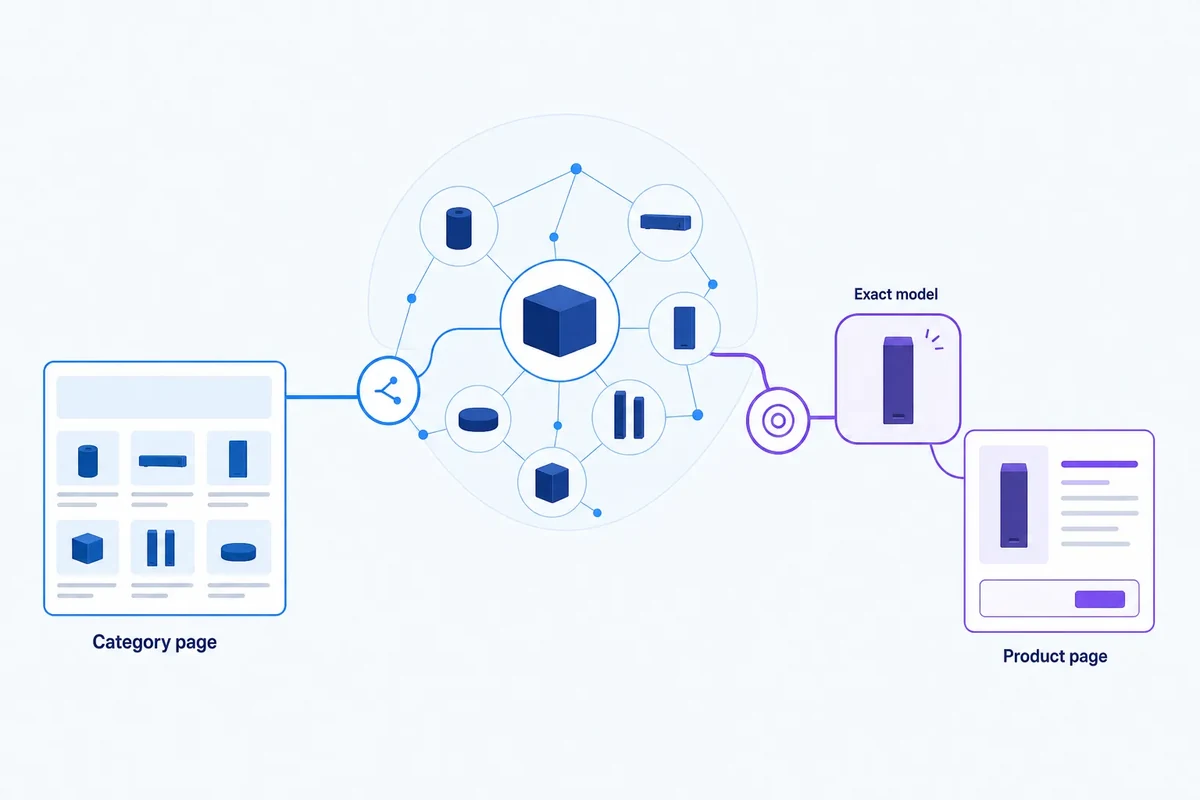
Category page vs product page queries: clustering ecommerce demand at the right level
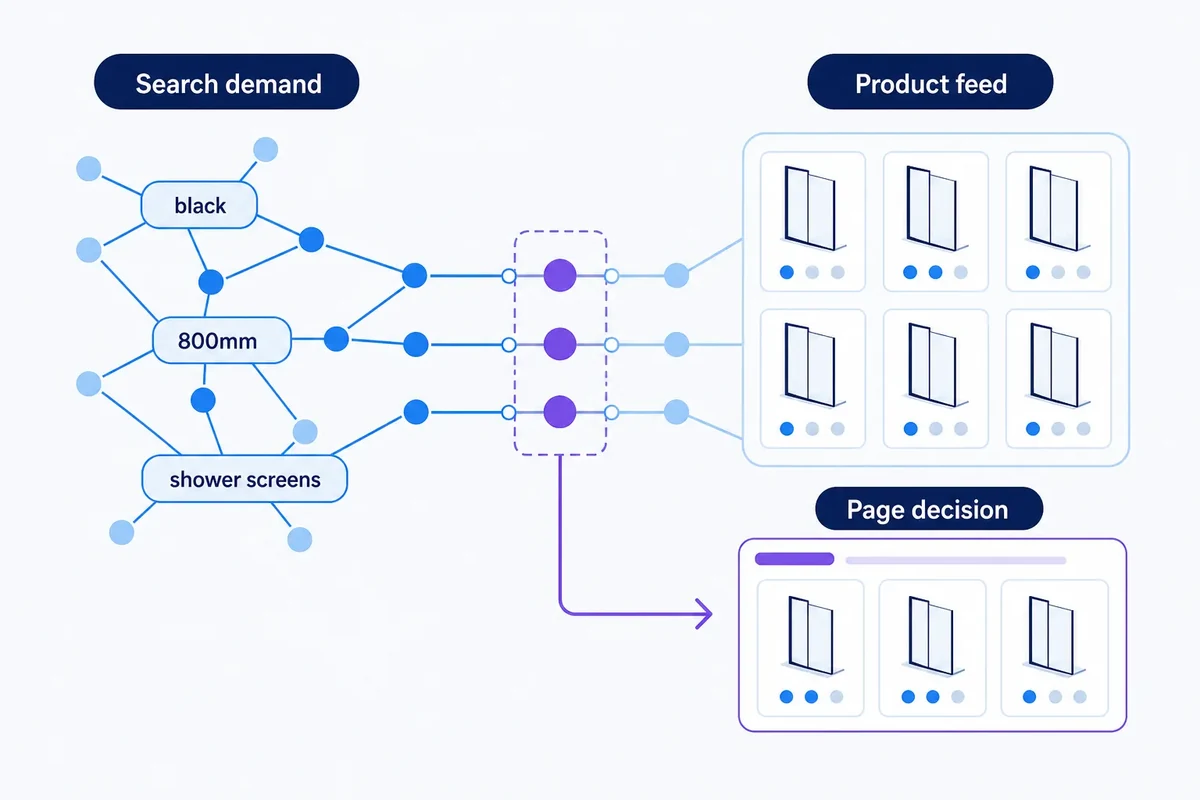
Combining product feed data with keyword clusters: where ecommerce SEO becomes operational