Duplicate content vs topical similarity: why related pages are not automatically duplicates
Two pages can discuss the same topic and serve different tasks, while near-duplicate pages can use different wording. Learn how ClusterIQ separates topical relatedness from duplication.

Farky Rafiq
Founder of ClusterIQ
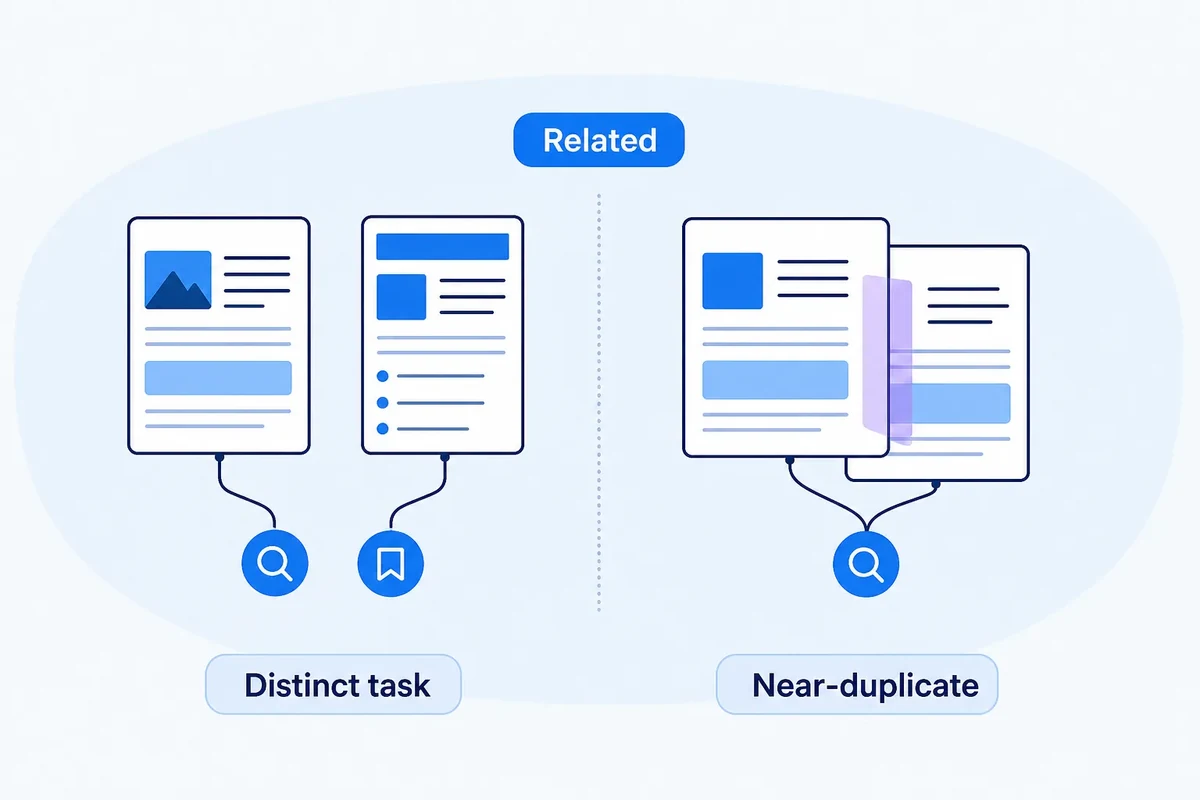
It is a common frustration when auditing a site: you find two pages that seem to cover the same ground, and the immediate instinct is to flag them as duplicates. However, two pages can live in the same subject area without being redundant. A product page, a detailed buying guide, and a head-to-head comparison might all focus on the same core product, but they serve entirely different user needs.
In contrast, you might have templated pages that use different words to say exactly the same thing. For tools like ClusterIQ, the goal is to separate topical relatedness from genuine duplication, because the fix for each is fundamentally different.
Topical similarity asks what the pages are about
We use semantic embeddings to group pages that occupy the same thematic space. High topical similarity is often a sign of a healthy, comprehensive content hub rather than a problem. You should expect to see high similarity between:
- A parent category and its sub-categories;
- A commercial landing page and a supporting "how-to" guide;
- An introductory overview and a deep-dive technical method;
- A main product page and its troubleshooting documentation.
Duplicate analysis asks how much unique page role remains
We only start suspecting duplication when pages share more than just a topic. We look for overlap in purpose, the specific entities covered, the page template, and which keywords they are trying to rank for. If two pages have the same product set and the same content structure, they are likely duplicates. No single metric can tell you this; it requires looking at multiple dimensions of the page.
Worked example: three ClusterIQ pages
Imagine we have three pages: an article explaining the maths of cosine similarity, a comparison of different similarity metrics, and a product page for ClusterIQ’s semantic engine. These are all topically close. However, they aren't duplicates because they each have a distinct "job" and target different search queries.
If we then published a second article that simply rephrased the cosine similarity guide using the same examples, that would be a duplicate, even if the title was slightly different.
Lexical overlap and semantic overlap answer different questions
To catch near-copy content, we use lexical methods like n-grams or "shingles" to find matching strings of text. Semantic embeddings, however, can spot when the meaning is identical even if the wording has been changed. By using both, ClusterIQ can distinguish between pages that have the same wording and meaning, those with different wording but the same meaning, and those that share a topic but perform a different task.
Page type is an important discriminator
A blog post and a category page might mention the same keywords, but they offer different user experiences. Using page-type classification helps us avoid flagging these as duplicates incorrectly.
Query ownership provides observed evidence
The best way to see if two pages are competing is to look at their performance. If two URLs are constantly swapping places in the SERPs for the same cluster of keywords, they are likely overlapping. If their keyword sets are cleanly separated, the content is likely healthy and serving its own purpose.
Canonical tags do not solve distinct-page overlap
A common mistake is using canonicals to "fix" two different articles that feel too similar. Canonicals are for technical duplicates or nearly identical URL versions. They aren't a shortcut for editorial decisions. We believe canonical and query ownership should be handled separately from the decision to merge content.
Product-set similarity matters in ecommerce
In ecommerce, two categories might have different names but display the exact same list of products. If their keyword clusters also overlap, there is rarely a reason to keep both indexed. We use Jaccard similarity to compare these product sets and query groups to see if the pages are truly unique.
Templates can create harmless boilerplate similarity
Sometimes pages look similar because they share the same headers, footers, or legal disclaimers. It is important to strip away this "boilerplate" text before judging whether the actual unique content on the page is duplicated.
Section-level similarity can find the real issue
Sometimes two long, unique guides might share one specific 500-word explanation. By comparing content in "chunks," we can identify these specific instances of copying without wrongly labelling the entire page as a duplicate.
Consolidation needs page-role evidence
Before you decide to merge two pages, you need to be sure. Ask yourself what unique task each page performs, which keyword clusters are unique to each, and what links or conversions you might lose. Using cluster-based consolidation ensures that your decision is based on data, not just a hunch.
Do not optimise for a site with one page per topic
You don't need to thin your site out until there is only one page per subject. Complex topics require multiple resources to cover them well. The goal is clear ownership and unique value for the user, not just reducing your URL count for the sake of it.
Use duplicate flags as review states
Rather than a simple "pass/fail" duplicate check, ClusterIQ categorises pages into states: near-duplicates, topically related, same topic but different task, or consolidation candidates. This gives you a much more nuanced to-do list.
Track outcomes after consolidation
After merging pages, keep a close eye on the results. Check if the remaining URL successfully picks up the keyword rankings of the old page and ensure that neighbouring pages in your site architecture remain distinct.
Practitioner principle: topical similarity tells you pages are related. Duplication asks whether they still have distinct reasons to exist.
ClusterIQ Conclusion
By looking at semantic topics, word-for-word overlap, and query ownership, ClusterIQ helps you avoid the trap of deleting useful content. You can keep your helpful related pages while confidently merging the genuine duplicates that are holding your SEO back.
Use a page-role matrix before taking action
When you find two pages with high similarity, run them through a simple matrix. Compare their page type, user task, keyword clusters, and product sets. If they differ in these areas, they are likely just related. If they match across the board, they are prime candidates for consolidation. This makes your SEO decisions explainable to clients and stakeholders; instead of saying "the tool said merge," you can show that the pages serve the same purpose and compete for the same traffic.
Sources and further reading
Farky Rafiq
Founder of ClusterIQ
I've worked in digital marketing since 2005 and founded Liquid Silver in 2011. These articles are where I share the methods, experiments and practical SEO thinking behind ClusterIQ.
Put the idea into practice with your own keyword data
ClusterIQ helps turn raw SEO exports into clean, structured working datasets you can inspect, refine, report on and take into the next stage of your workflow.
Keep reading
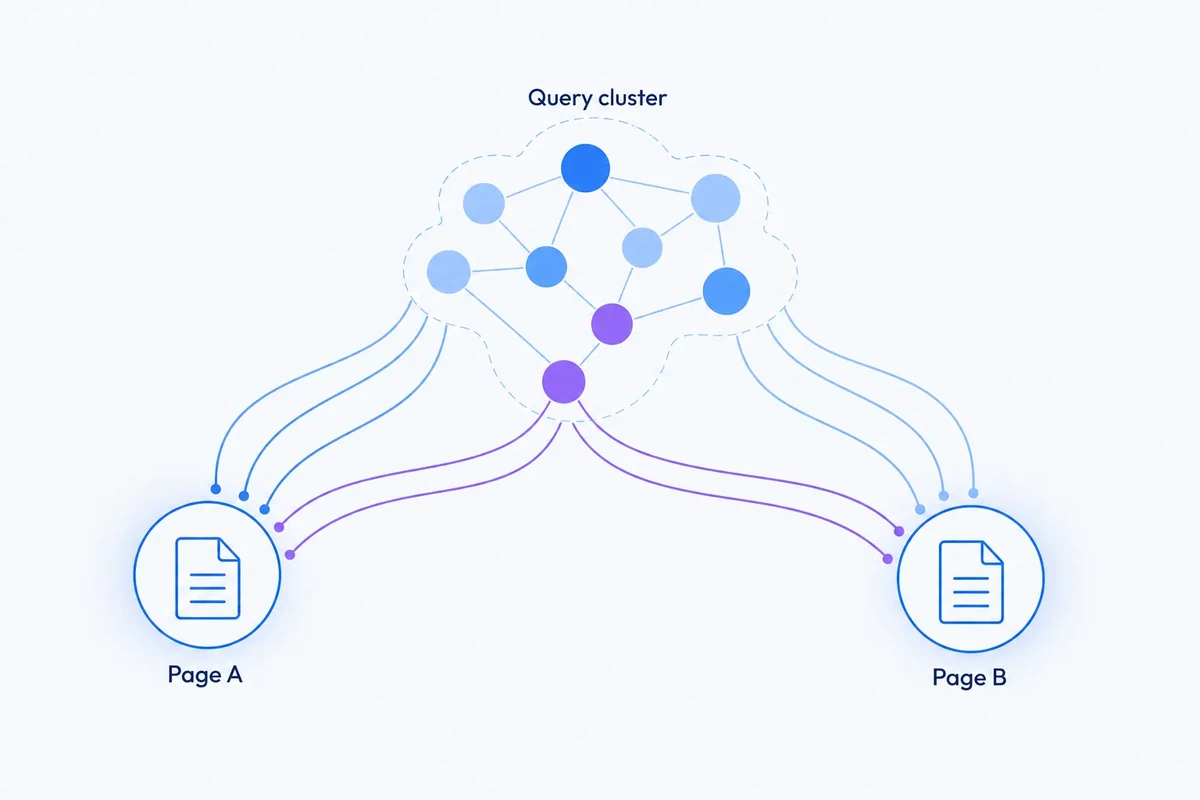
Keyword cannibalisation: how clustering helps find overlap without inventing a problem
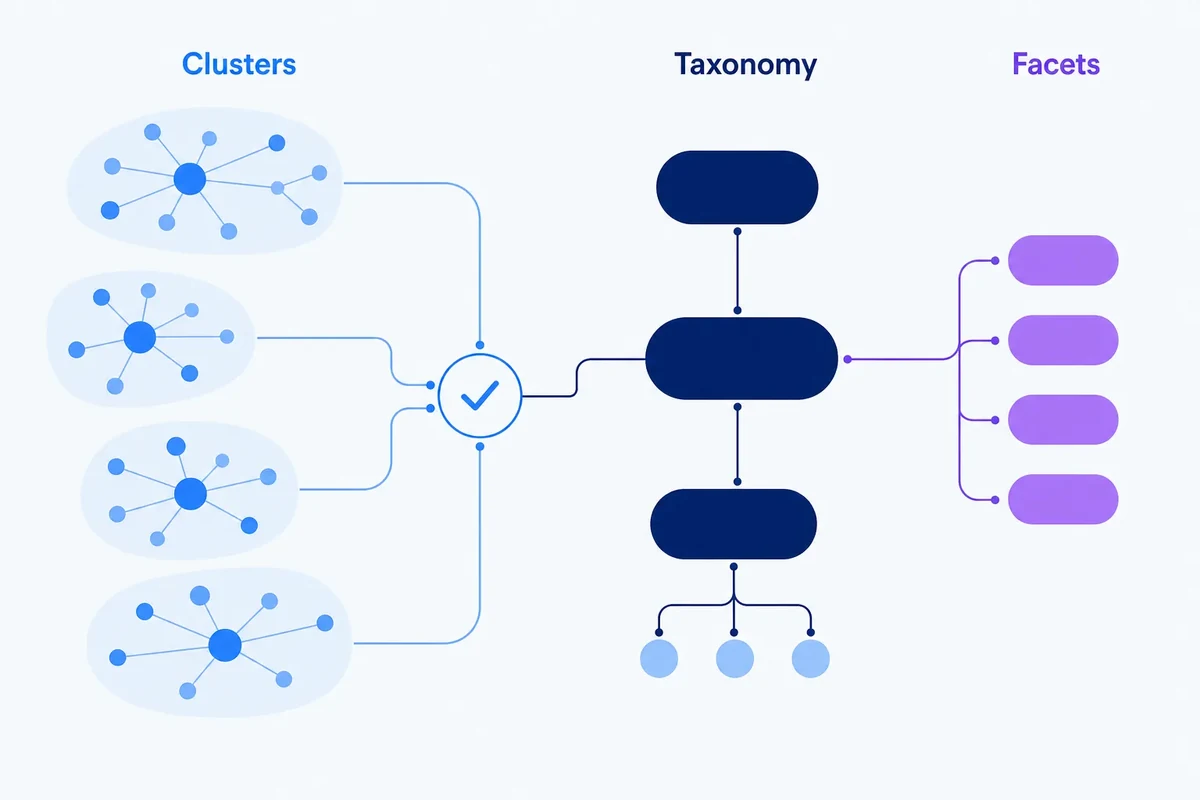
Using keyword clusters to design an SEO taxonomy without letting search volume run the site