Topical maps vs content calendars: separating site structure from publishing sequence
A topical map describes what subjects and relationships matter. A content calendar decides what gets published when. Learn why confusing the two can create thin or fragmented SEO programmes.

Farky Rafiq
Founder of ClusterIQ
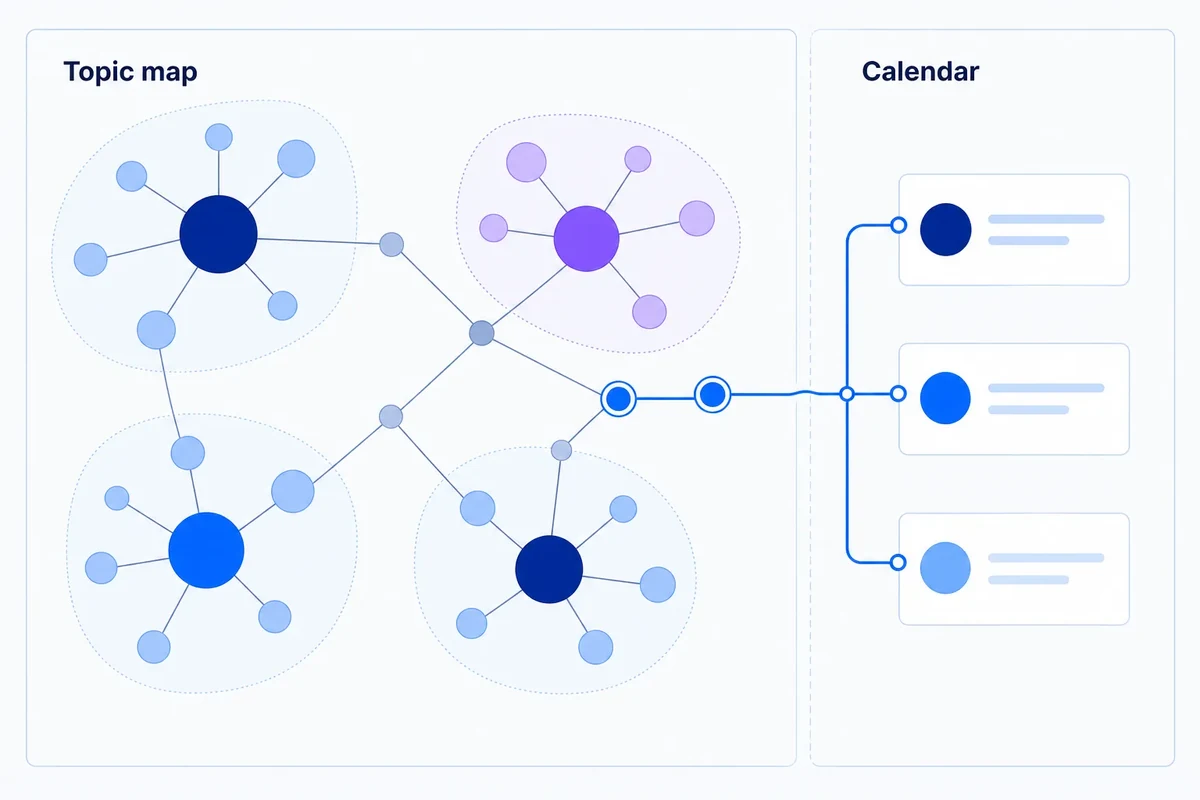
A topical map and a content calendar solve two entirely different problems. One defines the landscape of your expertise, while the other manages the logistics of your team. When these concepts get blurred, marketing teams often fall into the trap of treating an empty slot on a Monday morning as sufficient evidence that a new article needs to exist.
In practice, a topical map describes the subjects, subtopics, and semantic relationships a website must cover to be seen as an authority. A content calendar, by contrast, decides when specific work will be researched, written, updated, or promoted. Keeping these layers distinct ensures your strategy drives your schedule, rather than your schedule dictating your strategy.
A topical map is structural
Think of the map as the blueprint for your site architecture. It should describe:
- Major topic families and their hierarchies;
- Granular subtopics and specific entities;
- Logical relationships between different pages;
- Current coverage levels and identified gaps;
- Areas where topics naturally overlap.
ClusterIQ builds this framework by analysing keyword relationships, auditing existing pages, and incorporating your own strategic decisions.
A content calendar is operational
The calendar is the engine room of your editorial process. It manages:
- Priority levels and internal owners;
- Deadlines and expected publication dates;
- Dependencies on wider marketing campaigns;
- Seasonal fluctuations in search demand;
- Internal review and approval cycles.
These fields tell your organisation how work moves through the pipeline, but they do not define the underlying topic structure.
Why the distinction matters
Imagine ClusterIQ identifies 120 valid topic groups from a Search Console export or an Ahrefs keyword list. That does not automatically mean you should schedule 120 new articles. Depending on the intent, those groups might map to:
- Optimisations for existing pages;
- New sections within a pillar page;
- High-level category pages;
- Interactive tools or calculators;
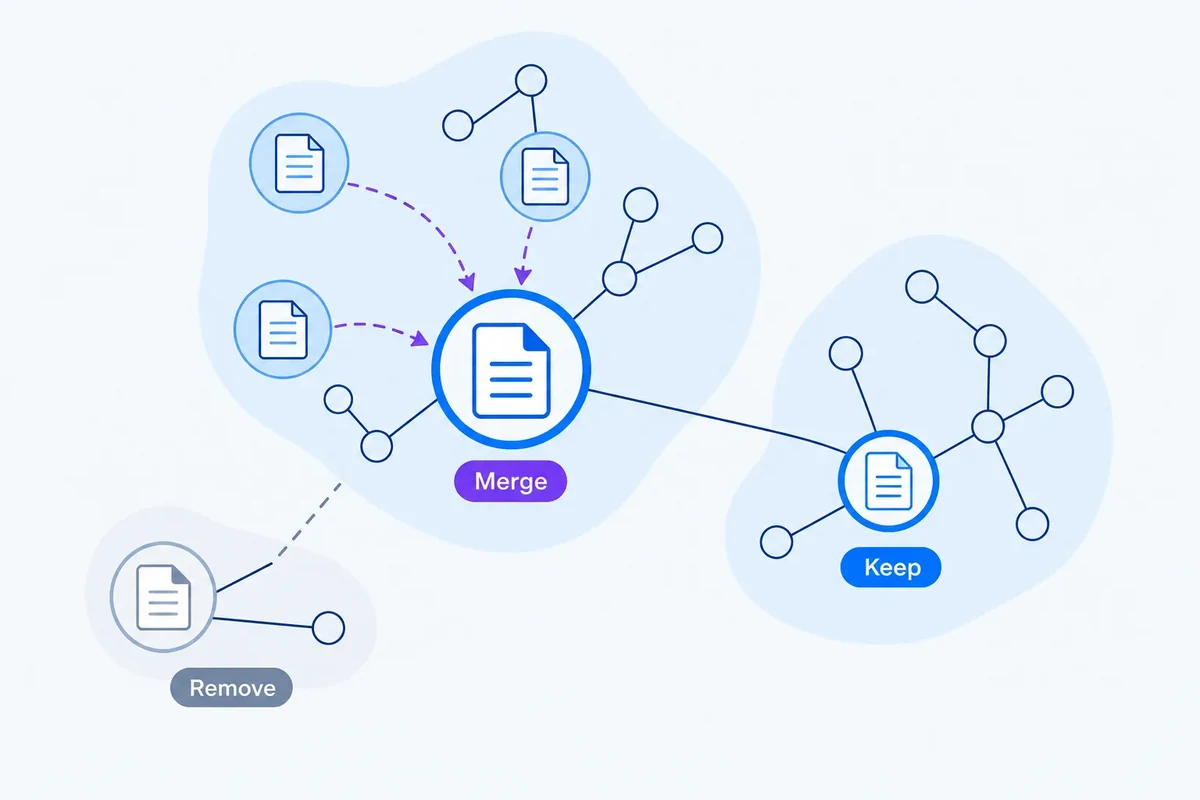
- Consolidating three thin posts into one guide;
- No action at all if the topic lacks business value.
The topical map is always broader than the editorial queue because it represents the total knowledge base, not just the next month of work.
Worked example: keyword clustering content
A ClusterIQ topic map for the subject of SEO clustering might include nodes for semantic similarity, HDBSCAN algorithms, graph theory, SERP overlap, and URL mapping. While some of these deserve dedicated articles, others are better served as technical sections within a broader guide. Product-oriented clusters should likely point users toward the ClusterIQ platform itself rather than spawning another informational blog post. The calendar should only ever schedule the work that survives this filtering process.
Sequence can follow dependency
Your publication order should often reflect the logical structure of the topic. For instance, it is usually better to publish a foundational guide before several deep-dive methodology pieces. This ensures the more specific articles have a natural parent page to link back to from day one. ClusterIQ uses graph relationships to help you identify:
- Foundational pillar topics;
- Supporting child topics;
- Bridge articles that connect different themes;
- High-intent commercial destinations.
Sequence can also follow opportunity
The most important article to write next is not always the most central topic in the map. Commercial value, current ranking positions, upcoming seasonal peaks, and team readiness can all shift your priorities. The map remains a stable reference point while the calendar adapts to the changing needs of the business.
Do not publish the map linearly
A comprehensive topic map often contains hundreds of nodes. Attempting to publish every single one as a standalone page is a recipe for thin content and keyword cannibalisation. ClusterIQ's gap-analysis framework helps you decide whether a missing piece of coverage requires a brand new page, a simple expansion of an existing one, or no action at all.
The calendar should include non-publishing work
Effective SEO involves more than just hitting "publish". Your calendar should also account for:
- Refreshing declining pages;
- Consolidating overlapping articles;
- Internal linking sprints;
- Building out new site categories;
- Updating tools or data sets;
- Retiring content that no longer serves a purpose.
A calendar that only tracks new posts creates a dangerous bias toward volume over value.
Use topic IDs across planning
By referencing a stable ClusterIQ topic or cluster ID in your project management tool, you create a clear audit trail. You can easily see why a piece of work was commissioned, which specific queries it targets, and how it relates to the rest of the site architecture long after it has been published.
Track coverage separately from throughput
Publishing ten articles in a month is a measure of throughput. Improving your coverage across five strategically vital clusters is a measure of an outcome. ClusterIQ keeps these metrics separate so teams are not rewarded simply for filling up the calendar with low-impact content.
Seasonality belongs in the calendar layer
A seasonal topic might exist permanently in your map, but it only needs editorial attention in the months leading up to its peak. Seasonal clustering helps you identify when the underlying topic is stable even if the search volume is volatile.
Content status should flow back to the map
Once a task is completed, the topical map should be updated to reflect the new reality. It becomes the record of your architecture, showing coverage status, target URLs, and performance evidence, while the calendar remains the tool for execution.
Do not let campaign dates distort permanent structure
A short-term campaign might make a specific topic a high priority for a few weeks. However, that temporary urgency should not necessarily change the permanent parent-child relationships in your site structure. Keep your operational needs separate from your semantic logic.
How ClusterIQ can join the two without merging them
ClusterIQ allows you to move approved opportunities from the topic map into a planning queue while retaining all the original cluster data. This ensures continuity from the research phase through to execution, without confusing your long-term roadmap with your weekly to-do list.
Practitioner principle: the topical map tells you what the site needs to understand. The calendar tells you what the team is doing next.
ClusterIQ Conclusion
Topical maps and content calendars work best as connected but distinct layers of your strategy. ClusterIQ defines the durable structure and relationships of your content, allowing the editorial calendar to sequence work based on real-world value and timing. This approach protects your site quality by ensuring that a calendar slot never becomes the sole justification for a new page.
Use the map to prevent calendar-driven duplication
Before any new item is added to the publishing schedule, ClusterIQ can compare it against your existing and planned topic nodes. If a new brief overlaps too heavily with something already in the works, the system flags the collision early. This allows your team to decide if two separate pages are truly necessary or if they should be merged before any time is wasted on writing.
Sources and further reading
Farky Rafiq
Founder of ClusterIQ
I've worked in digital marketing since 2005 and founded Liquid Silver in 2011. These articles are where I share the methods, experiments and practical SEO thinking behind ClusterIQ.
Put the idea into practice with your own keyword data
ClusterIQ helps turn raw SEO exports into clean, structured working datasets you can inspect, refine, report on and take into the next stage of your workflow.
Keep reading
Measuring topical coverage with clusters without inventing a fake authority score
Turning keyword clusters into content briefs without writing the article twice